


Green Ceramic Pitcher
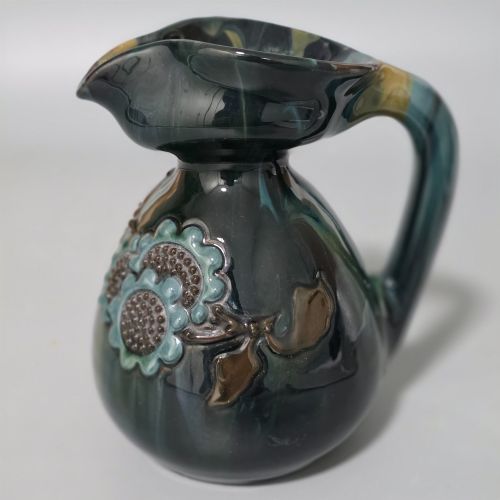
A green ceramic pitcher brings rich earthy tone and sculptural form to a room, ranging from moulded Victorian majolica to fluid Art Nouveau earthenware.
Green Ceramic Pitcher
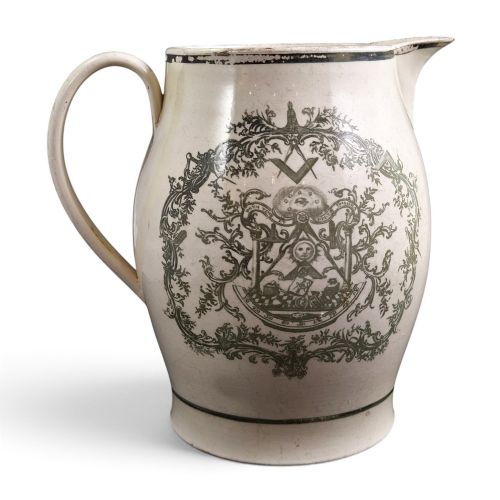
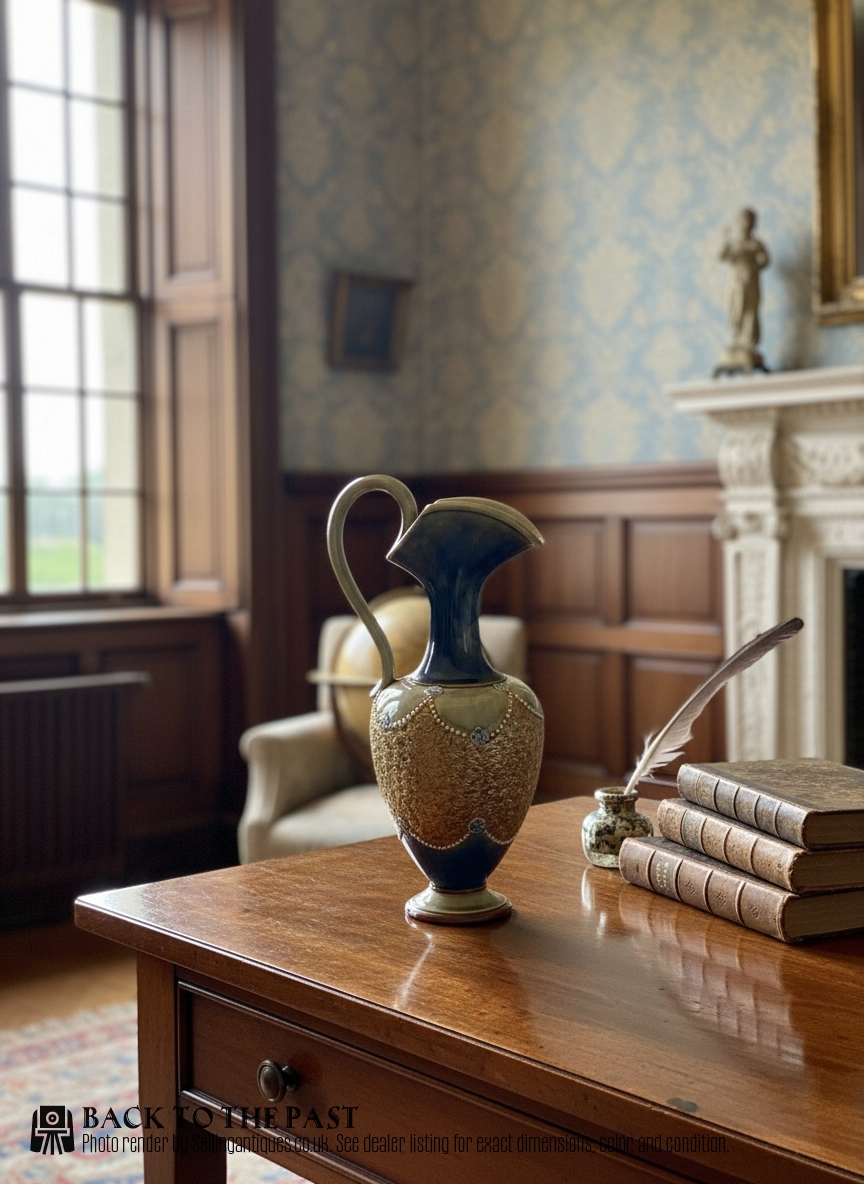
When you search for a green ceramic pitcher, you encounter functional vessels and decorative ewers spanning the eighteenth, nineteenth, and early twentieth centuries. These pieces encompass Staffordshire creamware, elaborate Victorian majolica, and striking studio pottery forms.
The selections available on this page lean heavily towards late Victorian and Edwardian examples, alongside earlier Georgian ironstone and Regency porcelain. You will find items intended for daily service, washstand sets, and exhibition pieces produced by major English and continental potteries.
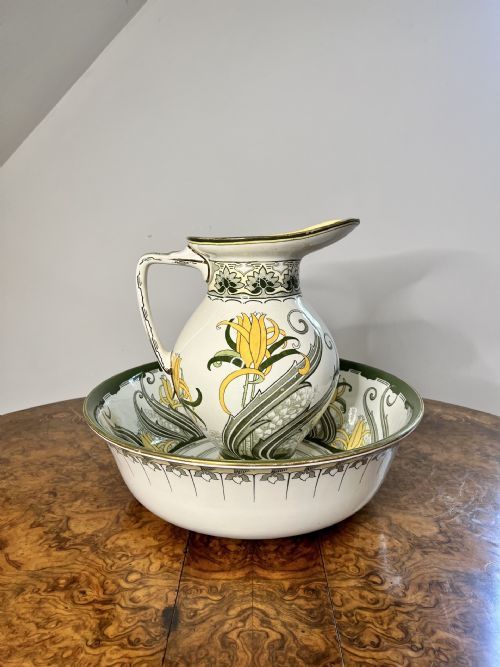
Forms vary from modest cream jugs and oil pots to large ewers, handled pouring vessels, and complete jug and bowl sets. Each piece demonstrates the period's fascination with botanical and classical motifs rendered in distinctive green glazes.
Materials and manufacture
Potters built these vessels using earthenware, stoneware, creamware, pearlware, and porcelain, shaping them on the wheel or casting them in moulds. The bodies provide the structural foundation for intricate relief decoration depicting leaves, flowers, and figures.
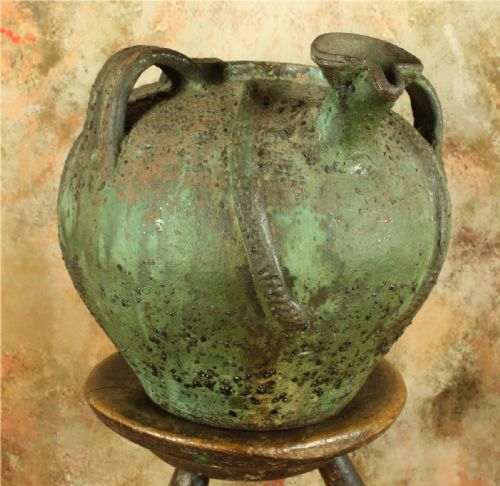
Glaze application defines the visual character, utilising Majolica lead glazes, enamels, and specialised slips to achieve varying shades of olive, sage, and deep green. Some pieces incorporate gilt highlights or gold leaf applied over the fired ceramic body.
Listings feature earthenware, stoneware, and porcelain bodies finished with majolica and enamel glazes.
Assessing the pieces
Quality rests upon the crispness of the moulded relief and the depth of the glaze, where superior pieces exhibit sharp botanical detail and even colour distribution without pooling or dry patches. Master potteries achieved a harmony between the sculptural form and the glaze that lesser workshops missed.
The reputation of the maker and the ambition of the design elevate certain items, distinguishing standard utility wares from exhibition-quality studio pottery and factory masterpieces. Preservation of the original surface, handles, and any painted or gilt detailing determines the integrity of the piece.
Sir Edmund Elton·William Moorcroft·George Jones·Keith Murray·Royal Worcester·Doulton Lambeth
The Green Ceramic Pitcher Glossary
- Majolica
- A type of earthenware coated with an opaque tin-lead glaze and brightly coloured with metallic oxide pigments. It gained immense popularity during the Victorian era for moulded botanical and animal designs.
- Creamware
- A refined fine earthenware developed in eighteenth-century Staffordshire, characterised by a pale yellowish-cream hue under a transparent lead glaze. It offered a lighter, more durable alternative to porcelain.
- Ewer
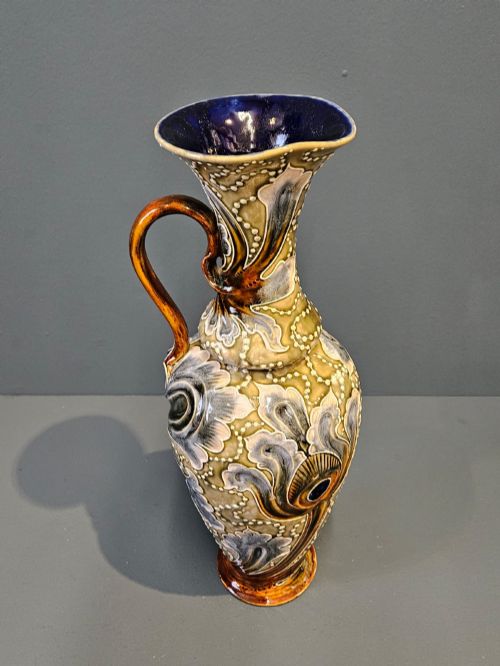
- A large pitcher with a wide spout and a looped handle, traditionally used for holding water alongside a matching wash basin. Many antique examples survive purely as decorative display objects.
- Ironstone
- A heavy, durable type of feldspathic stoneware patented in the early nineteenth century to imitate porcelain. It provided a robust body suited to bold patterns and moulded shapes.
- Studio Pottery
- Ceramic ware created by individual artists working independently or in small workshops, focusing on unique artistic expression rather than mass production. Pieces often feature experimental glazes and hand-thrown forms.
Green Ceramic Pitcher: Frequently Asked Questions
What periods do these green ceramic pitchers come from?
The listings span from the eighteenth century through the Georgian and Regency eras, extending into the Victorian, Edwardian, and early twentieth-century periods. You will encounter pieces representing distinct design movements such as Arts and Crafts, Art Nouveau, and Art Deco.
Each period brought different manufacturing techniques and aesthetic priorities, influencing everything from the clay body used to the style of the handle and spout.
How were these pitchers originally used?
Many served practical functions in the home, acting as cream jugs for the tea table, milk containers, or oil pots in continental kitchens. Others formed part of large jug and bowl sets used for washing and grooming in bedrooms before indoor plumbing.
Larger ewers and decorative vessels were frequently intended for display on sideboards or mantelpieces, showcasing the homeowner's taste and the potter's skill.
How do I distinguish between majolica and standard glazed earthenware?
Majolica is defined by its thick, lustrous coloured glazes applied directly over a moulded earthenware body, often featuring rich green and brown tones shaped into botanical reliefs like leaves or bulrushes. Standard glazed earthenware usually relies on painted underglazes or simpler, uniform colour surfaces.
Inspecting the underside and the relief work reveals the characteristic depth and sheen of nineteenth-century majolica glazes compared to earlier creamware or pearlware.
Are these pitchers suitable for daily use?
While many antique pitchers retain their structural integrity, older ceramics with historic glazes or delicate handles are generally better suited for gentle display or careful handling rather than heavy everyday service.
Pieces made from robust ironstone or heavy stoneware are hardier, but antique items often require hand washing to preserve their surface finishes and any gilt details.