
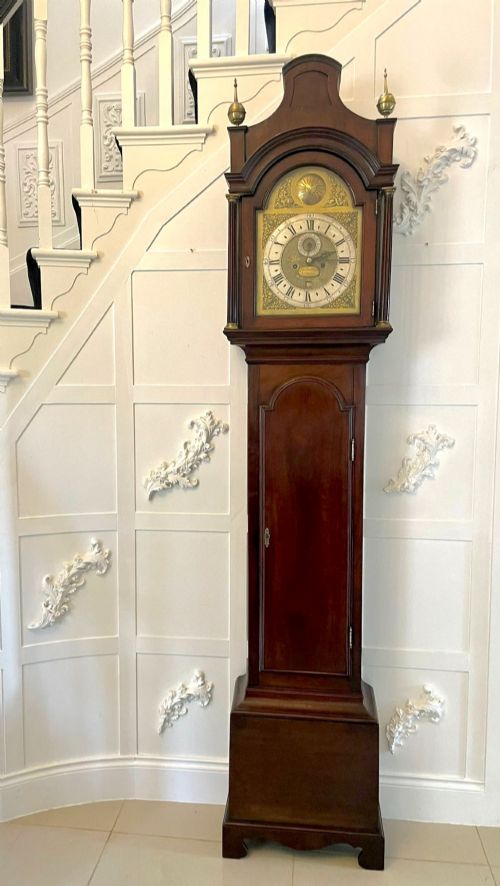
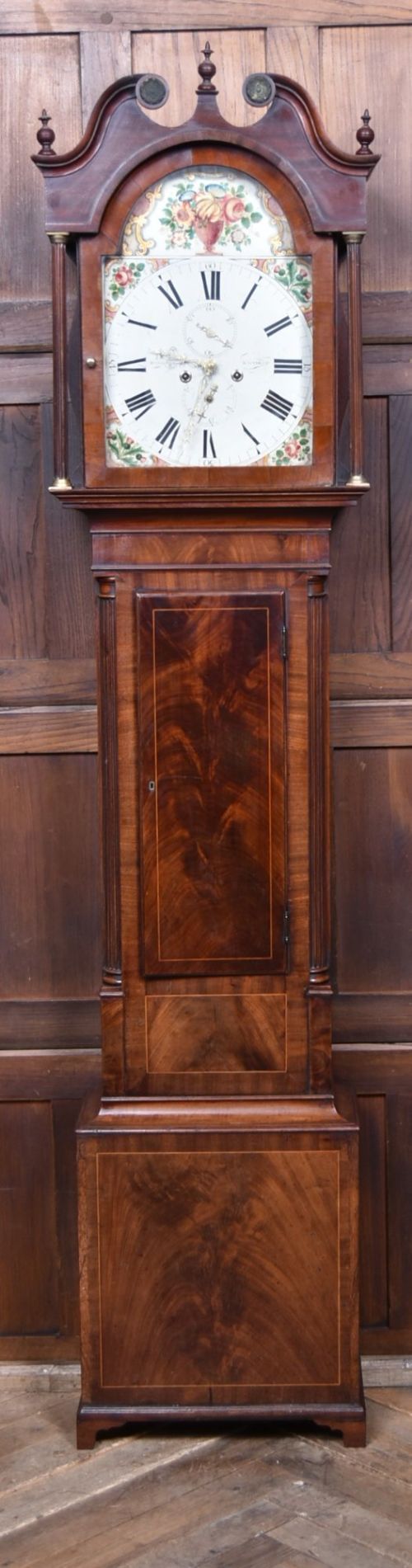
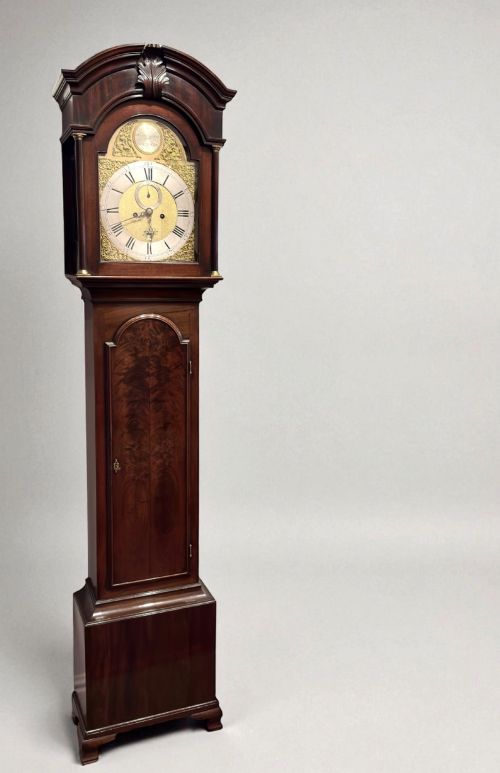
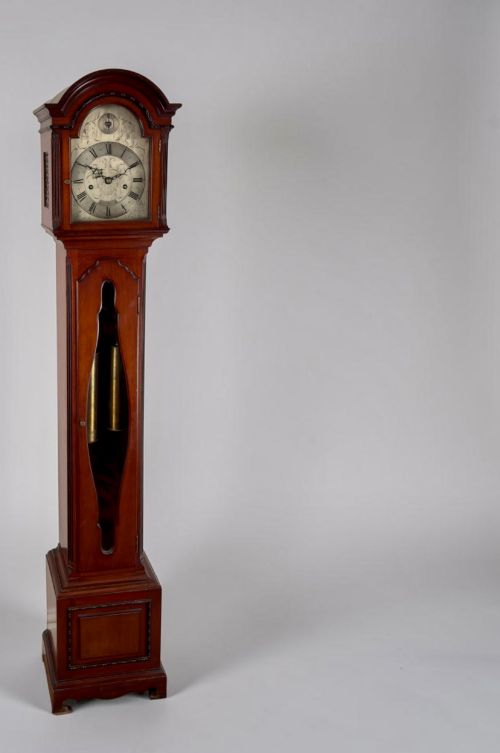
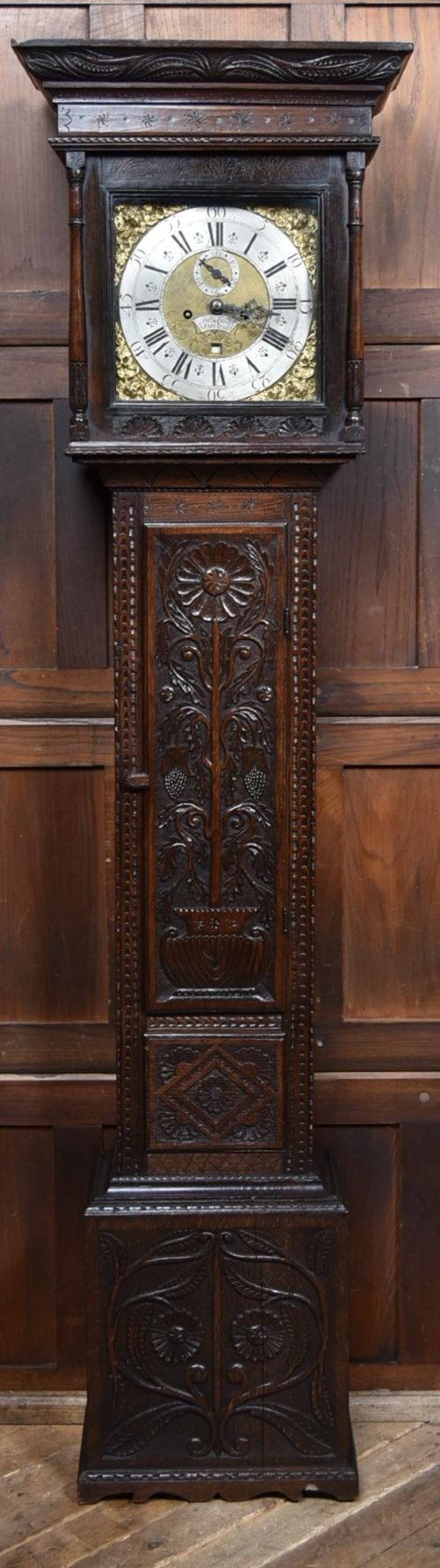


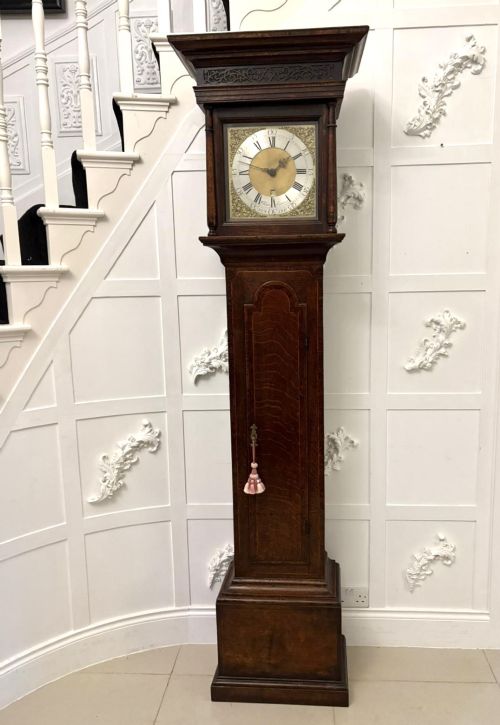
Grandfather Clock Dial
When you search for grandfather clock dial, you are looking at the brass and painted faces that record time across the Georgian, Victorian, and Edwardian periods.
Grandfather Clock Dial
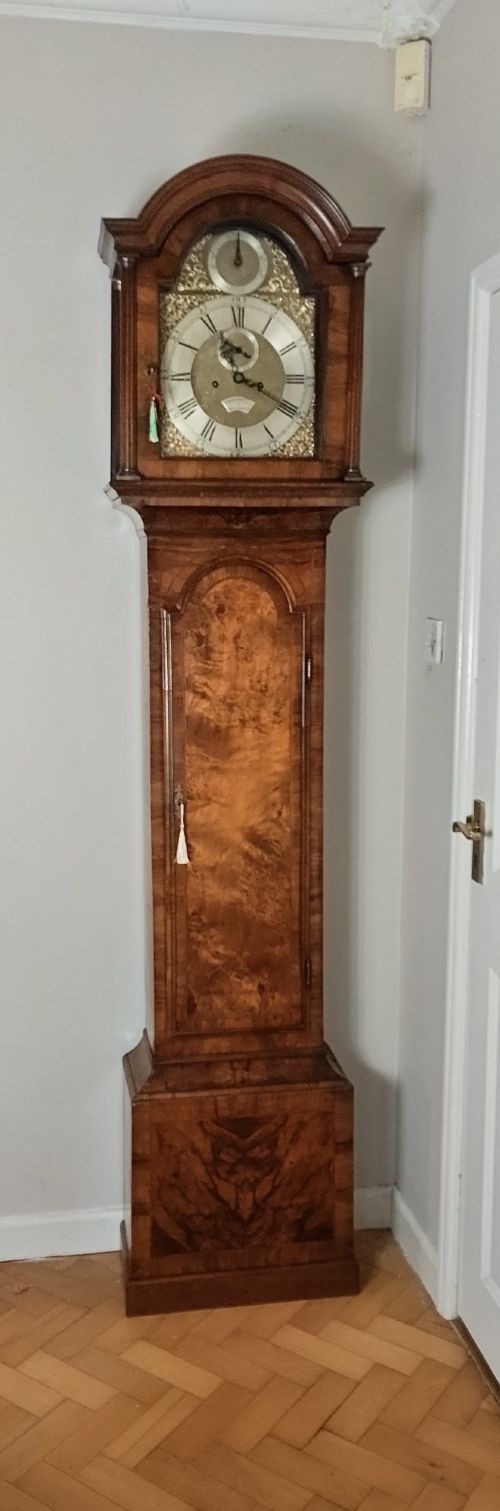
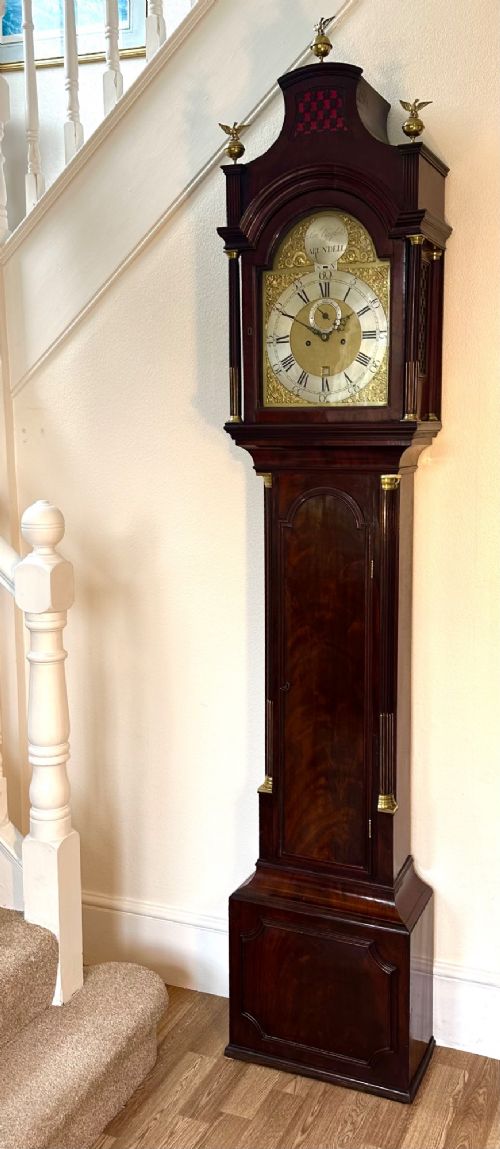
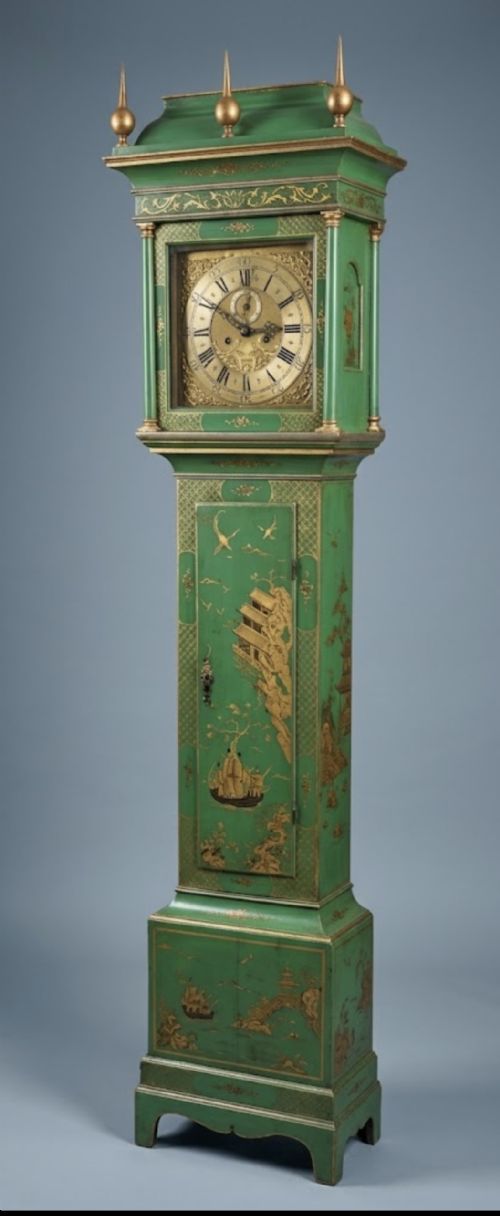
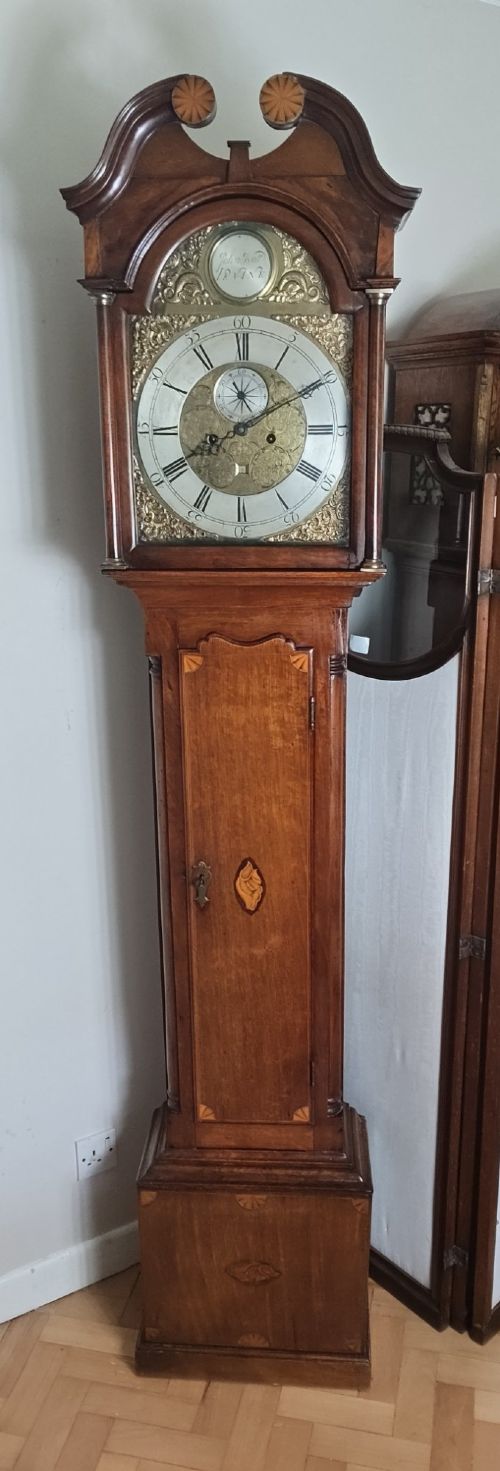
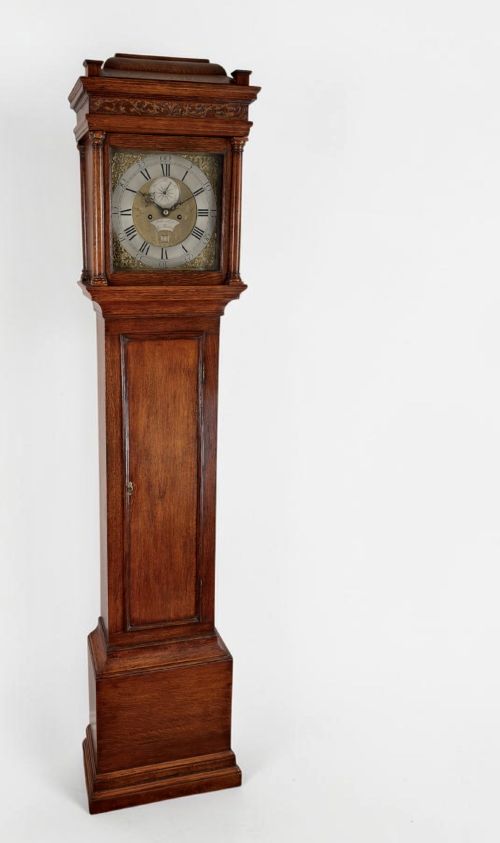
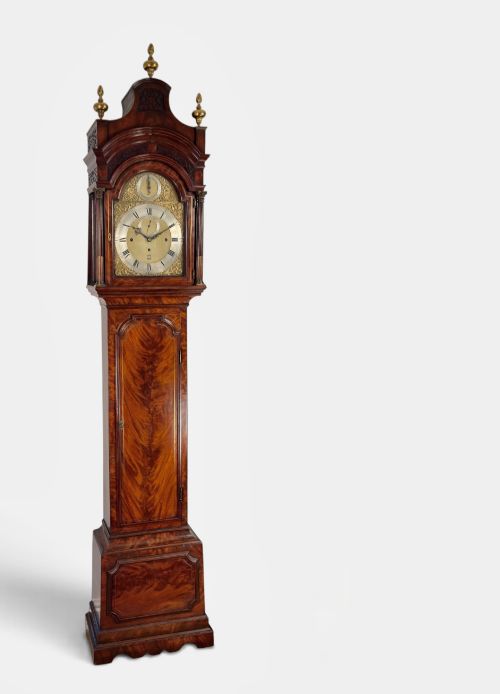
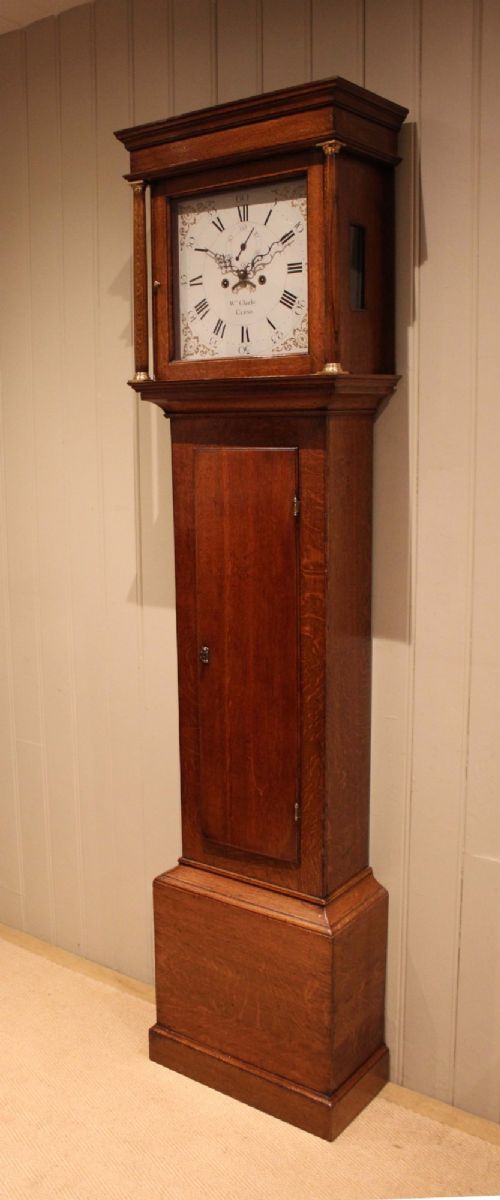
A grandfather clock dial forms the functional and visual centre of a longcase clock, housing the chapter ring, hands, and often subsidiary dials for seconds or moon phases. These faces survive from the eighteenth and nineteenth centuries, spanning George III, Regency, and Victorian periods.
Buyers will most frequently meet brass dials from the Georgian era alongside painted iron or enamel dials from the late eighteenth and nineteenth centuries. These components appear either fitted within surviving longcase clocks or occasionally as standalone dial and movement assemblies.
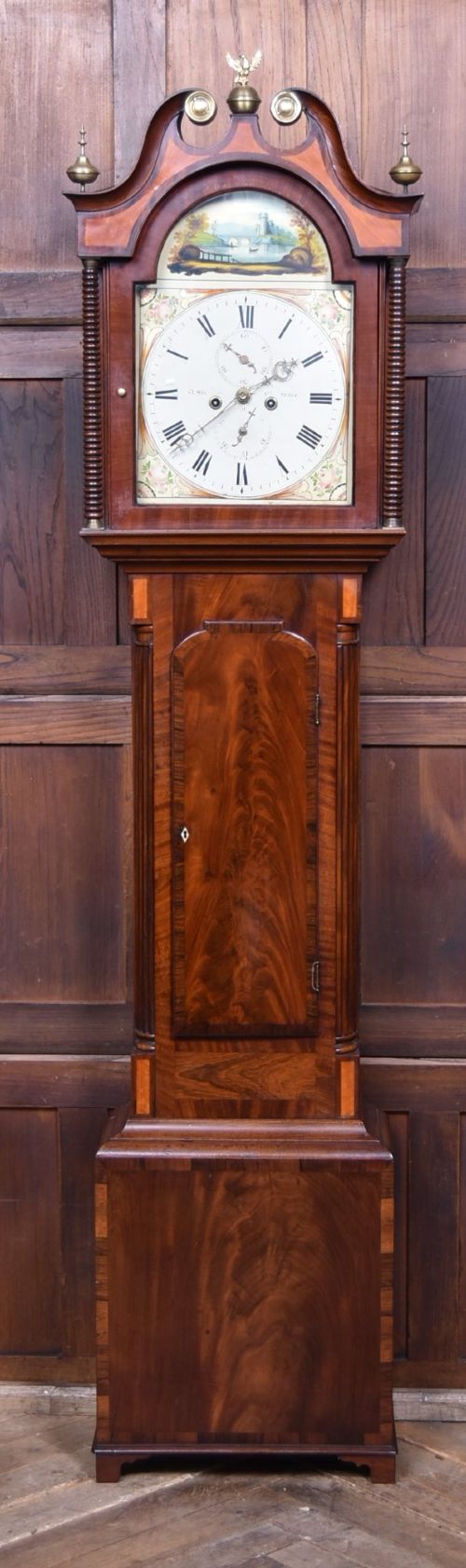
The forms range from square brass plates of the mid-eighteenth century to larger arched dials featuring painted moon rollers and subsidiary calendar work. Regional variations span English provincial makers to Scottish and Welsh workshops.
How They Were Made
Dials were constructed primarily from cast brass or sheet iron, with brass plates often finished with matted centres, engraved corner spandrels, and applied silvered chapter rings for the numerals.
Painted iron dials utilised lead-based paints and hand-lettered numerals, frequently incorporating gilt floral decorations, seasonal allegories, or moving moon phases in the arch.
Workshops employed specialised techniques such as silvering, engraving, and enamel firing to create legible and decorative faces designed to last centuries.
Listings feature brass and painted iron dials housed within oak, mahogany, and walnut longcase clocks dating from the eighteenth to the early twentieth century.
What Varies in Quality
Quality rests upon the crispness of the engraving on brass spandrels and chapter rings, or the artistic merit and preservation of hand-painted details on iron dials.
Signatures of accomplished provincial or London makers engraved directly onto the brass or painted surface elevate a piece above standard utility work.
The complexity of the mechanism behind the face, such as moon phases, strike-silent functions, or eight-day movements rather than thirty-hour trains, dictates the tier of the piece.
Charles Shuckburgh·John Ellicott·James McCabe·John Hancock·Anthony Binks
The Grandfather Clock Dial Glossary
- Chapter ring
- The circular ring fixed to the dial face that bears the hour and minute numerals. It is frequently silvered brass on earlier examples.
- Spandrel
- The decorative corner piece filling the space between a square dial chapter ring and the outer frame. They evolved from cast brass ornamentation to painted floral corners.
- Moon phase
- A mechanical display in the arch of a dial that tracks the lunar cycle using a rotating disc behind two hemispherical cutouts.
- Strike/silent
- A subsidiary lever or dial on the face that allows the chiming mechanism to be disengaged at night. It is a desirable complication found on better movements.
- Grandmother clock
- A smaller, more slender version of the traditional longcase clock, typically produced during the Edwardian period or early twentieth century.
Grandfather Clock Dial: Frequently Asked Questions
How do I date a grandfather clock dial?
Square brass dials without arches typically point to the mid-eighteenth century, while arched brass dials and painted iron faces usually indicate the later eighteenth or nineteenth century. Maker signatures and stylistic clues in the spandrels help narrow the decade further.
Changes in font styles, engraving depth, and the presence of moon rollers also provide clear chronological markers for collectors studying regional British clockmaking.
What is the difference between brass and painted dials?
Brass dials were dominant through the seventeenth and eighteenth centuries, featuring engraved details and applied silvered brass chapter rings. Painted iron dials emerged later in the Georgian period, offering vibrant coloured decoration and floral scenes.
Both materials remained in use concurrently for a period, but painted dials became the standard choice for nineteenth-century provincial clockmakers.
What does a moon phase dial do?
A moon phase dial tracks the lunar month across a fifty-nine-day cycle using two painted moons on a rotating disc behind the dial arch. It kept rural communities informed of tides and moonlight for evening travel.
Today, collectors prize these complications for the intricate artistry involved in painting the lunar discs and the mechanical gear train required to drive them.
Are smaller longcase clocks rare?
Smaller longcase clocks, often termed grandmother clocks, generally date from the Edwardian period or the early twentieth century rather than the Georgian era. Their compact proportions made them suitable for smaller domestic spaces.
Genuine eighteenth-century examples with reduced dimensions, often termed small longcase clocks, do exist from provincial makers but appear less frequently on the market.