




8 Day Clock Face
An 8 day clock face brings together brass, painted iron and enamel dials housed in longcase, desk and pocket watch forms spanning the eighteenth to twentieth centuries.
8 Day Clock Face
An 8 day clock face sits at the front of longcase clocks, grandfather clocks, desk clocks and pocket watches, recording hours and minutes through traditional movements. Buyers searching for an 8 day clock face generally encounter longcase clocks originating from the eighteenth and nineteenth centuries, alongside smaller desk and pocket watch iterations.
The material composition of these faces relies heavily on brass, painted iron and enamel, often paired with mahogany, oak, walnut and glass. Examples span George III, Regency, Victorian, Edwardian and Art Deco periods, representing both regional British workshops and international makers.
How they were made
Clock makers utilised brass for engraved dial plates and cast spandrels, while later dials incorporated painted iron and enamel surfaces. Cases and surrounds combined timber construction using oak, mahogany, walnut and burr oak.
Movements integrated steel components alongside glass protective covers for pocket watches and desk clocks. Artisans carved and polished timber cases while hand-engraving or painting the dial faces.
Listings feature brass, painted iron, enamel and glass materials paired with oak, mahogany and walnut timbers across longcase, desk and pocket watch formats.
What varies in quality
Quality separates through the crispness of brass engraving on the dial and the depth of detail in painted iron or enamel work. Finer pieces display superior cabinetmaking in mahogany, oak or burr oak cases.
The reputation of the maker inscribed on the dial plate and the complexity of the movement, such as lunar moonphases or quarter repeating mechanisms, distinguish standard examples from exceptional items.
Joseph Gibson Ecclefechan·William Betagh Dublin·David Morice·John Pollard of Crediton·Jn Wright Linton·Richard Northen·Robert Thomson·James Draycot Wells·Standring Of Bolton·George Clapham·Jonathan Blake·Richard Peckover·Samuel Whalley·Richard Watkin·Yaxley West
The 8 Day Clock Face Glossary
- Longcase clock
- A tall pendulum clock enclosed in a wooden case, commonly known as a grandfather clock. These housing units protect the weight-driven movement and the prominent dial face.
- Spandrel
- An ornamental corner piece fitted to a square brass clock dial. These decorative brass castings fill the space between the circular chapter ring and the outer edge of the face.
- Moonphase
- A dial mechanism displaying the lunar cycle and age of the moon. This visual complication appears on select arched clock faces.
- Enamel face
- A fused glass surface applied to a metal dial plate to provide a smooth white background for painted numerals. This technique offers a clean, legible display for the movement.
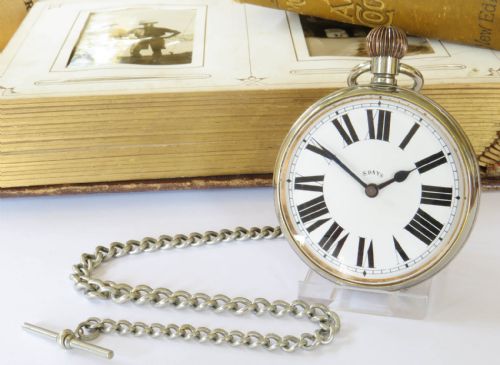
- Goliath pocket watch
- An oversized pocket watch fitted with an eight-day movement. These heavy timepieces often sit in travel cases on desks.
8 Day Clock Face: Frequently Asked Questions
What is an 8 day clock face?
An 8 day clock face is the visible dial of a timekeeping movement that requires winding once every week. These faces display hours and minutes using brass, painted iron or enamel surfaces.
They serve as the functional and decorative centrepiece for longcase clocks, grandfather clocks, desk clocks and pocket watches across multiple historic periods.
How do I identify the period?
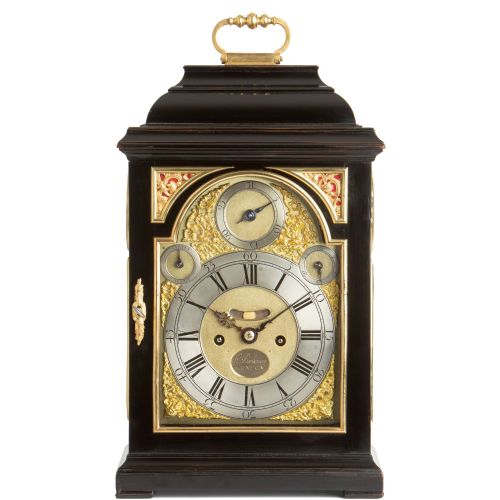
Periods are identified through a combination of dial materials, typography, case timbers and stylistic markers. Eighteenth-century examples frequently feature square or arched brass dials with cast corner spandrels.
Nineteenth-century and later pieces often introduce painted iron or enamel faces alongside mahogany or oak cabinetry reflecting Georgian, Regency, Victorian or Art Deco tastes.
Were these clocks used in homes?
Longcase clocks with brass or painted faces stood in hallways and principal rooms of domestic properties to regulate daily schedules. Their eight-day movements meant winding was required only on a weekly basis.
Smaller desk clocks and pocket watches provided portable or surface-mounted timekeeping for domestic and professional spaces during later periods.
How do I live with an 8 day clock?
Living with these pieces involves placing them in stable indoor environments away from direct sunlight and damp conditions to protect timber cases and metal movements. Regular weekly winding keeps the mechanism functioning correctly.
Careful positioning ensures the pendulum and movement operate on a level surface without interference from environmental vibrations.