



Georgian Longcase Clock Movement
A georgian longcase clock movement is the mechanical heart of a traditional tall case timepiece, sought after for its intricate brass gearing and historical clockmaking craft.
Georgian Longcase Clock Movement
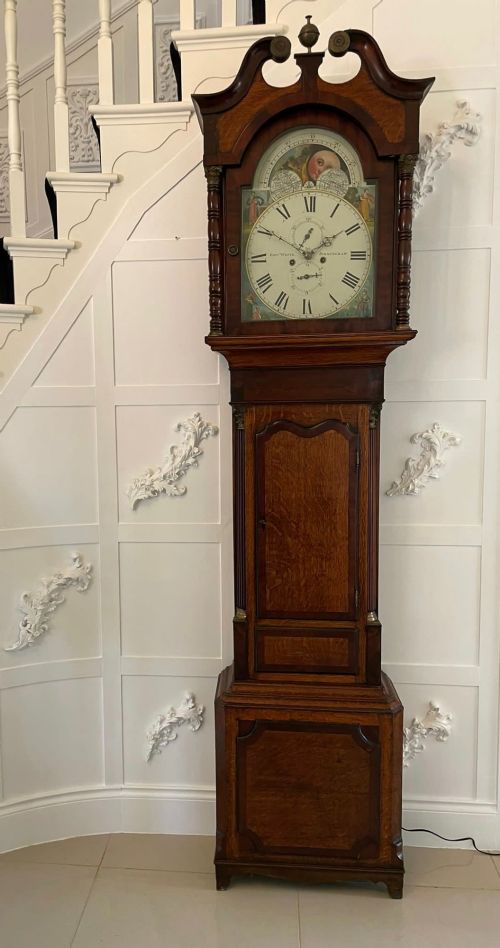
A georgian longcase clock movement represents the complex internal mechanism that powered tall timepieces during the eighteenth and early nineteenth centuries. When searching for a georgian longcase clock movement, collectors encounter various configurations ranging from simple thirty-hour versions to sophisticated eight-day mechanisms with moon phases.
The evidence shows examples originating from the eighteenth and nineteenth centuries, spanning periods such as the Georgian era, William IV, and Victorian times. These pieces frequently appear either as complete mechanisms housed within oak and mahogany cases or as standalone dials and movements.
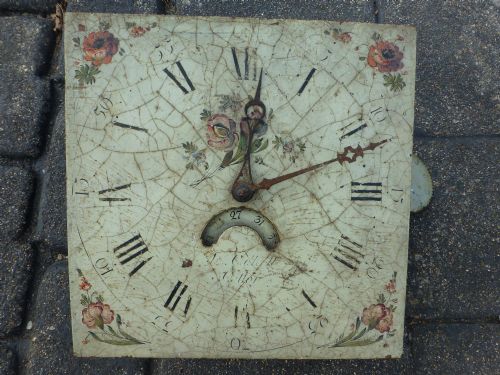
Regional diversity is a strong feature among these items, with movements signed by provincial makers from locations such as Alton, Birmingham, Bristol, Abergavenny, and Newport Pagnell. Buyers often find specialised variants including moon roller mechanisms, painted dials, and early birdcage or five-pillar constructions.
Materials and Construction
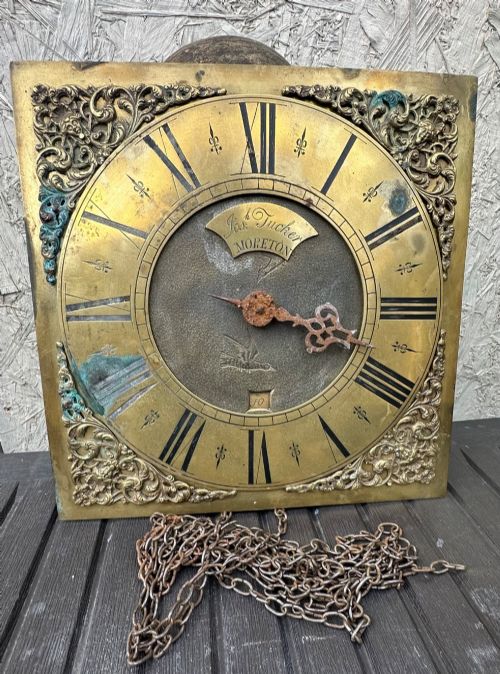
Makers constructed these mechanisms primarily from brass and steel for the intricate gear trains, arbors, and escapements. Cast brass formed the robust plates and pillars, while steel provided the necessary strength for springs, pivots, and wheel arbors.
Dials and surrounding structures incorporated varied materials depending on the regional workshop and period style. Painted metal, brass chapter rings, glass covers, and occasionally gold leaf details appear alongside cabinet timbers such as mahogany, oak, and lacquered wood.
Georgian Longcase Clock Movement Retail Price Guide 2026
Typical asking prices for georgian longcase clock movement among the pieces listed under this phrase on Sellingantiques today, from the lower quarter to the upper quarter. They describe what is for sale here now, not the wider market.
Some provincial clocks retain charming local spellings on their painted dials, reminding us of rural makers who worked far from London workshops.
Evaluating Quality and Craftsmanship
The distinction between standard and superior examples lies in the complexity and precision of the gear train and dial artistry. Five-pillar movements and those incorporating moon roller or lunar phase complications demonstrate higher technical ambition than basic thirty-hour variants.
Signed dials by recorded regional makers carry greater historical interest compared to unsigned works. The crispness of engraving on the brass chapter rings and the artistic quality of painted dial scenes further separate routine mechanisms from exceptional works.
John Fielder of Alton·Edward White Birmingham·James Harvey of Abergavenny·Ebenezer Handscomb
The Georgian Longcase Clock Movement Glossary
- Birdcage movement
- An early form of clock movement construction where the plates are held together by vertical steel pillars resembling a birdcage. This style is frequently associated with thirty-hour longcase clocks.
- Moon phase
- A dial mechanism tracking the lunar cycle over approximately twenty-nine and a half days. It uses a rotating disc with painted moons visible through curved apertures on the clock face.
- Count wheel
- An external locking plate mechanism used in older clocks to regulate the striking train. It counts the hours independently of the motion work.
- Pillar
- The vertical brass post connecting the front and back plates of a clock movement. The number of pillars often indicates the quality and stability of the mechanism.
Georgian Longcase Clock Movement: Frequently Asked Questions
What is a five pillar movement?
A five pillar movement utilises five brass supports between the plates instead of the standard four. This design provides extra structural rigidity to handle complex gear trains.
Such construction is typically found in higher quality eighteenth-century grandfather clocks built for stability and precision.
How do eight day movements differ from thirty hour ones?
An eight day movement requires winding roughly once a week using suspended weights and a longer cord system. These mechanisms often incorporate more sophisticated gear trains.
Thirty hour movements need winding daily and generally utilise simpler internal architecture designed for domestic economy.
What is a moon roller mechanism?
A moon roller mechanism drives the lunar calendar display on the clock dial to track monthly phases. It rotates a painted disk behind the dial face.
This feature adds significant visual interest and mechanical complexity to Georgian timepieces.
Are painted dials later than brass dials?
Painted iron dials became widely popular toward the later part of the eighteenth century and into the nineteenth century. Earlier clocks predominantly used brass dial plates with applied silvered chapter rings.
Both styles existed concurrently during transitional manufacturing periods.