
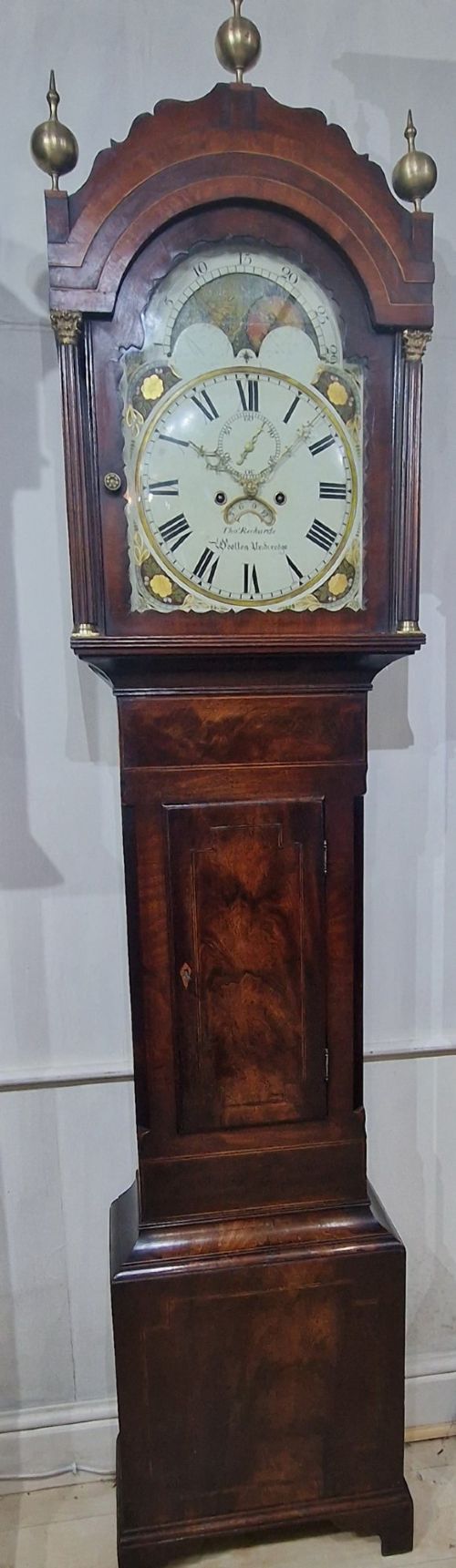
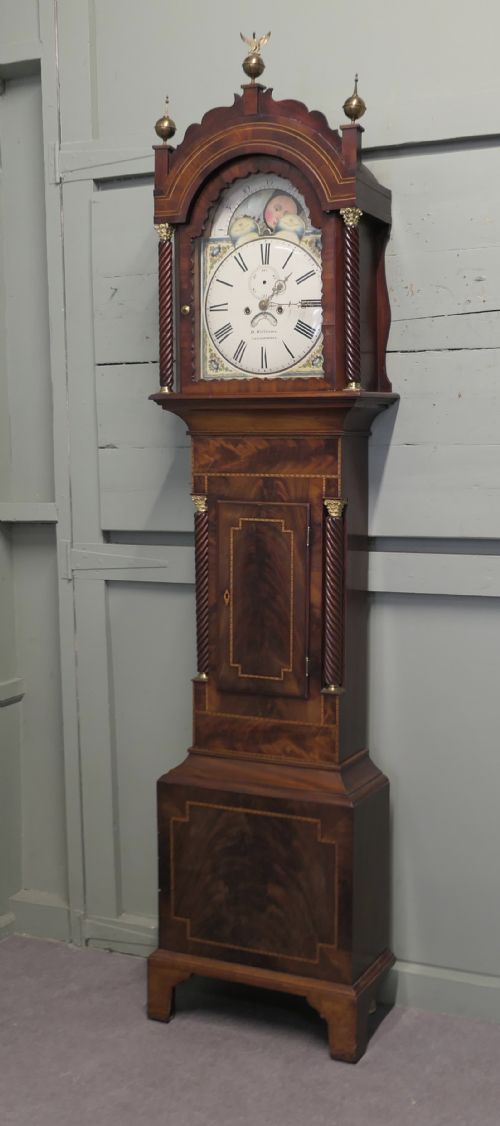


Moonphase Longcase Clock Dial
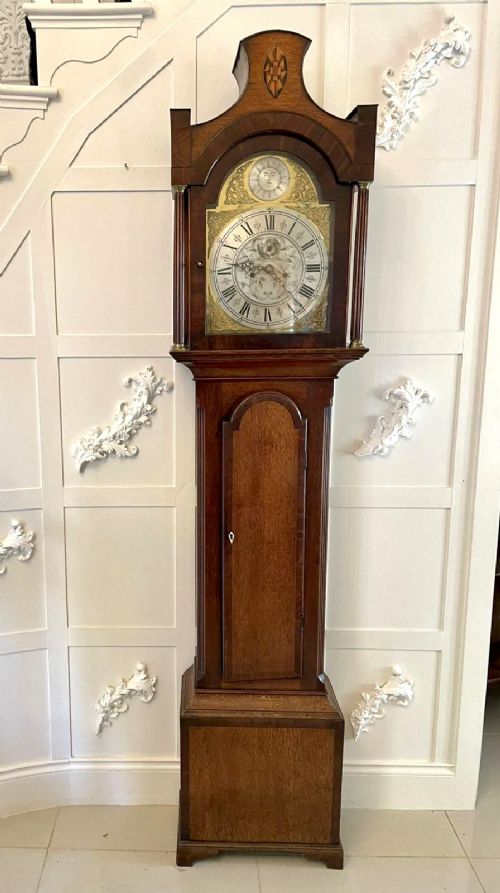
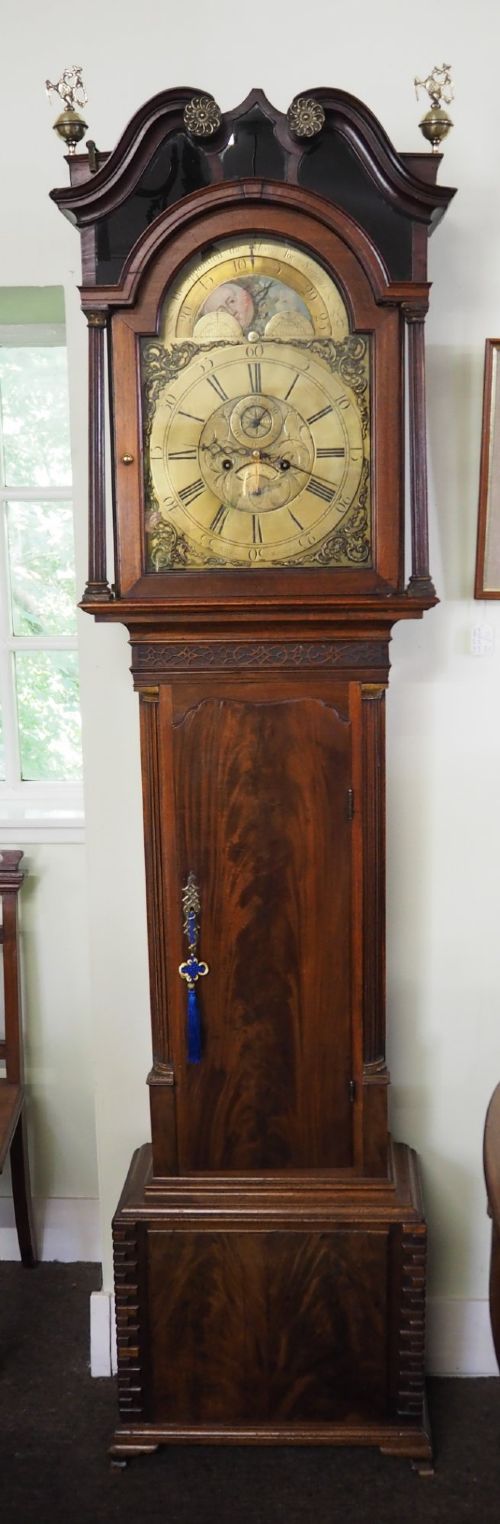
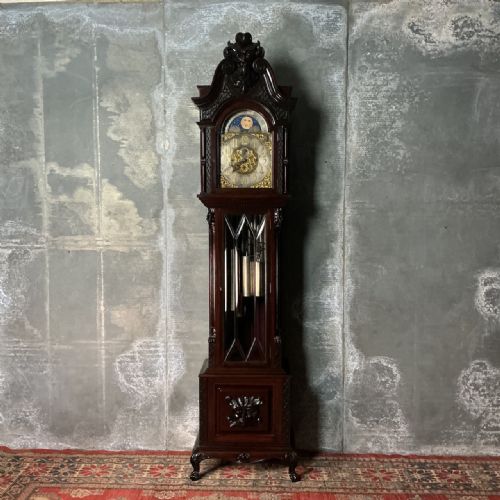
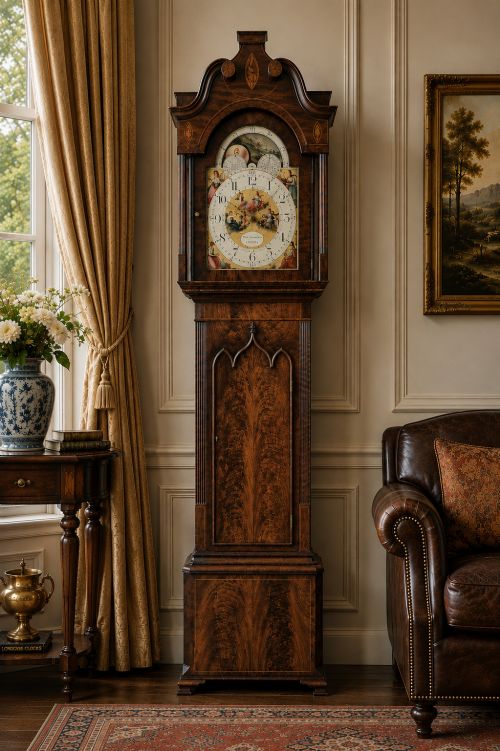
These moonphase longcase clock dial pieces track the lunar cycle through hand-painted discs set into tall clock faces.
Moonphase Longcase Clock Dial
When you search for moonphase longcase clock dial, you encounter circular brass or painted iron faces designed to measure time alongside the phases of the moon. Most examples you meet on this page originate from the eighteenth and nineteenth centuries, spanning Georgian and Victorian periods.
These dials sit at the top of tall wooden cases made from mahogany, oak, walnut, and flame mahogany. Makers incorporated mechanical apertures to reveal rotating moon discs that track lunar progression.
Materials and Techniques
Clockmakers constructed these dials using solid brass plates or iron sheets painted by hand. Dial painters applied detailed pigments to depict moon phases, lunar calendars, and sometimes tidal information alongside numerical markers.
The enclosing cases combine structural timbers like oak and mahogany with decorative veneers such as flame mahogany and walnut. Cabinetmakers shaped these woods to house the heavy brass movements and weight-driven mechanisms.
Some dials recorded high water times alongside the moon, keeping sailors punctual even miles inland.
Assessing Quality
The fineness of the hand-painted artwork on the moon disc and dial face separates standard workshop production from superior examples. Detailed landscape miniatures and precise subsidiary dials indicate skilled craftsmanship.
The quality of the cabinetwork and the reputation of the maker inscribed on the dial dictate the overall standing of the piece. Well-documented regional clockmakers produced movements and cases with greater decorative ambition and structural integrity.
Samuel Kellett of Bredbury·D Williams of Crickhowell·Charles Dowsett Of Canterbury·Thomas Vernon London·John Banks Oldham·Furnival Oldham·Thomas Dean of Leigh·Wilshire and Link of Bristol·Nicholas of Birmingham·Richardson of Manchester·James Rayner of Hull·Thos Burchall of Nantwich·Robert Darling Melrose·Thomas Hall Romsey·Thomas Hutchison of Leeds·Iames Richards Liverpool
The Moonphase Longcase Clock Dial Glossary
- Moonphase dial
- A clock face featuring a mechanical aperture that displays the phases of the moon using a rotating painted disc. This mechanism completes a full cycle roughly every twenty-nine and a half days.
- Longcase clock
- A tall pendulum clock housed in a wooden case designed to stand directly on the floor. These items are frequently referred to as grandfather clocks.
- Eight day movement
- A clock mechanism that requires winding once every week. This movement uses hanging weights suspended by cords or chains.
- Painted iron dial
- A clock face made from sheet iron coated with a smooth white paint layer. Artists applied detailed numerals and decorative scenes directly onto this prepared surface.
Moonphase Longcase Clock Dial: Frequently Asked Questions
What is a moonphase clock dial?
A moonphase dial displays the changing phases of the moon through a specialised arched aperture on the clock face. A rotating disc behind the opening tracks the lunar month.
These mechanisms were built to help farmers, mariners, and households track tides and moonlight for travel and agriculture.
How do you wind an eight day longcase clock?
An eight day clock is wound using a specialised key inserted into winding holes on the dial face. Turning the key pulls the internal weights back to their starting position.
Care must be taken not to overwind the movement to ensure the weights hang properly and the pendulum maintains its beat.
What wood was used for longcase clock cases?
Cabinetmakers primarily used native oak and imported mahogany to construct tall clock cases. Walnut and flame mahogany veneers were also utilised for decorative impact on finer models.
The choice of timber often reflected regional availability and the stylistic preferences of the period.
How can you tell a Georgian dial from a Victorian one?
Georgian dials frequently feature hand-painted floral spandrels and arched moon displays set into brass or iron plates. The accompanying mahogany or oak cases display classic eighteenth-century proportions and joinery.
Victorian examples often incorporate bolder painted details, heavier mahogany cases, and distinct regional signatures from expanding industrial centres.