
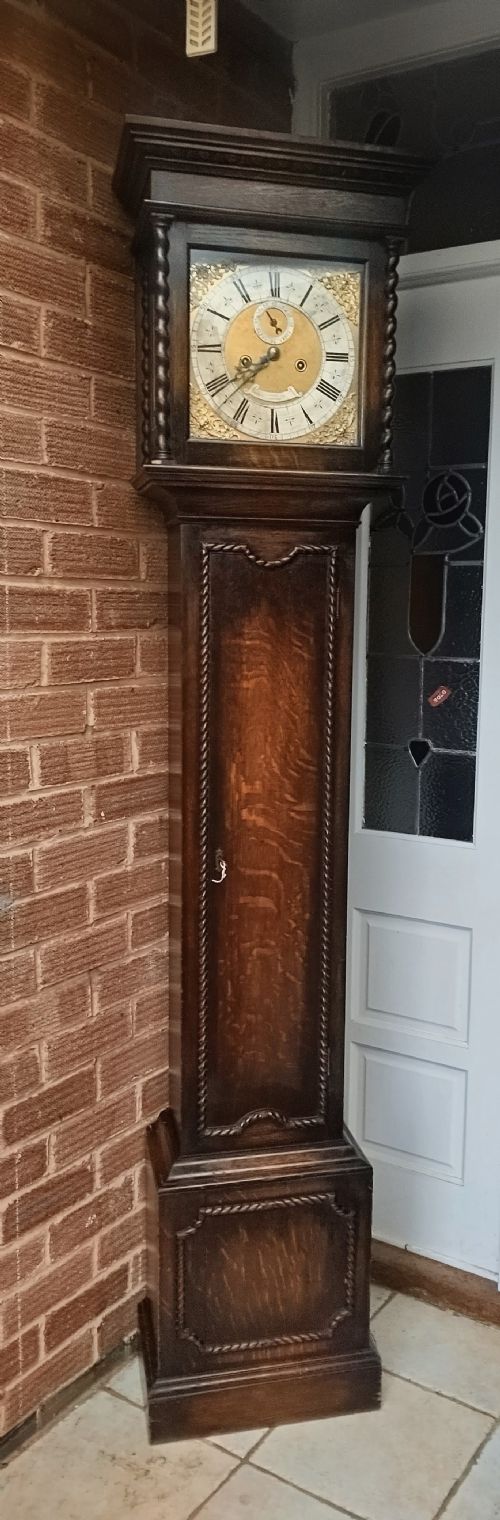
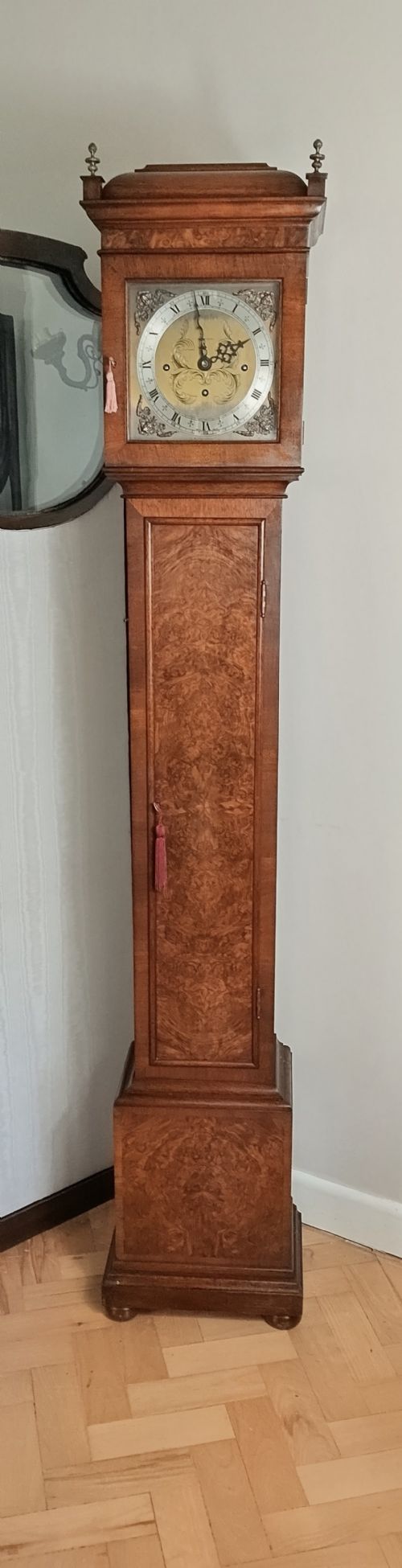


Longcase Clock Dial Movement
A longcase clock dial movement represents the intricate mechanical heart and face of a traditional tall clock, prized for both timekeeping precision and craftsmanship.
Longcase Clock Dial Movement
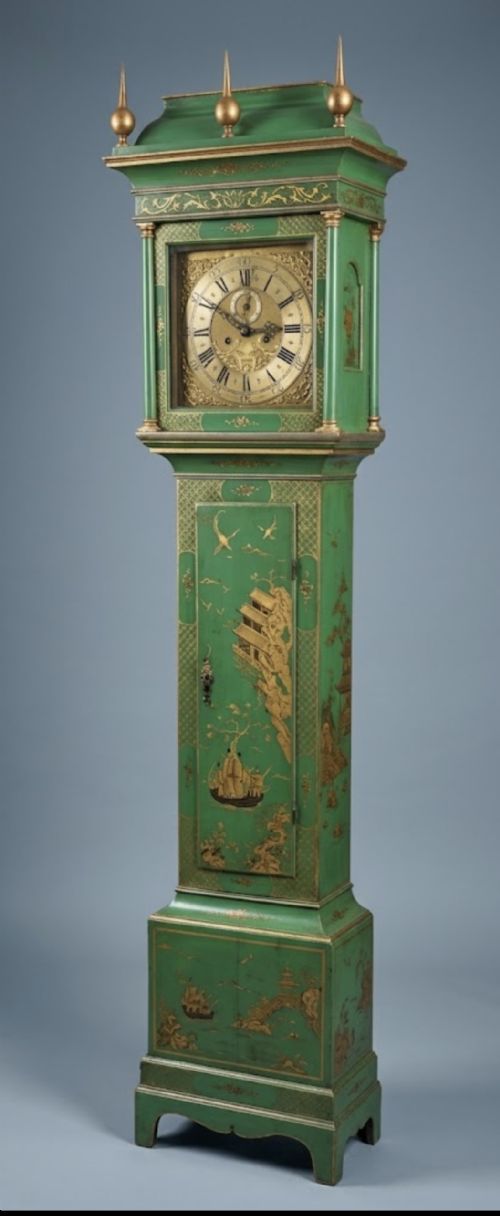
When you search for a longcase clock dial movement, you examine the functional gear trains, dials and escapements that drive tall case clocks. These components survive from the eighteenth and nineteenth centuries, often separated from their original timber cases over time.
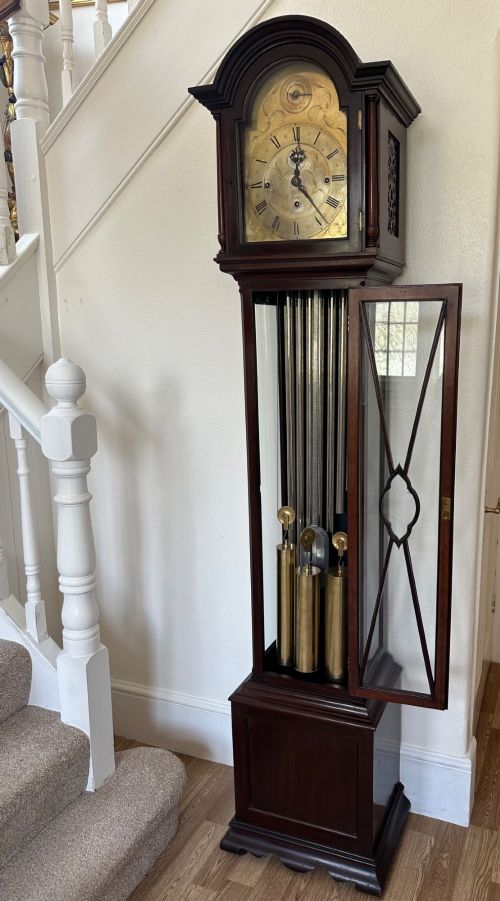
You will most frequently encounter brass and painted dials paired with eight-day or thirty-hour movements originating from the Georgian and Victorian periods. Some examples include moon phase displays, calendar work or musical tubular bells.
The objects range from early eighteenth-century brass face plates with matching gear assemblies to later nineteenth-century regulator movements. Each piece reveals the mechanical choices of regional and metropolitan clockmakers.
Materials and construction methods
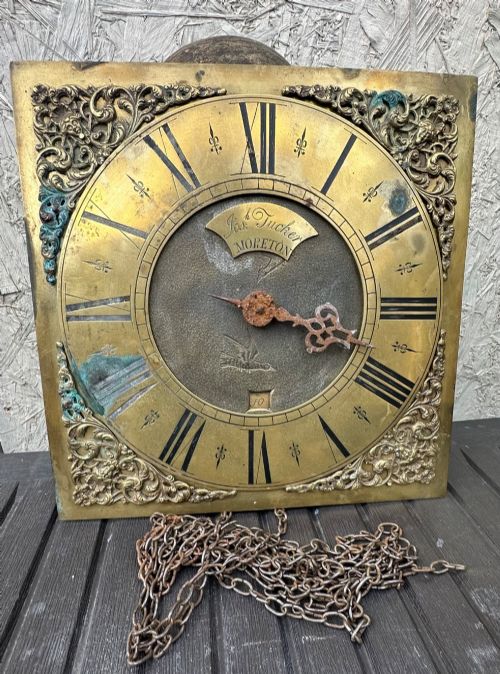
Clockmakers utilised brass for gear wheels, plates and dial faces, often engraving the brass surfaces with intricate floral patterns or maker signatures. Steel was shaped for arbors, pinions and springs, while iron formed sturdy internal framing.
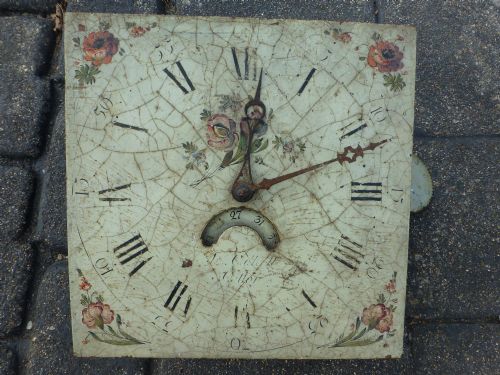
Painted iron dials emerged later, decorated with floral corners or lunar phases using oil pigments. Selected examples incorporated gold leaf highlights on the dial numerals and spandrels.
Some nineteenth-century dials hide smiling painted moons that peek out from behind the clock face to track the tides.
Distinctions in mechanical execution
Superior longcase clock dial movements display fine hand-engraving on the brass dial spandrels and meticulous tooth-cutting on the brass wheels. The presence of five pillars instead of four provides greater structural rigidity for the movement plates.
Makers who signed their dial faces often delivered higher standards of adjustment and finishing in the train and escapement work. The inclusion of specialised complications like moon rollers or musical bell chimes elevates the mechanical ambition of the piece.
John Fielder of Alton·Edward White Birmingham·James Harvey of Abergavenny
The Longcase Clock Dial Movement Glossary
- Dial
- The face of the clock that displays the hours and minutes, rendered in brass or painted iron.
- Movement
- The internal mechanical assembly of gears, springs or weights and escapements that powers the clock and drives the hands.
- Spandrel
- The ornamental corner piece on a square clock dial, frequently cast in brass and chased.
- Moon phase
- A mechanism tracking the lunar cycle, displayed on a rotating disc visible through an aperture on the dial face.
- Count wheel
- An older locking plate system used to control the striking train of a clock before rack striking became standard.
Longcase Clock Dial Movement: Frequently Asked Questions
What is a longcase clock dial movement?
It is the mechanical assembly and decorative face removed from or preserved within a tall clock case. It includes the brass or painted dial plate and the brass and steel gear train.
These components functioned together to measure time, strike the hours, and sometimes track lunar cycles through complex gear ratios.
Can I run a movement without a case?
Many movements require a secure mounting framework to support the weight-driven lines or pendulum suspension properly. Collectors often display them on specialised wall brackets or within custom cabinets.
Proper alignment of the plates and pendulum is essential for the escapement to beat evenly without a case.
How do I date a brass dial?
Early eighteenth-century dials tend to feature square brass plates with cast brass spandrels in the corners and subsidiary seconds rings. Engraved signatures directly onto the brass plate rather than painted cartouches indicate earlier periods.
As the eighteenth century progressed, arched dials and painted iron faces became more common stylistic choices among provincial makers.
What does an eight-day movement mean?
An eight-day movement requires winding approximately once a week via weights suspended on cords or chains within the trunk. This contrasts with thirty-hour movements which demand daily or more frequent attention.
Most quality brass dial movements from the Georgian period onward utilised this eight-day architecture.