



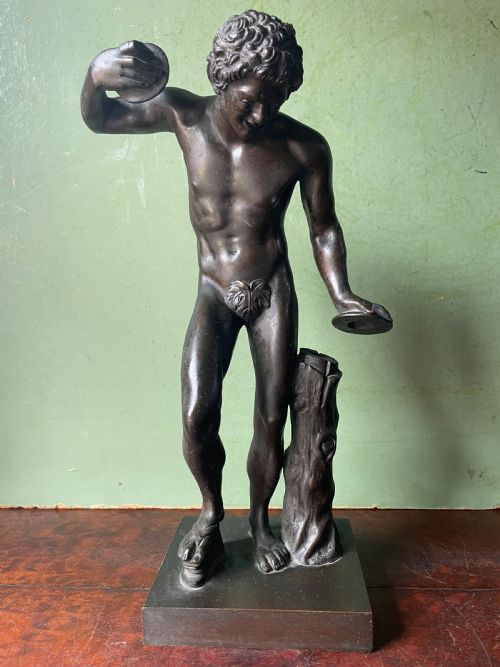

Grand Tour Bronze Faun
A grand tour bronze faun brings the tactile energy of classical antiquity into a room through nineteenth-century European craftsmanship.
Grand Tour Bronze Faun
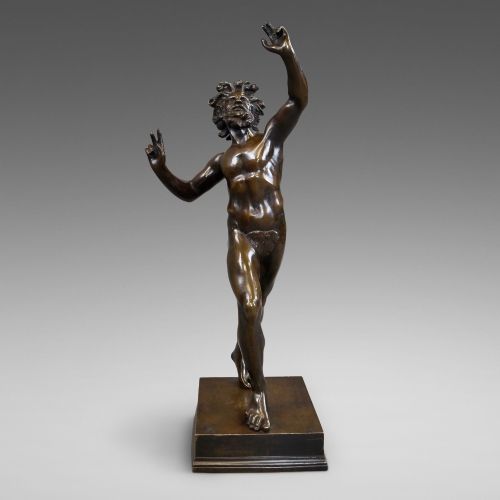
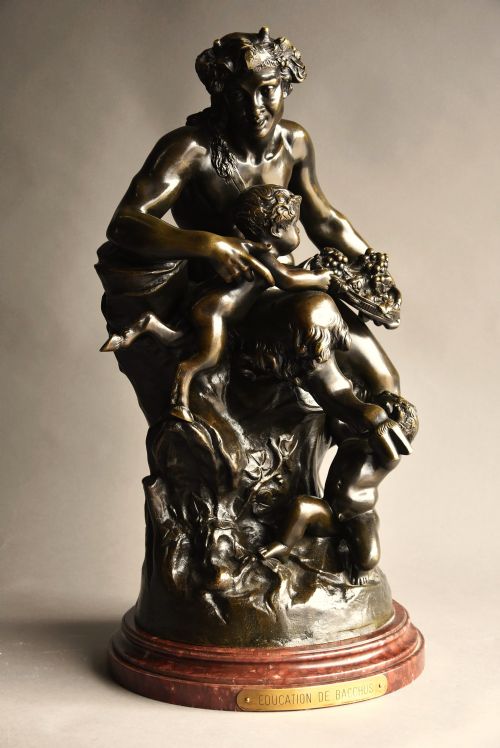
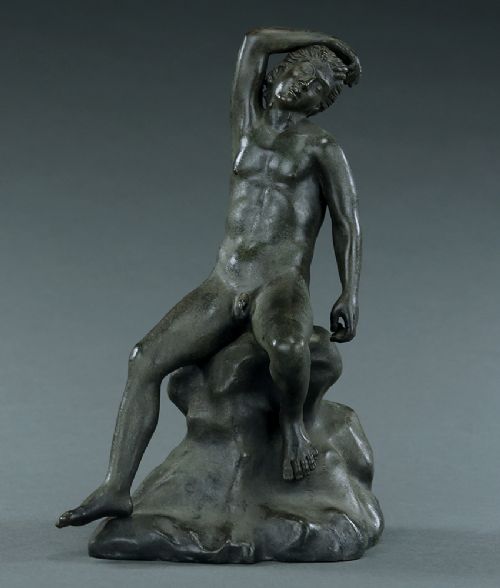
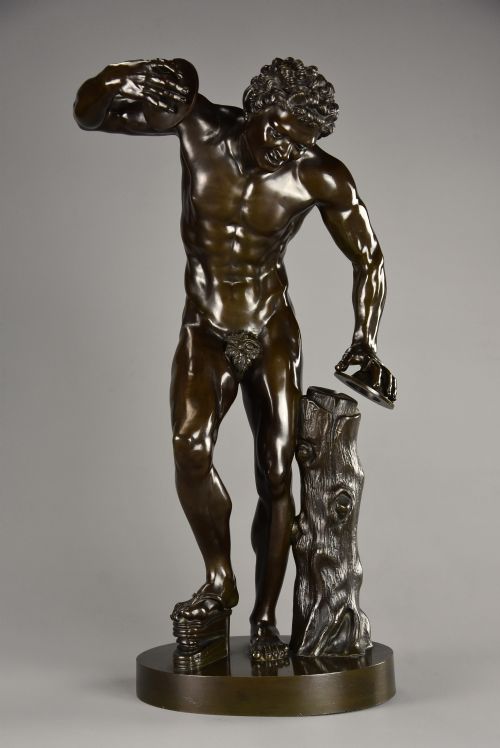
A grand tour bronze faun is a nineteenth-century souvenir sculpture modelled after celebrated classical antiquities discovered in excavations at Pompeii and Rome. These pieces depict mythological figures in dynamic poses, including dancing fauns with cymbals, drunken fauns, and groups with the infant Bacchus. The most common version met on this page is the dancing faun of Pompeii, captured in mid-movement with arms raised or playing pipes.
The objects originate primarily from Italian and French workshops catering to travellers journeying through classical sites during the nineteenth century. Makers produced these reductions and souvenir studies in various dimensions, ranging from cabinet-sized figures to larger group sculptures. Collectors encounter them mounted on stone bases or cast as free-standing bronze studies reflecting neoclassical and classical revival tastes.
How they were made
Foundries produced grand tour bronze fauns using traditional metal-casting methods, translating ancient marble prototypes into portable bronze editions. Craftsmen chased and hand-finished the cast metal surfaces to define musculature, hair, and facial expressions with high fidelity to the antique originals. Certain pieces incorporate applied patination, ranging from dark tones to green verdigris, mimicking the appearance of buried archaeological finds.
Many sculptures feature integral supports or are secured directly onto marble bases, such as Siena marble, using fitted pins or screws. Workshops also utilised alternative mediums including plaster and gilt bronze, though patinated metal remains the predominant material recorded. The integration of stone plinths provides stability while enhancing the architectural presence of the small-scale figures.
Listings feature works from the nineteenth century, including specific dates such as eighteen-fifty, eighteen-seventy, and eighteen-ninety.
What varies in quality
Surface finishing and patination depth contribute significantly to the visual success of the piece. Masterful application of varied patinas creates tonal richness across the musculature, whereas inferior treatments appear flat and uniform. Furthermore, the weight and density of the bronze casting, alongside the quality of any associated marble base, distinguish finer workshop output.
Duchemin·Augusto Rivalta·Ferdinand Barbedienne foundry
The Grand Tour Bronze Faun Glossary
- Grand Tour
- A nineteenth-century cultural journey undertaken by European elites across France and Italy to study classical art. Souvenirs purchased along the route included bronze reductions of famous statues.
- Reduction
- A scaled-down copy of a large ancient sculpture. Foundries produced these smaller versions to allow travellers to transport classical art home.
- Patina
- The surface coloration and texture developed on bronze through chemical treatment or age. Makers applied artificial patinas to emulate ancient buried metal.
- Verdigris
- A green patina resulting from copper oxidation. Nineteenth-century founders used chemical agents to give fresh bronze the appearance of antiquity.
- Chasing
- The manual refinement of a raw metal cast using chisels and punches. This technique restores fine details lost during the casting process.
Grand Tour Bronze Faun: Frequently Asked Questions
How were these bronzes displayed originally?
Travellers placed these sculptures in libraries, studies, and drawing rooms as physical evidence of their classical education and travels. Many were mounted on polished stone plinths or marble bases to elevate their status in a domestic interior.
Today, they function well on bookshelves, mantelpieces, or dedicated display tables where their patinated surfaces catch ambient light.
How do you date a grand tour bronze?
Dating relies on stylistic clues, foundry marks, and the quality of the casting and patination. Most surviving examples date from the mid to late nineteenth century, reflecting the height of the grand tour era.
Inscribed names of foundries or individual makers help narrow the production period. Examination of the metal surface and base construction also indicates the manufacturing era.
Why do some fauns have green patination?
Foundries applied chemical treatments to the bronze surface to simulate the appearance of ancient buried artefacts. This green verdigris finish mimics the natural corrosion found on bronzes recovered from archaeological excavations.
Other pieces received dark brown or black patinas depending on workshop preferences and the specific classical marble being copied.