
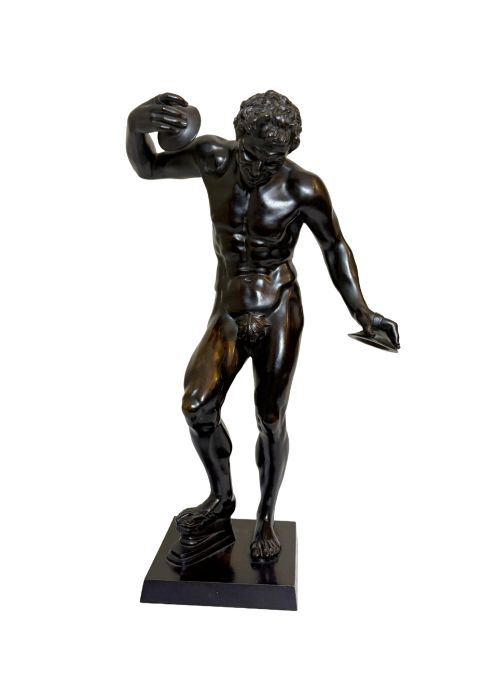
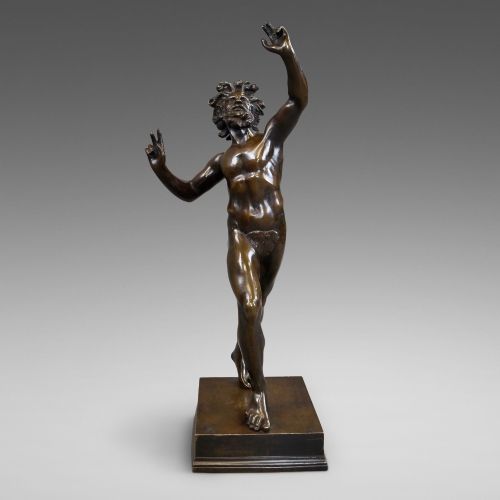
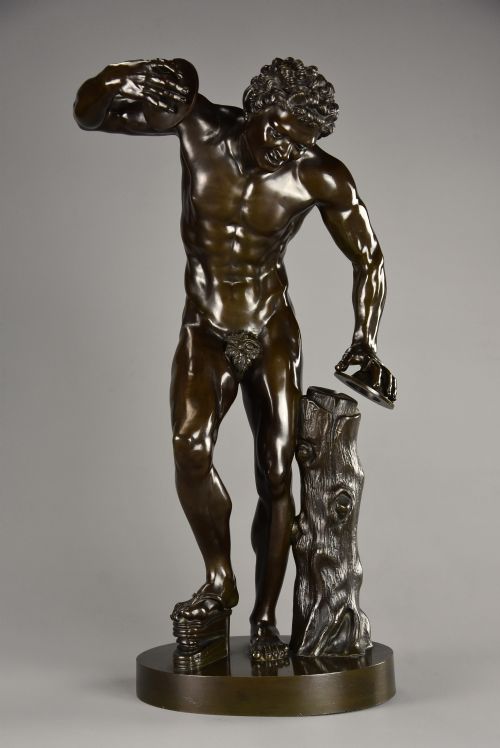


Pompeii Dancing Faun Bronze
A pompeii dancing faun bronze brings the famous excavated antiquities of Italy straight into a nineteenth-century interior with vigour and classical style.
Pompeii Dancing Faun Bronze
Most examples found on this page date from the Victorian era, spanning various decades of the nineteenth century from eighteen fifty to eighteen ninety. They are predominantly categorized as sculptures and statues, capturing the dynamic posture of the dancing figure.
Buyers will encounter these works executed primarily as bronze reductions or figures after the antique. They serve as tangible links to nineteenth-century classical revival taste and the European tradition of collecting classical art.
Distinguishing quality in the cast
The precision of the casting and the crispness of the chisel work define the upper tier of these sculptures. Finer examples capture the musculature and facial expression of the faun with remarkable clarity.
The depth and tone of the patination significantly influence the visual success of the piece. Superior patinas show subtle gradations rather than a flat, uniform darkness.
Materials recorded across the inventory include bronze, patinated bronze, marble, metal, and plaster.
Duchemin
The Pompeii Dancing Faun Bronze Glossary
- Grand Tour
- A traditional trip through Europe undertaken by upper-class Europeans in the eighteenth and nineteenth centuries. It resulted in the acquisition of art and antiquities as souvenirs.
- Neoclassical
- A Western cultural movement drawing inspiration from the classical art and culture of ancient Greece or Rome. It heavily influenced nineteenth-century sculpture design.
- Patinated Bronze
- Bronze that has been treated with chemical solutions to produce a specific surface colour and finish. This technique protects the metal and enhances aesthetic depth.
- Reduction
- A scaled-down copy of a larger, well-known sculpture. These were popular as portable souvenirs during the nineteenth century.
Pompeii Dancing Faun Bronze: Frequently Asked Questions
Where were these bronzes made?
Most of these souvenir sculptures were produced in Italian foundries, particularly in Naples and surrounding artistic centres, to cater to foreign travellers.
Local artisans created reductions of the famous museum pieces for the export market.
How do I style a bronze figure?
These sculptures suit traditional studies, libraries, or mantelpieces where classical objects are displayed.
Pronounced patination and marble bases allow them to sit comfortably alongside books and period furniture.
Are all these pieces solid bronze?
While the primary material is bronze with various patinas, some listings record alternative mediums such as metal or plaster.
Buyers should examine specific material notes for each individual sculpture.