
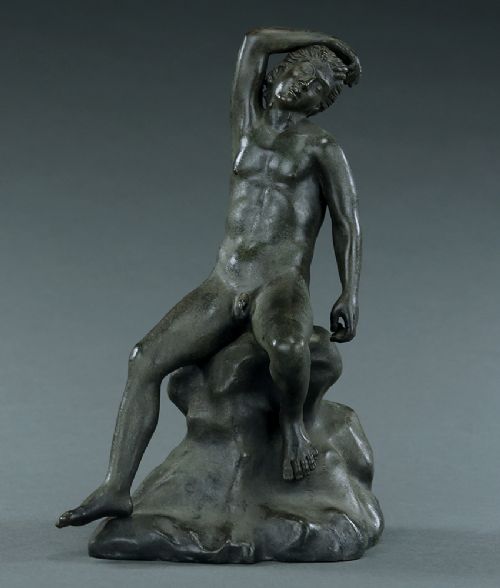


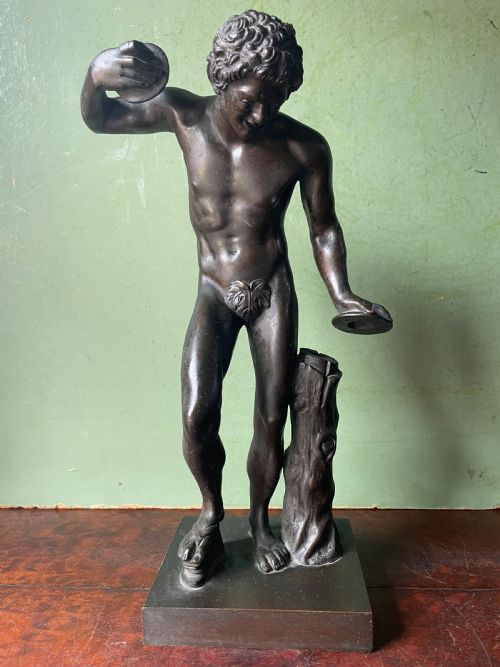
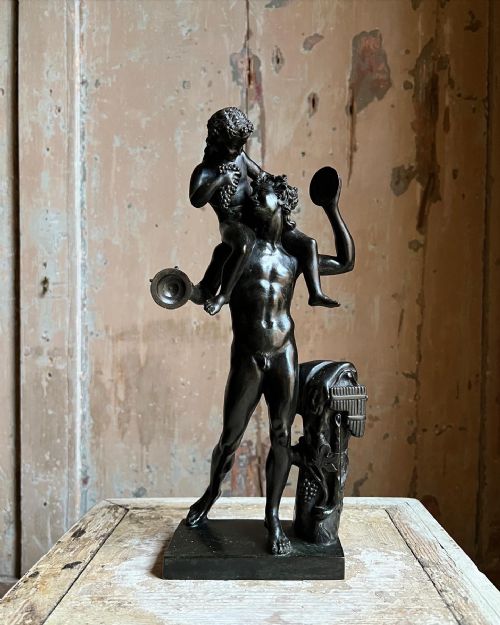

Bronze Satyr Figure
A bronze satyr figure brings classical mythology into the room, cast in metal and shaped by the antique revival tastes of the nineteenth century.
Bronze Satyr Figure
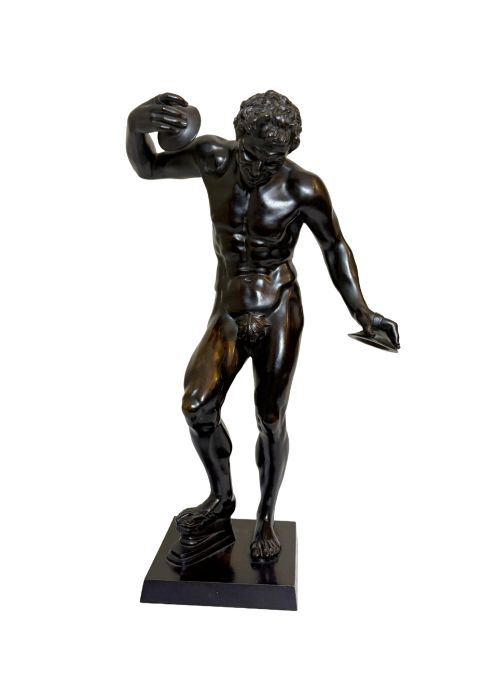
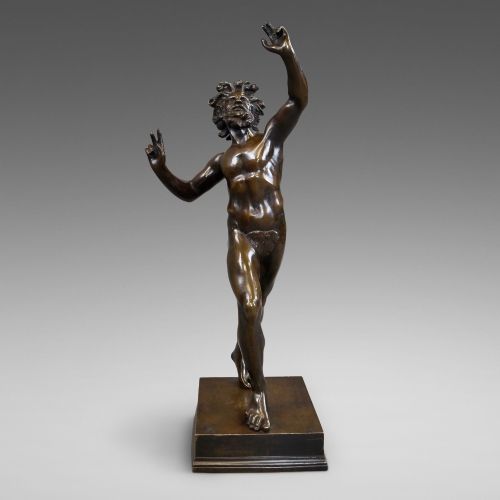
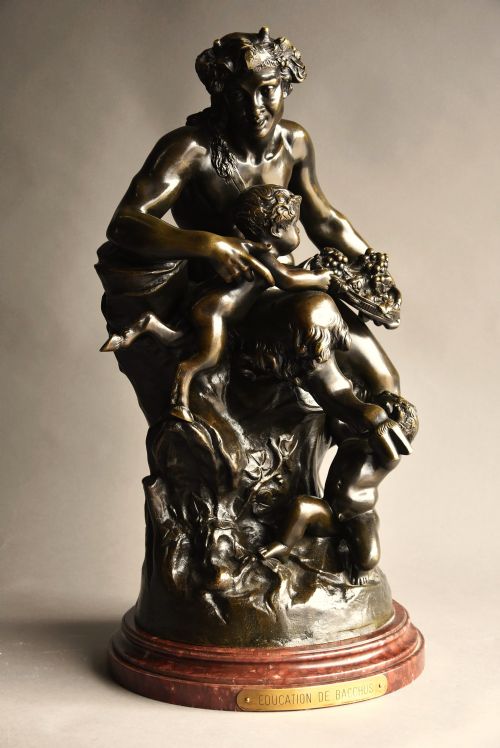
A bronze satyr figure represents mythological attendants of Bacchus and Pan, frequently cast as dancing fauns, figures with goats, or groups with infants. These sculptures draw heavily from classical antiquity and excavations such as Pompeii, taking form primarily as nineteenth century Grand Tour souvenirs and cabinet bronzes.
The versions most commonly met on this page originate from France and Italy during the Victorian era and the broader nineteenth century. They range from small tabletop reductions of museum pieces to larger sculptural groups involving multiple figures.
How they were made
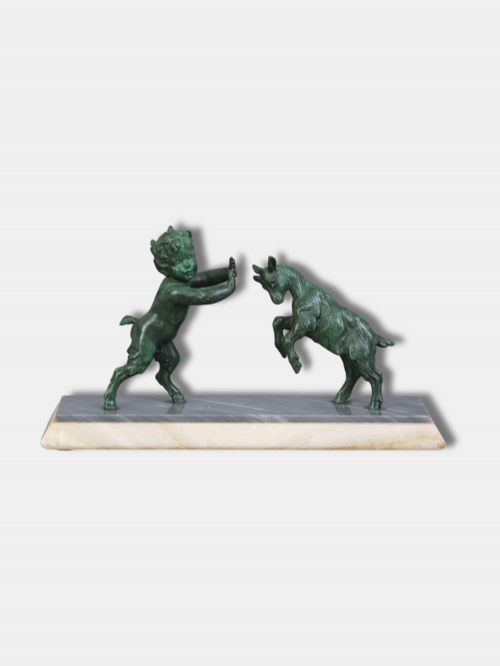
Foundry workers utilised bronze and patinated bronze, sometimes pairing the metal castings with marble bases or applying a verdigris finish to emulate ancient excavation finds. Plaster also appears as a casting and modelling medium for certain sculptural studies.
Makers produced these pieces through traditional casting methods, often reducing larger classical sculptures down to cabinet size for travellers and collectors. Surface treatments like patination defined the final colour and tone of the metal.
Listings span the nineteenth century into the early twentieth century, featuring materials such as bronze, marble, and plaster within Neoclassical and Grand Tour styles.
What varies in quality
The fidelity of the cast separates standard tourist souvenirs from superior works produced by skilled foundries or named artists. Crispness in anatomical detail, hair texture, and musical instruments indicates better workshop standards.
The depth and nuance of the bronze patina contribute significantly to the visual success of the piece. Base materials, such as fitted marble plinths, also mark the distinction between simpler cabinet objects and more ambitious sculptural groups.
Claude Michel Clodian·Emile Carlier·Augusto Rivalta
The Bronze Satyr Figure Glossary
- Grand Tour
- A traditional trip through Europe undertaken by upper class men in the eighteenth and nineteenth centuries. Travellers frequently collected bronze souvenirs of classical statues to bring home.
- Patina
- A thin layer that naturally or artificially forms on the surface of bronze. It changes the colour and protects the metal underneath.
- Reduction
- A small scale copy of a larger sculpture. Foundries made these to fit domestic interiors.
- Verdigris
- A green coating formed on copper, brass, or bronze. Makers applied it intentionally to replicate the appearance of buried antiquities.
Bronze Satyr Figure: Frequently Asked Questions
What is a Grand Tour bronze?
A Grand Tour bronze is a small souvenir sculpture bought by travellers visiting classical sites in Italy during the nineteenth century. These pieces replicated famous antiquities found in museums.
Foundries in France and Italy specialised in producing these reductions for the collector market.
How do I identify a satyr from a faun?
In classical mythology, satyrs and fauns largely overlap in appearance and function as companions to Bacchus. Nineteenth century titles often use the terms interchangeably for figures with horns, pointed ears, or animal tails.
Sculptures usually depict them dancing, playing pipes, or holding cymbals regardless of the specific term used in the title.
Where should I display a bronze figure?
These sculptures suit mantels, side tables, or dedicated display cabinets where their patinated surfaces can catch the light. Their nineteenth century origins pair well with period interiors and classic furniture.
Stable surfaces protect the heavier bronze and marble components from accidental knocks.
Why do some bronzes have a green finish?
A green verdigris finish mimics the appearance of ancient bronzes recovered from archaeological excavations. Nineteenth century makers deliberately applied these chemical patinas to satisfy collector tastes for antiquity.
Other pieces received dark brown or black patinas depending on the foundry style.