GIFTSNEW
188 ITEMS ADDED TODAY
Sort Order
Items Per Page
Browse Categories
Sort order
Relevant Links
Items per page
ID #SA1046226
FOR SALE
£5,500
Email Phone
Save
19th Century Grand Tour Bronze of the Dancing Faun of Pompei
For sale by Isherwood Fine Art
for sale €6,435     $6,985
£5,500
Isherwood Fine Art

Isherwood Fine Art

Sellingantiques Verified Since Oct 2023
Browse dealers 43 items
  • About Us
    16th to 19th century old master, british and european paintings and sculpture, specialising in period portraiture. Member BADA, LAPADA.
  • Trade Associations
    Isherwood Fine Art is a registered member of LAPADA  BADA 
Id #SA1046226
PDF SHARE
SAVE

19th Century Grand Tour Bronze of the Dancing Faun of Pompei

19th century
Description

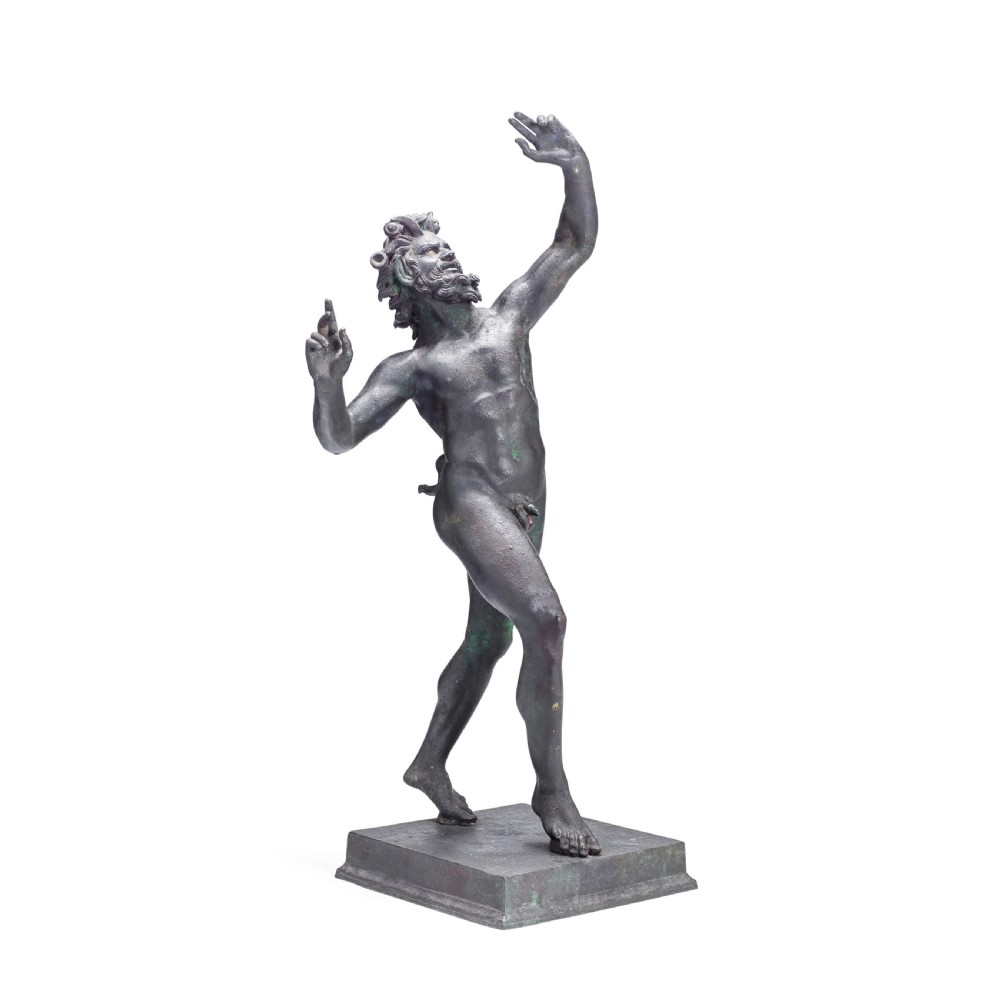
A 19th century 'Grand Tour' bronze figure of the Dancing Faun, standing on a bronze square plinth. The faun balances on his toes and pivots, his horned head raised, his hair wreathed with acorns. He is smiling lasciviously, flipping his tail, and snapping his fingers.

Height: 80cm

Plinth width 26 x length 28cm

The original dancing faun was discovered in October 1830, installed in the middle of an impluvium, the pool in the atrium, in the ruins of a grand Pompeiian house, destroyed by the eruption of Mount Vesuvius near Naples in 79CE. The house was named the House of the Faun after the statue, which, much like the great Alexander Mosaic from the same house, immediately became famous. Thought to be based on an earlier Hellenistic work, an English traveller in 1838 declared it 'the Venus de Medicis of Sylvans'.

In 1860, under Victor Emmanuel II, the antiquities from Pompeii were put on view for the general public in the National Archaeological Museum at Naples. Permits for taking molds from antiquities in order to copy them were soon granted to various individuals and institutions. The reproductions that these enterprises offered were often reduced in scale, making them easy for grand tourists to take home to northern Europe, Britain, and America.

Physical Dimensions
Height
80cm (31.50")
Width
26cm (10.24")
Depth
28cm (11.02")
Declaration

Isherwood Fine Art has dated this Grand Tour Bronze Faun to the 19th Century.

Reference Numbers
Sellingantiques Reference
SA1046226
Dealers Notes

Isherwood fine art

Description
A 19th century 'Grand Tour' bronze figure of the Dancing Faun, standing on a bronze square plinth. The faun balances on his toes and pivots, his horned head raised, his hair wreathed with acorns. He is smiling lasciviously, flipping his tail, and snapping his fingers.
fig 1. A nineteenth-century patinated bronze sculpture depicting the Dancing Faun of Pompeii with raised arms standing on a square base.
fig 1. 19th Century Grand Tour Bronze of the Dancing Faun of Pompei

Height: 80cm

Plinth width 26 x length 28cm

The original dancing faun was discovered in October 1830, installed in the middle of an impluvium, the pool in the atrium, in the ruins of a grand Pompeiian house, destroyed by the eruption of Mount Vesuvius near Naples in 79CE.

“
The house was named the House of the Faun after the statue, which, much like the great Alexander Mosaic from the same house, immediately became famous.
Isherwood Fine Art

Thought to be based on an earlier Hellenistic work, an English traveller in 1838 declared it 'the Venus de Medicis of Sylvans'.

fig 2. A nineteenth-century patinated bronze sculpture depicting the Dancing Faun of Pompeii with raised arms standing on a square base.
fig 2. 19th Century Grand Tour Bronze of the Dancing Faun of Pompei

In 1860, under Victor Emmanuel II, the antiquities from Pompeii were put on view for the general public in the National Archaeological Museum at Naples. Permits for taking molds from antiquities in order to copy them were soon granted to various individuals and institutions. The reproductions that these enterprises offered were often reduced in scale, making them easy for grand tourists to take home to northern Europe, Britain, and America.

Height
80cm (31.50")
Width
26cm (10.24")
Depth
28cm (11.02")
Date of Manufacture

Isherwood Fine Art has dated this Grand Tour Bronze Faun to the 19th Century.

Reference Numbers
Sellingantiques Ref
SA1046226
Isherwood Fine Art
Isherwood Fine Art
Sellingantiques verified Since Oct 2023

16th to 19th century old master, british and european paintings and sculpture, specialising in period portraiture. Member BADA, LAPADA.

Dealer Profile

You can view the stock and full dealer information on the Isherwood Fine Art Profile Page

Trade Associations

Isherwood Fine Art is a registered member of LAPADA  BADA 
PDF SHARE
SAVE
A nineteenth-century patinated bronze sculpture depicting the Dancing Faun of Pompeii with raised arms standing on a square base.
1 / 3
Archive I A nineteenth-century patinated bronze sculpture depicting the Dancing Faun of Pompeii with raised arms standing on a square base.

19th Century Grand Tour Bronze of the Dancing Faun of Pompei
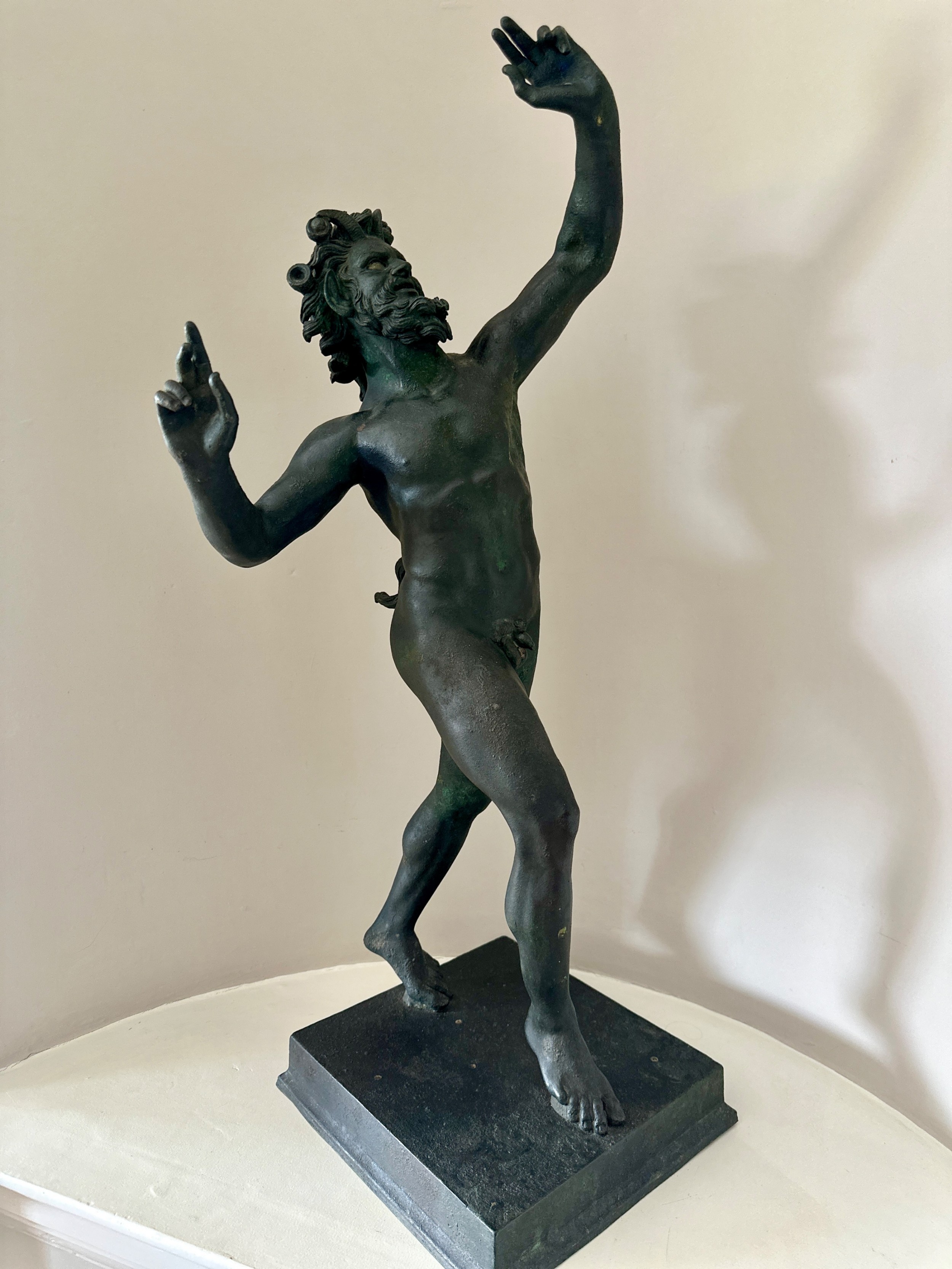
Archive II A nineteenth-century patinated bronze sculpture depicting the Dancing Faun of Pompeii with raised arms standing on a square base. View II
Archive III A nineteenth-century patinated bronze sculpture depicting the Dancing Faun of Pompeii with raised arms standing on a square base. View III
FURTHER BROWSING

Visitors also looked at these ⇣

Enlarged Archival View
Telephone 07984 699799
Location
Bath
Somerset
United Kingdom

By appointment only.

Viewing in London by appointment.
Verified Since Oct 2023
Items For Sale 43
Items Sold 32
Isherwood Fine Art
Isherwood Fine Art
Verified Since Oct 2023
View Dealer Info
Location: Bath, Somerset, United Kingdom, , By appointment only., , Viewing in London by appointment.
Verified
Oct 2023
For Sale
43
Sold
32
A nineteenth-century patinated bronze sculpture depicting the Dancing Faun of Pompeii with raised arms standing on a square base.
19th century Grand Tour bronze of the Dancing Faun of Pompei
Ref: SA1046226
A nineteenth-century patinated bronze sculpture depicting the Dancing Faun of Pompeii with raised arms standing on a square base.
Detail View 1
Detail View 2
Archival Detail
Every single antique dealer on our platform is individually approved by our internal team. We verify their professional trade history, ethical standards, and photographic quality to ensure a secure, high-standard buying environment. Upon joining, every dealer agrees to a strict 9-point code of conduct. While issues can occasionally arise, our dealers typically resolve them swiftly and directly with the buyer. In fact, since our founding in 2002, Sellingantiques has only had to step in to help resolve an issue on roughly five occasions—a true testament to the quality of our dealers and their dedication to your happiness.
Our dealers are highly experienced in packing and shipping fragile, high-value antiques. Because you are in direct contact with the dealer, you will be able to easily go through all available shipping and insurance options together to ensure your item arrives safely.
Antiques are the ultimate green purchase. By choosing historical pieces over newly manufactured goods, you completely eliminate the carbon footprint of modern mass production while preserving exceptional, timeless craftsmanship.
Written by Sellingantiques from the dealer’s photographs and listing
  • ObjectSculptures
  • Period19th century
  • StyleGrand Tour / Neoclassical
  • MaterialPatinated Bronze
  • ColourDark Verdigris
  • MotifsRaised arms posture, Horned satyr head, Integral square base, Naturalistic musculature
  • SizeH 80 cm (31 in) x W 26 cm (10 in) x D 28 cm (11 in)

This nineteenth-century Grand Tour sculpture takes the form of the Dancing Faun of Pompeii, rendered in patinated bronze with a dark verdigris colour and subtle green verdigris highlights across the surface. The piece depicts a horned satyr standing on an integral square base, balancing on his toes with one hand raised and fingers snapped while his head is thrown back and crowned with acorn-wreathed hair. Highly defined musculature, a smiling expression, and a playful tail complete the classical posture. The sculpture measures 80 cm high, 26 cm wide, and 28 cm deep. Designed in the neoclassical style, this decorative figure suits placement on a mantelpiece within a gentleman's library or study. The compact proportions allow easy display on any flat wooden shelf or tabletop surface, adding historical character to a period interior.

Grand Tour bronzes were created during the 18th and 19th centuries as scale replicas of ancient Greek and Roman masterpieces. Aristocratic European travellers acquired these cast metal souvenirs while touring cultural sites across Italy to display as symbols of education and taste upon returning home.

These sculptures were typically cast in bronze alloy using the lost-wax (cire perdue) process or sand casting techniques. After casting, metalworkers hand-chased the surface details and applied chemical patinas to produce dark, verdigris, or polished brown finishes.

Authentic period examples display high-quality hand-chasing, crisp anatomical details, and natural surface oxidisation consistent with age. Look for evidence of traditional hollow casting, heavy metal weight, and subtle wear patterns around raised highlights rather than uniform modern machine finishes.

Position the figure on a mantelpiece, marble sideboard, or open bookshelf to elevate its silhouette against a neutral or rich dark backdrop. Surrounding the piece with leather-bound books, stone accents, or clean modern lines creates a refined contrast between classical forms and contemporary decor.

Dust the surface regularly using a dry, soft-bristled brush or lint-free cloth. To protect the original patina, avoid liquid cleaners or abrasive polishes, and periodically apply a thin layer of clear microcrystalline wax to guard against environmental moisture and oxidisation.
items
Add keywords to the filter
Price
£100
£250000
Era
Period
Style
Material
Origin
Stock Location
Recently Added
Online Payments
Categories