




Bronze Dancing Faun Figure
A bronze dancing faun figure brings the spirited energy of classical antiquity directly to a desk or mantelpiece.
Bronze Dancing Faun Figure
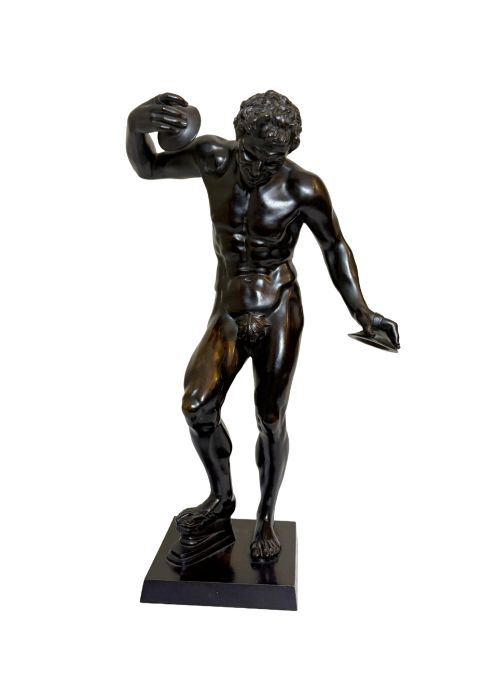
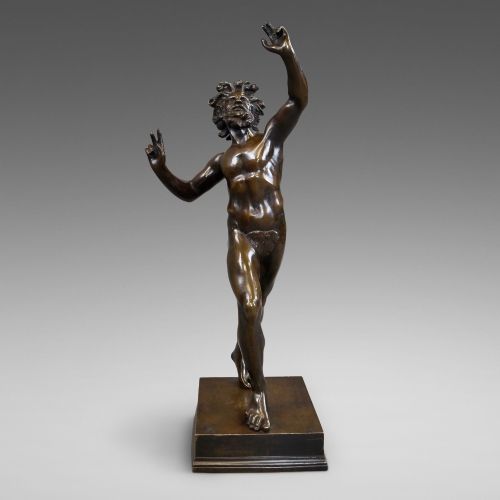
A bronze dancing faun figure captures the mythological subject derived from ancient discoveries in Pompeii, most notably the famous statue housed in the Naples museum. These pieces take the form of small-scale sculptures produced primarily as Grand Tour souvenirs during the nineteenth century. Buyers seek them for their classical lines and the lively, dynamic posture of the dancing figure.
The selections on this page span the Victorian era, specifically clustered around the later decades of the nineteenth century. Alongside solid cast metal works, the records show plaster examples and variations depicting related figures such as Pan and Bacchus. Most originate from Italian and French workshops catering to travellers collecting antiquities.
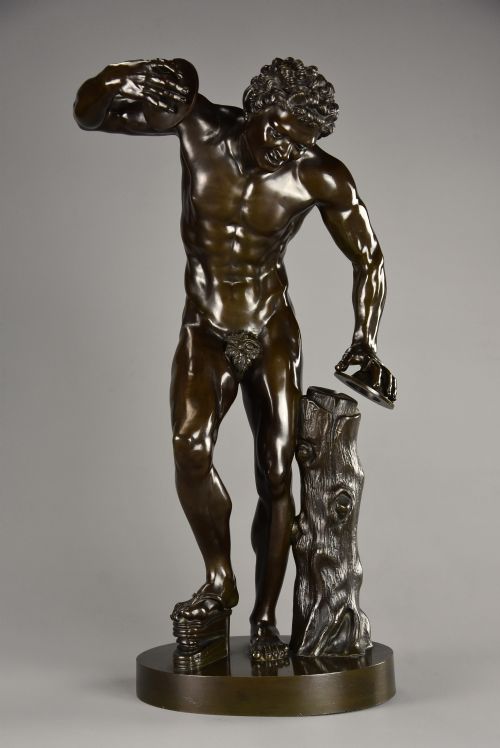
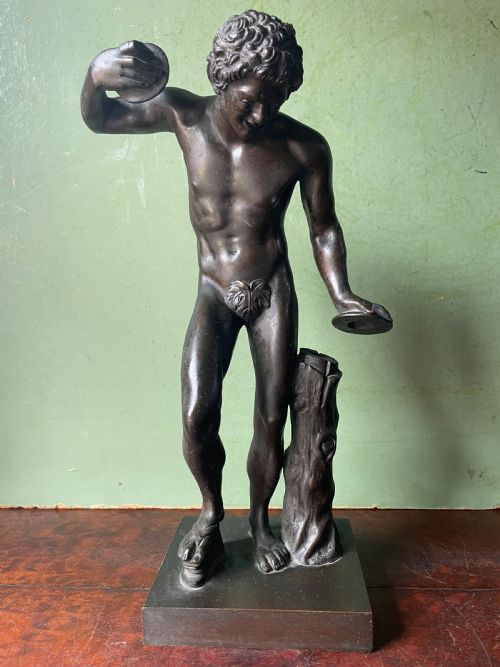
The forms appear as reductions of the ancient sculpture, frequently shown with cymbals or clappers in hand. They serve primarily as decorative mantel or cabinet pieces that reflect nineteenth-century classical revival tastes. Collectors encounter both patinated bronze interpretations and stone or marble elements within the group.
How they were made
The metal sculptures rely on bronze casting methods to achieve detailed reductions of the ancient original. Founders applied various surface treatments, yielding dark patinated bronze finishes or greenish patination to emulate excavated antiquities. Plaster also served as a medium for producing sculptural souvenirs during the same period.
Several versions capture the faun clashing cymbals, immortalising an energetic dance frozen in metal for over a century.
What varies in quality
The crispness of the casting separates standard souvenir reductions from superior works. Finer examples retain sharp definition in the hair, fingers, and the facial expression of the faun, whereas weaker pieces appear soft and indistinct due to worn moulds.
The quality of the patina and the finish of the metal surface dictate the visual depth of the sculpture. Skilled founders achieved nuanced tonal variations that enhance the modelling, while lesser pieces display flat or uneven coloration.
The integration of the figure with its base, alongside the choice of materials like supportive marble plinths, influences the overall presence of the object. Signed works by documented makers often demonstrate a higher standard of overall execution.
Duchemin·Augusto Rivalta
The Bronze Dancing Faun Figure Glossary
- Grand Tour
- A traditional journey through Europe undertaken by upper-class travellers to study classical art and antiquities. Souvenirs purchased during these trips form the core of nineteenth-century bronzes available today.
- Patina
- A thin layer that develops on the surface of bronze through oxidation or chemical treatment. Makers applied deliberate patination to give newly cast figures the appearance of aged antiquities.
- Reduction
- A scale copy made smaller than the original ancient sculpture. Nineteenth-century founders produced these reductions so travellers could transport classical statues home easily.
- Neoclassical
- An artistic style inspired by the classical art and culture of ancient Greece and Rome. This aesthetic dominated the design of Grand Tour souvenirs and sculpture during the Victorian period.
Bronze Dancing Faun Figure: Frequently Asked Questions
How do I date a nineteenth century bronze faun?
Dating relies on the style of the casting, the nature of the patination, and any associated foundry marks or signatures. Most pieces on record date from the middle to the late nineteenth century.
Examining the underside, the type of marble base, and the crispness of the metalwork helps distinguish between early Grand Tour souvenirs and later decorative objects.
Where were these souvenir sculptures made?
The majority of these figures originated in Italian workshops, particularly in Naples and Rome, as well as in French foundries. Artisans created them specifically for foreign visitors touring archaeological sites.
Local workshops utilised traditional casting techniques to replicate famous museum pieces for the export market.
How do I care for an antique bronze faun?
Bronze requires minimal maintenance beyond occasional dusting with a soft, dry cloth to prevent grime accumulation. Avoid using chemical cleaners or abrasive polishes that can strip the historic patina.
Keeping the sculpture in a stable environment away from excessive moisture protects both the metal surface and any attached marble components.