

Neoclassical Bronze Ornament
When you search for a neoclassical bronze ornament, you are looking at classical antiquity revived through nineteenth-century European craftsmanship.
Neoclassical Bronze Ornament
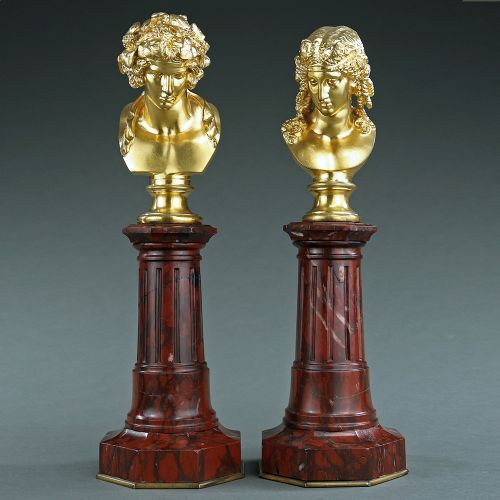
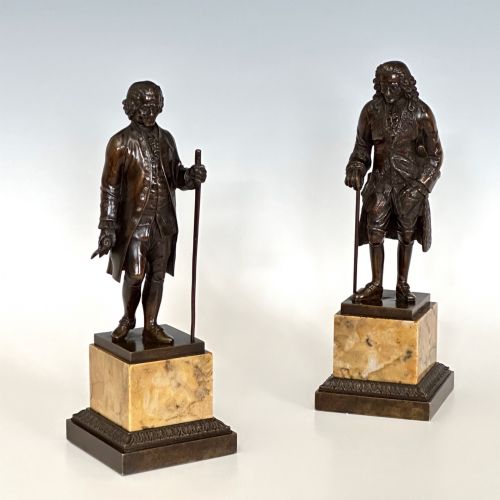
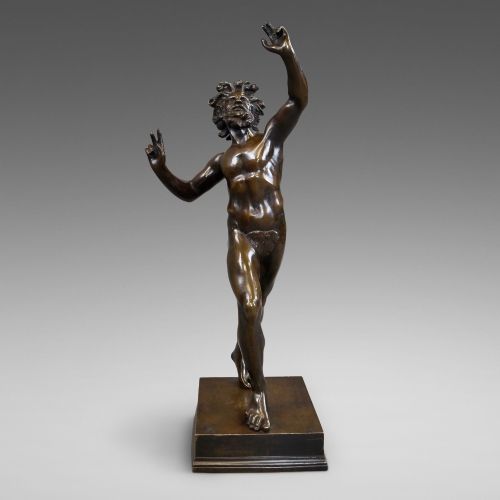
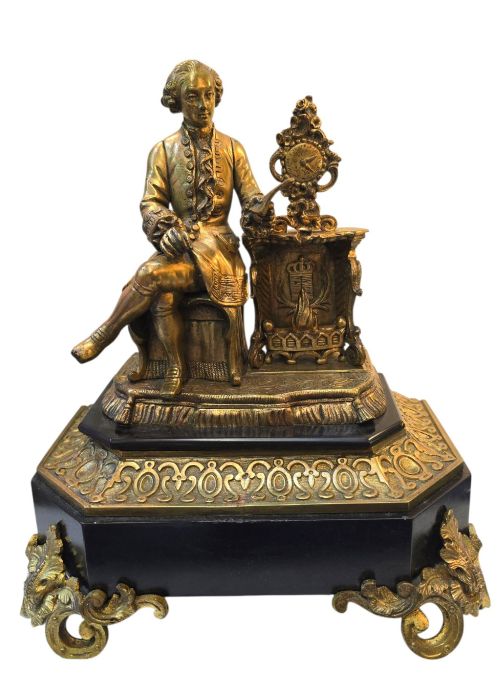
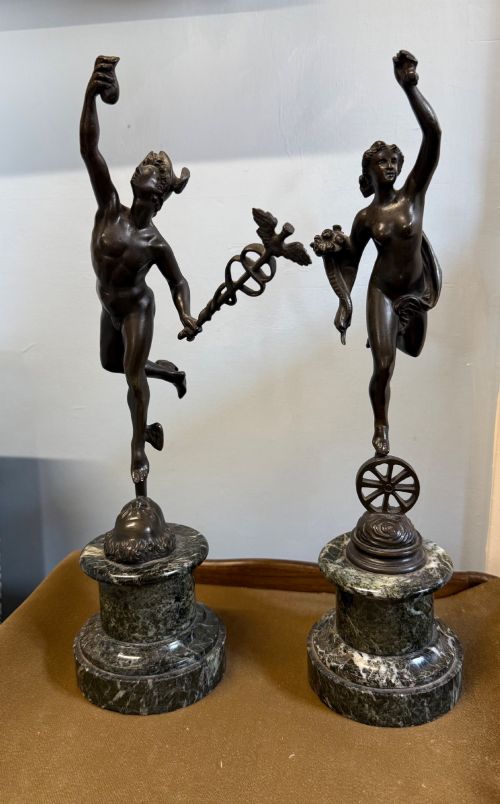
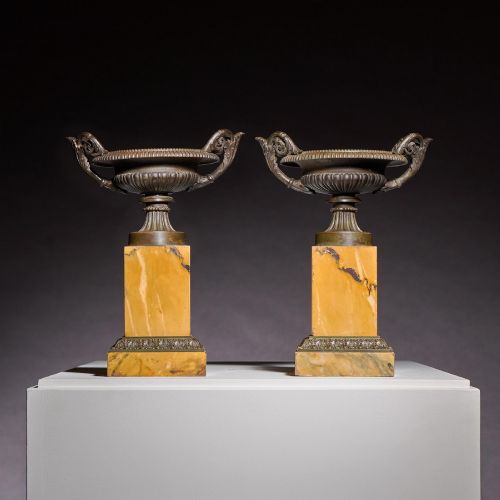
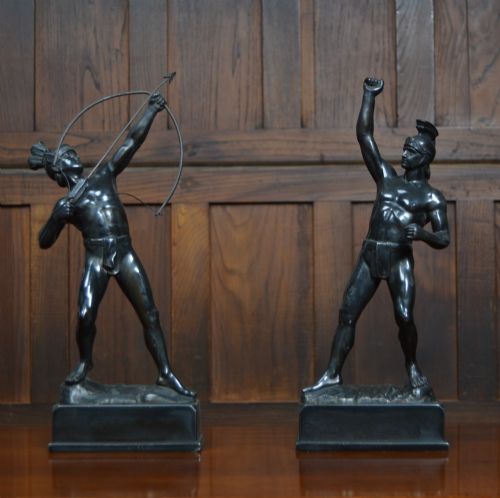
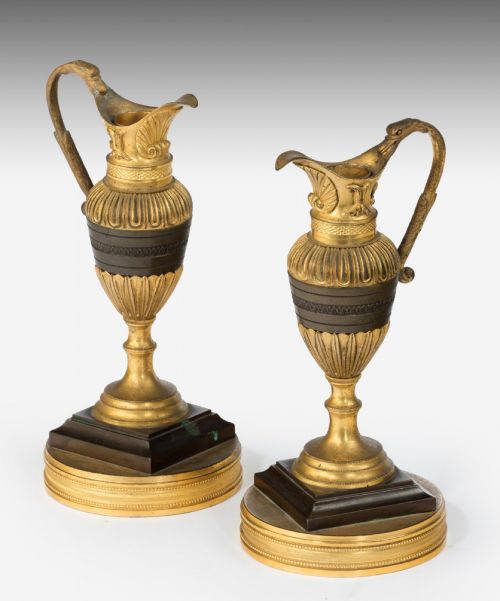
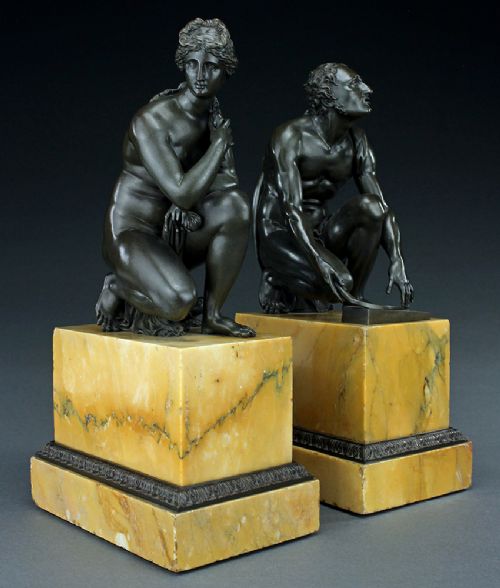
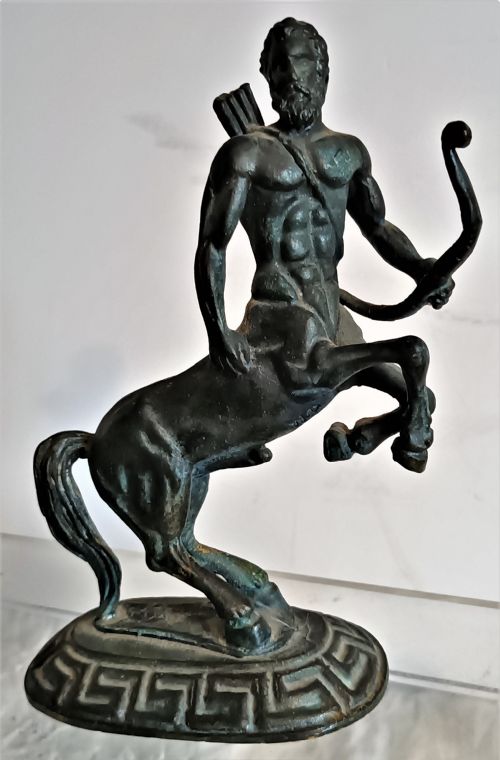
A neoclassical bronze ornament brings classical sculpture, architecture and mythology into domestic interiors through figures, busts, architectural models and decorative vessels.
The objects on this page span the nineteenth century and the early twentieth century, taking the form of Grand Tour souvenirs, French Empire works and Italian models.
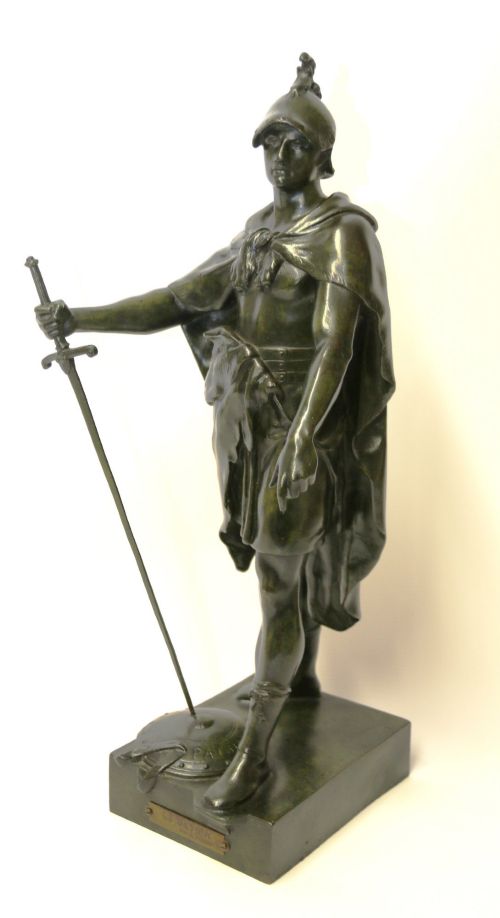
Buyers encounter subjects ranging from Roman soldiers and mythological figures to architectural models of temples and obelisks, frequently mounted on marble bases.
How they were made
Foundries cast these pieces in bronze, patinated bronze, gilt bronze, ormolu, and spelter, often employing meticulous chasing and finishing by hand.
Sculptures and decorative objects are commonly paired with natural stones such as Siena marble, white marble, and red marble to form architectural plinths and bases.
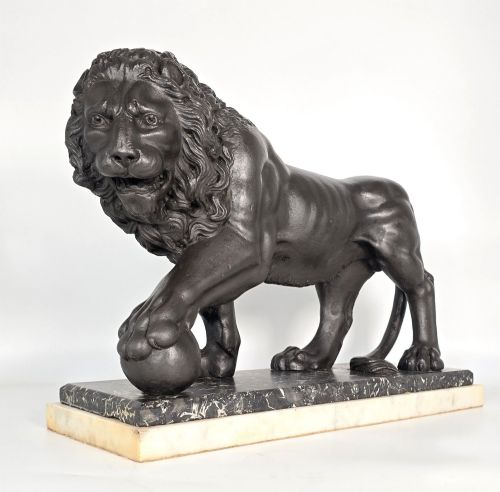
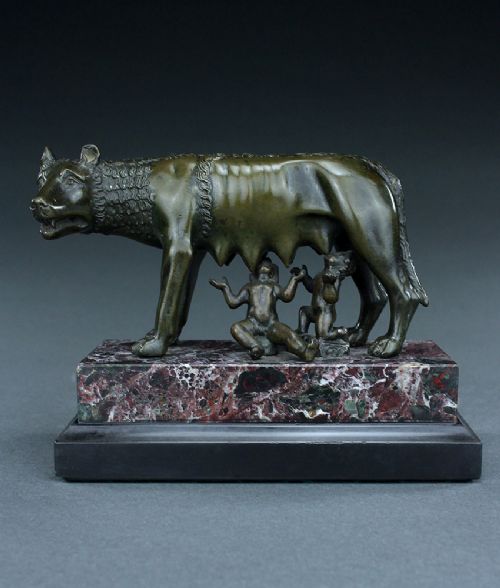
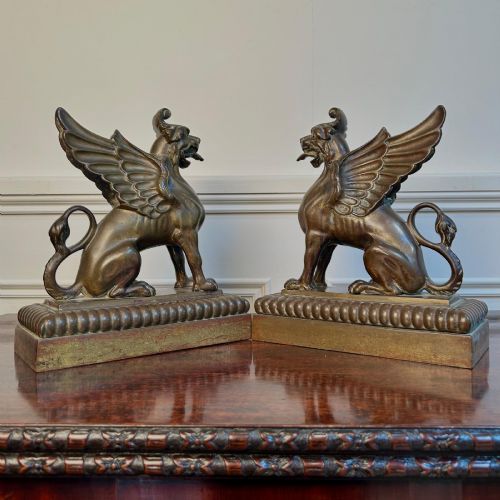
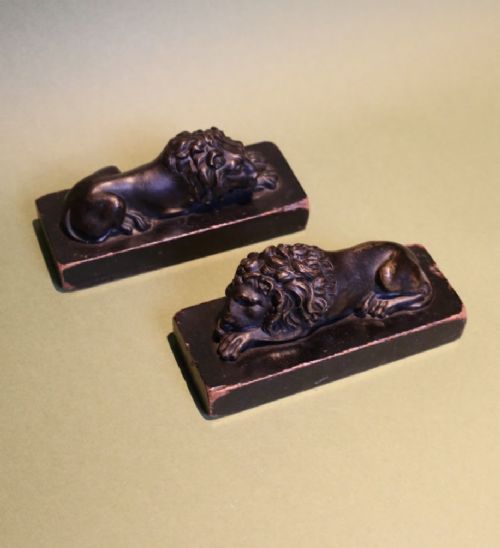
Several lions make an appearance, ranging from Canova's resting beasts to the Capitoline Wolf and the Venetian Winged Lion.
What varies in quality
The refinement of the casting and the crispness of the hand-chased surface details separate standard production from superior examples.
The quality of the mountings, particularly the selection and polish of associated marble bases and ormolu mounts, dictates the overall presence of the piece.
Pierre Augustin Caron de Beaumarchais·Émile Louis Picault·Leonhard Posch
The Neoclassical Bronze Ornament Glossary
- Grand Tour
- A nineteenth-century tradition where wealthy travellers collected classical souvenirs in Italy. These bronze models and architectural replicas commemorated their travels.
- Ormolu
- Gilt bronze produced by applying a finely ground mercury-gold amalgam to cast bronze. This technique creates a rich golden surface finish on decorative mounts.
- Cassolette
- A dual-purpose decorative vessel functioning as a lidded vase or an incense burner. They are frequently turned from marble with cast bronze mounts.
- Patinated bronze
- Metal treated with chemical solutions to produce a controlled surface colour or dark tone. This finish accentuates the anatomical modelling of figures.
Neoclassical Bronze Ornament: Frequently Asked Questions
What is a Grand Tour bronze?
A Grand Tour bronze is a nineteenth-century miniature replica of a famous classical sculpture or ruin purchased by travellers in Italy.
These pieces served as academic souvenirs and decorative ornaments for European and British homes.
How do you display marble and bronze ornaments?
These ornaments look best placed on sturdy wooden surfaces such as sideboards, mantelpieces or dedicated pedestals where their weight is supported.
Because many include heavy marble plinths, ensure the supporting furniture is stable and positioned away from direct heat.
What is the difference between bronze and spelter?
Bronze is a durable alloy of copper and tin capable of holding sharp chased detail and deep patination. Spelter is a softer, zinc-based substitute utilised for Victorian decorative items.
Spelter ornaments are lighter and often feature a bronzed surface finish rather than a true metal patina.
How are architectural models dated?
Architectural models of temples and arches are dated by examining the casting technique, the type of marble used in the base, and historical records of European foundries.
Nineteenth-century tourist souvenirs often exhibit distinct foundry marks or stylistic traits typical of Italian and French workshops.