

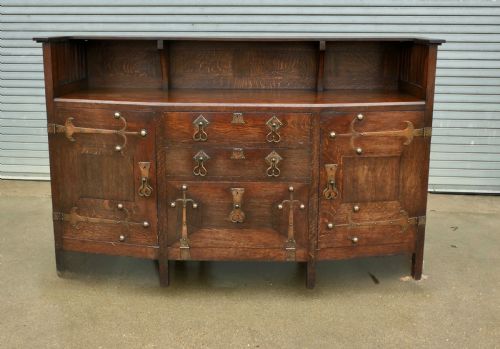
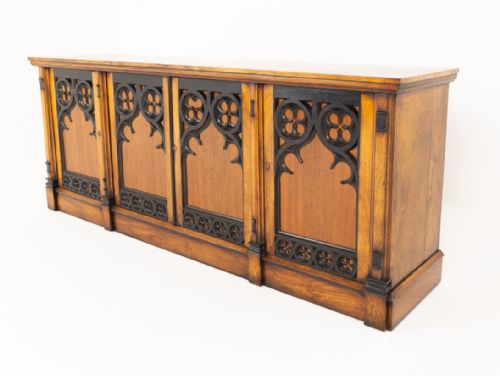

Gothic Revival Oak Sideboard
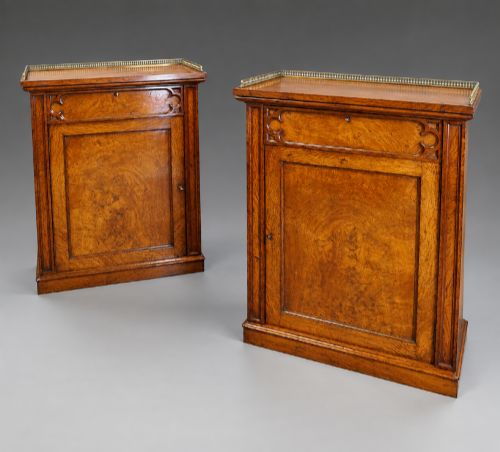
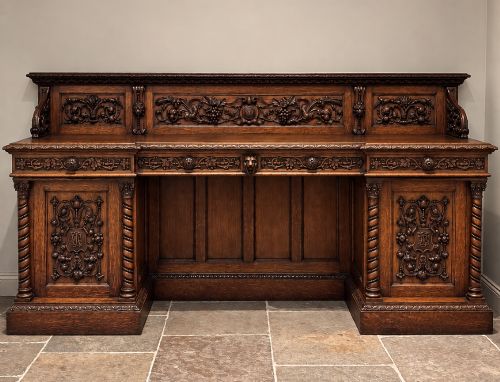
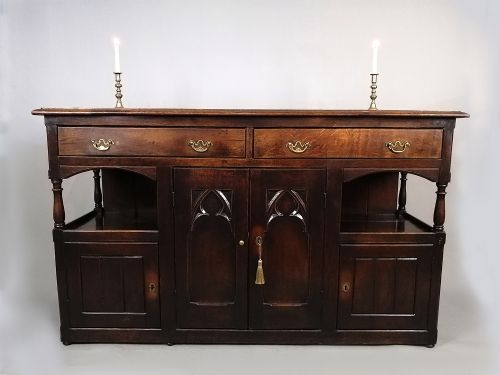
A gothic revival oak sideboard brings heavy timber, pointed arches and rich tracery straight from medieval halls into a Victorian dining room.

Gothic Revival Oak Sideboard
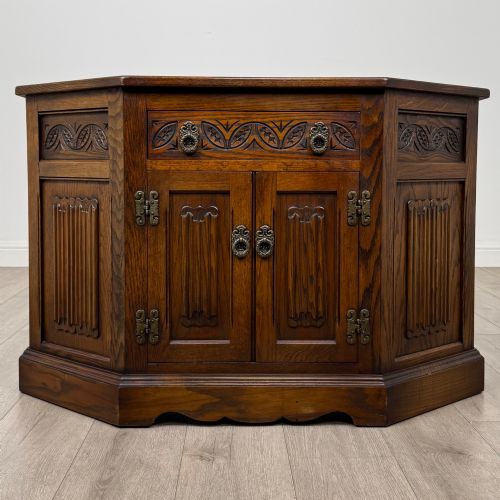
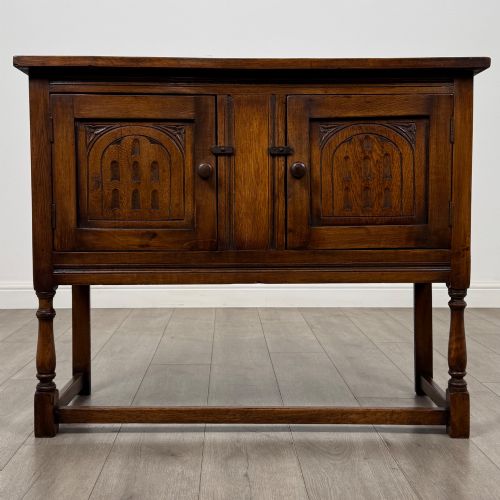
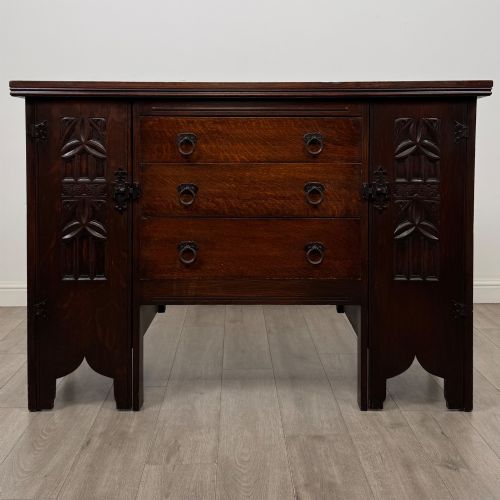
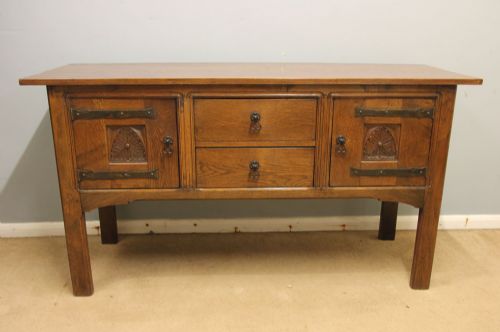
A gothic revival oak sideboard anchors a dining space through substantial timber construction, deep carving and architectural forms derived from medieval churches and castles. These storage pieces appear frequently in nineteenth century Victorian styles, alongside related dresser bases, buffets and cabinets.
Most examples originate from the Victorian era, spanning periods from the mid nineteenth century through to the early twentieth century. Variations include narrow proportions, mirror backed formats, and pieces designed for Liberty or attributed to makers such as Leonard Wyburd and John Moyr Smith.
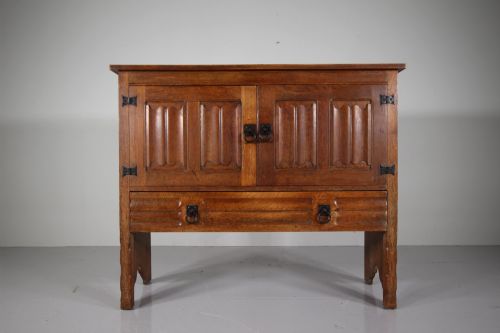
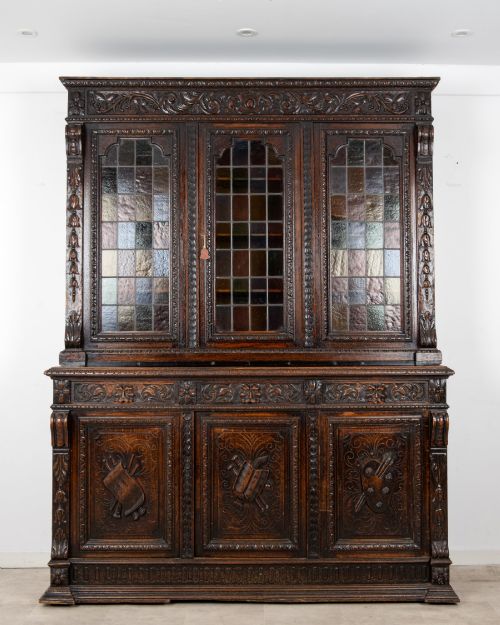
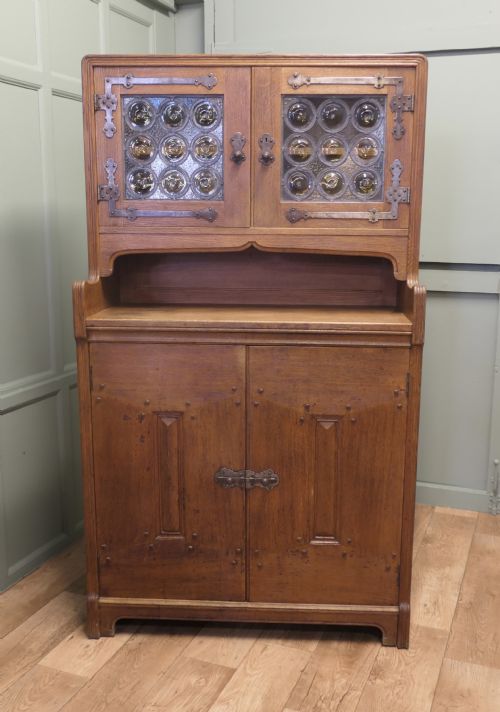
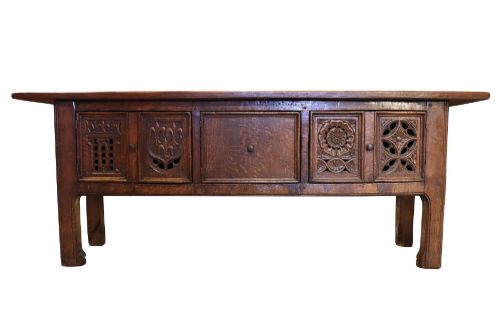
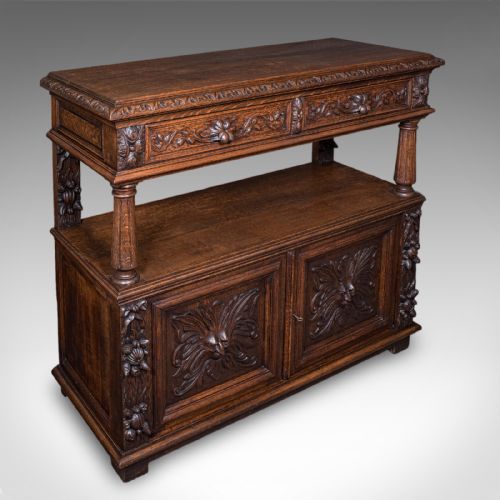
Buyers encounter forms ranging from simple two door cupboards to grand serving tables and creedence cabinets. Many incorporate traditional motifs including green man carvings, linenfold panels and stained glass elements.
Materials and construction
Makers utilised solid oak, often described as golden or dark timber, supported by internal framing and joined with traditional methods to bear the weight of heavy doors and carved superstructures. Metal fittings in brass, iron and copper provide functional hinges, drop handles and escutcheons.
Decorative details rely heavily on hand carving, applied mouldings and traceried panels, sometimes complemented by stained glass windows and lead work. Selected examples introduce walnut or multi wood elements alongside the dominant oak carcase.
Gothic Revival Oak Sideboard Retail Price Guide 2026
Typical asking prices for gothic revival oak sideboard among the pieces listed under this phrase on Sellingantiques today, from the lower quarter to the upper quarter. They describe what is for sale here now, not the wider market.
Listings feature oak alongside walnut, brass, iron, glass and stained glass across periods spanning the mid nineteenth century to the early twentieth century.
Assessing quality and execution
Quality rests upon the depth, sharpness and ambition of the carved ornament, separating standard production items from bespoke pieces designed by notable figures or firms. Crisp linenfold panels, well articulated tracery and balanced proportions indicate superior workshop standards.
The choice of timber and secondary woods dictates durability, with dense, well figured oak holding fine detail far better than softer or plainer stock. Original hardware, intact glass and sound structural joints preserve the integrity of the piece over time.
Leonard Wyburd·John Moyr Smith·Phillips Bristol
The Gothic Revival Oak Sideboard Glossary
- Gothic Revival
- An architectural and decorative style drawing inspiration from medieval forms, pointed arches and ecclesiastical detail. This movement influenced furniture design throughout the nineteenth century.
- Dresser Base
- A low sideboard or cabinet featuring drawers and cupboards, historically used for serving food and storing tableware. They frequently appear in heavy oak across various revival periods.
- Linenfold
- A style of wood carving that mimics folded fabric or linen panels. It is commonly found on the doors of cupboards and cabinets from this era.
- Green Man
- A sculptural motif depicting a human face surrounded by or sprouting from leaves and vines. It represents rebirth and appears frequently in nineteenth century wood carvings.
- Creedence Cabinet
- A small medieval style side table or cupboard used originally for holding church plate. Nineteenth century revivals adapted this form for domestic storage.
Gothic Revival Oak Sideboard: Frequently Asked Questions
Where should I place a gothic revival oak sideboard?
These large storage pieces suit dining rooms, large hallways or living spaces where their substantial timber presence and carved details can anchor the room. Ensure the floor can support heavy oak construction before positioning.
Measure the ceiling height as well as floor space, particularly for pieces featuring mirror backs, carved superstructures or tall cabinets that demand adequate clearance.
How do I care for antique oak furniture?
Maintain the timber by applying natural beeswax sparingly and buffing gently with a soft cloth to protect the grain. Avoid placing heavy oak items near direct heat sources or strong sunlight.
Keep humidity stable in the room to prevent the solid wood from shrinking or splitting over seasonal changes in temperature.
How do I date a nineteenth century sideboard?
Examine the construction methods, tool marks on internal panels, and stylistic cues such as hardware types and carving styles. Mid nineteenth century examples often display heavy architectural motifs while later Victorian pieces incorporate lighter Arts and Crafts influences.
Reference dates provided in historical records or cabinetmaker signatures when present to confirm the production period.
What is the difference between a sideboard and a buffet?
Sideboards traditionally feature a combination of drawers and lower cupboards designed for storing dining room linens and tableware. Buffets often emphasise serving surfaces and open lower staging.
In gothic revival furniture design, these terms frequently overlap as makers adapted medieval forms for domestic Victorian dining requirements.