





Green Man Sideboard
A green man sideboard brings heavy carved foliage and folklore straight into the dining room.

Green Man Sideboard
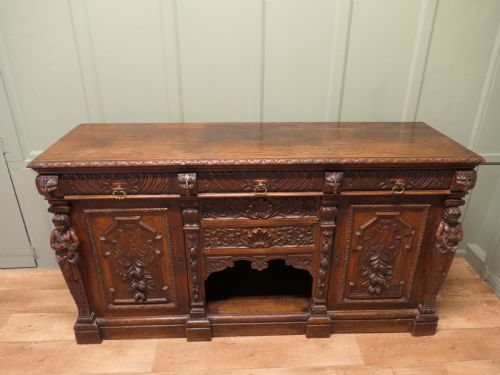
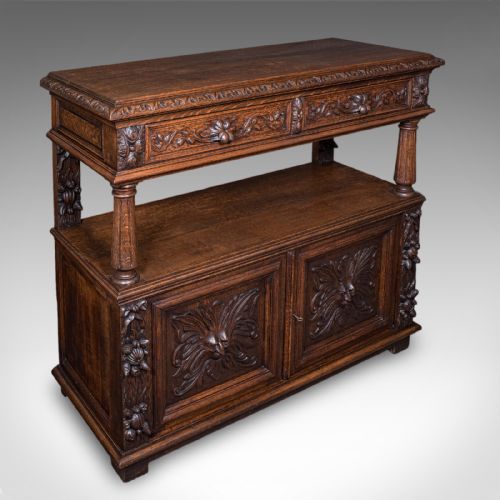
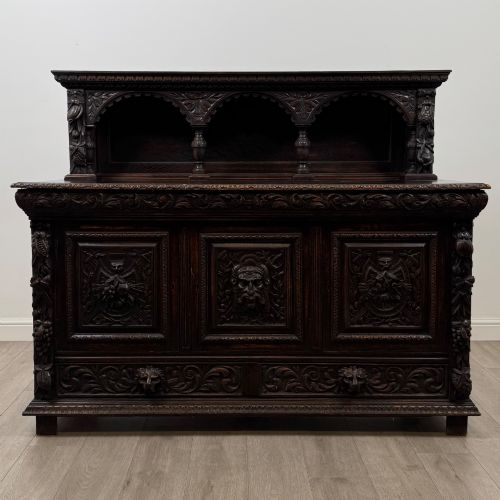
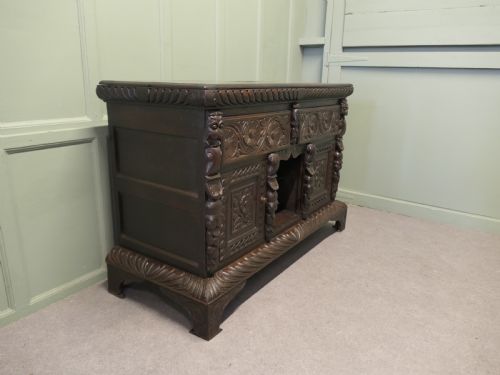
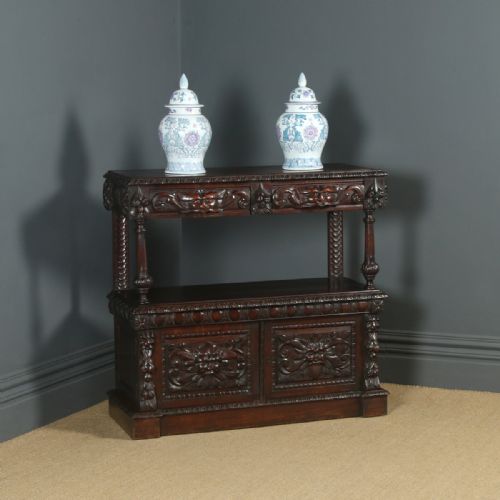
A green man sideboard is a substantial dining room storage piece defined by its foliate mask carvings. Most examples on this page date to the Victorian era, spanning the nineteenth century from the eighteen-fifties onwards.
Forms range from large servers and buffets to dresser bases, cupboards, and console tables. These pieces often sit low and broad, designed to anchor a traditional dining space or hallway.
How they were made
The primary material across all examples is solid oak, chosen for its durability and suitability for deep chisel work. Joinery relies on traditional construction methods to support heavy timber tops and wide cupboard bases.
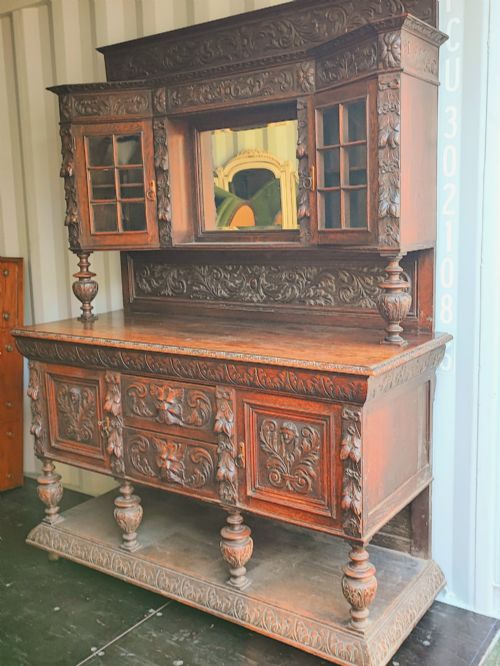
Carvers shaped foliage and faces directly into the oak boards, frequently combining the green man motif with Gothic revival or Renaissance revival architectural details. Fittings often include brass hardware, while upper sections occasionally incorporate bevelled glass and mirrors.
Listings demonstrate that almost every green man sideboard is built from solid oak, frequently incorporating mirrors and bevelled glass.
What varies in quality
Quality rests principally on the depth and ambition of the carving. The finest pieces display crisp, high-relief modelling in the foliage and distinct expression in the wooden mask, whereas lesser examples show shallower, mechanical punchwork.
Proportion and timber selection also set pieces apart. Superior sideboards utilise well-figured oak with balanced grain, retaining original hardware and integrated architectural mouldings rather than later replacements.
The Green Man Sideboard Glossary
- Green man
- A sculptural mask of a human face sprouting foliage from the mouth, nose, or hair. It appears frequently on nineteenth-century revival furniture.
- Buffet
- A low sideboard or serving table designed for holding food and tableware during meals. These versions often incorporate deep cupboard storage below.
- Gothic Revival
- An architectural and decorative style drawing inspiration from medieval design. It frequently employs pointed arches, tracery, and heavy mouldings alongside carved masks.
- Bevelled glass
- Mirror or window glass with an angled edge ground down to a thinner perimeter. This technique catches the light and adds depth to upper sideboard sections.
- Dresser base
- A lower kitchen or dining cabinet fitted with drawers and cupboards without the upper plate rack. Many examples share similar proportions to large sideboards.
Green Man Sideboard: Frequently Asked Questions
What is a green man sideboard?
A green man sideboard is a heavy nineteenth-century storage piece decorated with carved foliage masks. These items served as dining room servers or side cabinets.
Most examples found here date to the Victorian period and are constructed from solid oak with revival architectural styling.
How were these sideboards used?
These pieces functioned primarily as serving stations and storage units in Victorian dining rooms. Cupboards and drawers held heavy tableware, silver, and linens.
The wide top surface provided space for displaying dishes or serving food during large family meals.
How do I style one at home?
A green man sideboard works best as a focal point in a dining room, hallway, or large living space. Its dark oak timber pairs well with neutral walls and traditional architectural details.
Keep the top relatively uncluttered to let the heavy woodwork and intricate mask carvings remain the main visual focus.
How do I date a Victorian sideboard?
Dating relies on examining the timber, construction methods, and stylistic revival influences. Pieces from the mid to late nineteenth century often combine Gothic or Renaissance revival motifs.
Look for original brass hardware, bevelled mirror glass, and hand-carved details that indicate nineteenth-century workshop production.