



Gold Ruby Brooch
A gold ruby brooch brings together warm precious metal and vibrant red stones, offering a wearable piece of history from late nineteenth and early twentieth century workshops.
Gold ruby brooch styles
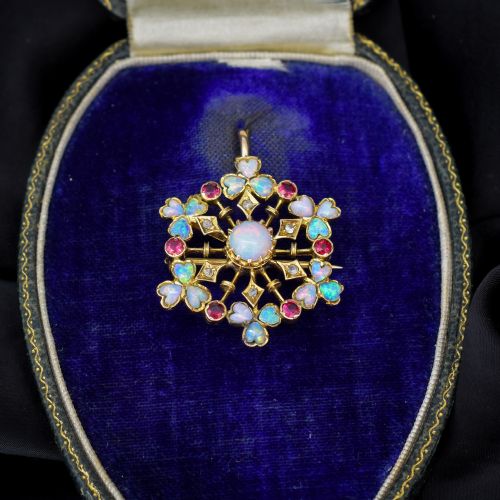
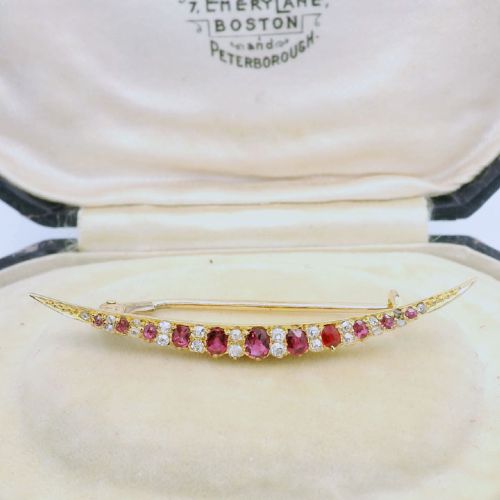
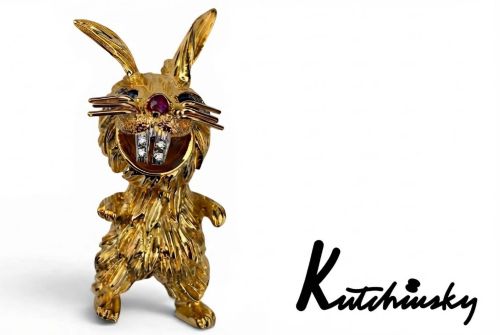
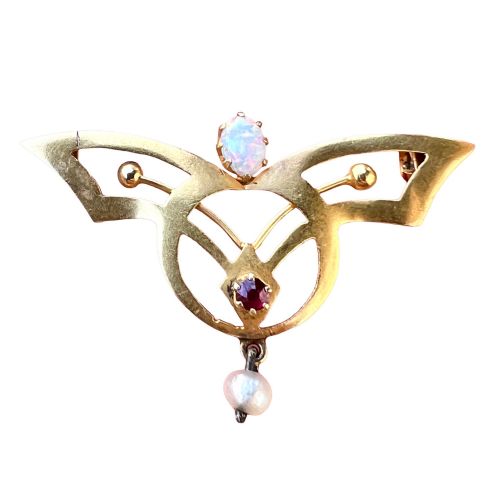
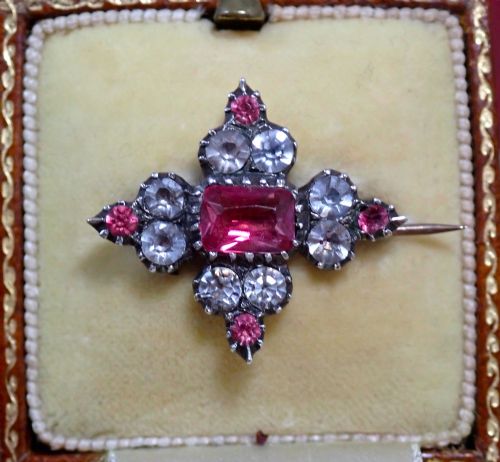
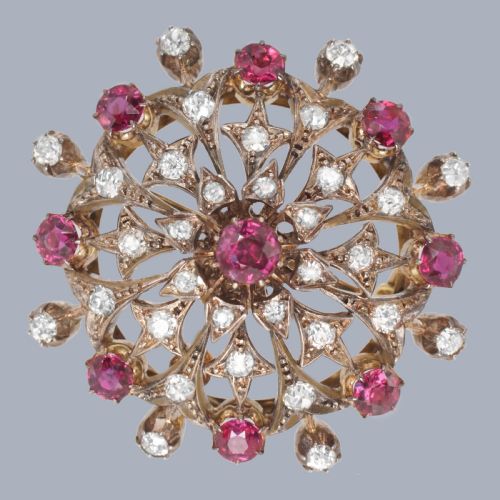
A gold ruby brooch is a decorative fastening designed to pin to clothing, appearing frequently across Victorian and Edwardian periods in specific symbolic and naturalistic forms. Buyers encounter hearts, crescents, stars, flowers, and insect motifs such as bees and salamanders.
The pieces listed on this page centre heavily on the Victorian and Edwardian eras, spanning from the late nineteenth century into the early decades of the twentieth century. Examples combine rubies with diamonds, pearls, or seed pearls set into yellow gold, white gold, and rose gold.
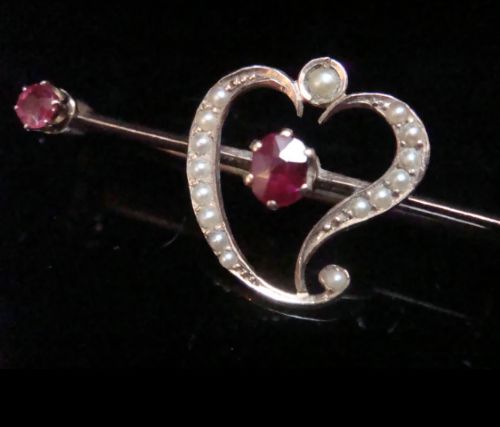
Crescent brooches and heart designs dominate the selection, often incorporating small seed pearls alongside the central red stones. These items reflect the sentimental jewellery tastes of the Victorian Romantic period and subsequent Edwardian fashions.
Materials and construction
Maker workshops utilised varying purities of gold, ranging from nine carat up to eighteen carat, alongside platinum in later Art Deco items. Stones were secured into metal mounts by hand, combining rubies with diamonds, emeralds, sapphires, and pearls.
Metals were cast, drawn into wire, or beaten into hollow crescent and bar shapes before stone-setting took place. Pin mechanisms and safety catches were soldered to the reverse, varying from simple hinged pins to safety clasp systems.
Retail Price Guide 2026
Typical UK retail prices for gold ruby brooch, calculated from the Sellingantiques database of over a million retail prices indexed since 2003. This retail price guide relies exclusively on Sellingantiques data; no external sources or auction records are used, so the figures do not describe the wider market.
Victorian makers occasionally added ruby paste eyes to tiny gold owls so the little birds stared back from your lapel.
Assessing quality and depth
Quality rests in the weight and purity of the gold, the saturation and clarity of the rubies, and the precision of the stone-setting. Heavier gold gauges and larger stone carats elevate the stature of a piece.
Design complexity marks the divide between standard production and exceptional work. Naturalistic forms with detailed engraving, multiple gem types, and integrated pendant loops show greater artisan skill than simple bar pins.
The Gold Ruby Brooch Glossary
- Crescent brooch
- A curved, moon-shaped pin design popular during the late nineteenth and early Edwardian periods. It frequently holds graduated rubies and pearls.
- Bar brooch
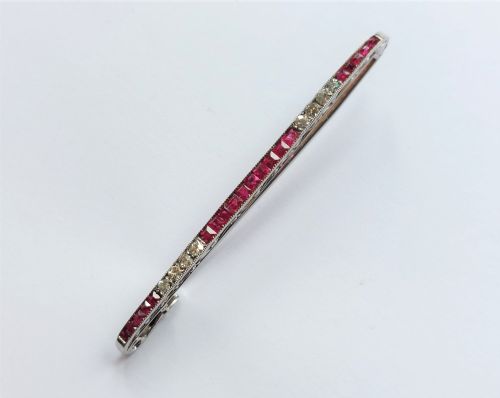
- A narrow horizontal pin format common in Victorian jewellery. Stones are mounted centrally along a straight metal shaft.
- Seed pearl
- A tiny, naturally small pearl used extensively in clusters or as borders around central gemstones. They add delicate white contrast to red rubies.
- Yellow gold
- Gold alloyed with silver and copper to retain a traditional warm yellow hue. It serves as the primary metal base for Victorian pieces.
Frequently Asked Questions
How do I wear a gold ruby brooch?
These pieces pin securely to heavy fabrics such as wool coats, scarves, or tailored jacket lapels. The weight of the gold requires a sturdy backing fabric to prevent sagging.
Many antique brooches also feature hidden loops on the reverse, allowing them to hang from a chain as a pendant necklace.
Are these brooches solid gold?
The listings comprise items made from various gold purities, including nine carat, fifteen carat, and eighteen carat yellow, white, and rose gold. Hallmarks where present confirm the metal standard used by the workshop.
Solid metal construction is standard for these periods, though hollow forms exist in lighter crescent and star designs to reduce weight on garments.
How do I tell Victorian from Edwardian pieces?
Victorian items often display heavier gold work, romantic motifs like double hearts, and darker stone settings from the late nineteenth century. The Victorian Romantic period favoured deep symbolic meanings in flora and fauna.
Edwardian pieces generally present a lighter, more delicate aesthetic with intricate wirework, platinum accents, and an emphasis on white and red stone combinations.
What stones accompany the rubies?
Diamonds appear frequently alongside rubies, particularly old cut and rose cut diamonds that offer a softer sparkle than modern brilliant cuts. Seed pearls and larger pearls also provide a traditional contrasting border.
Additional stones such as emeralds, sapphires, turquoise, and rock crystal occasionally appear in multi-gem floral or insect designs from the period.