


Victorian Heart Brooch
These Victorian heart brooch examples are romantic tokens crafted in gold and silver, offering collectors a tangible piece of sentiment.
Victorian heart brooch forms and periods
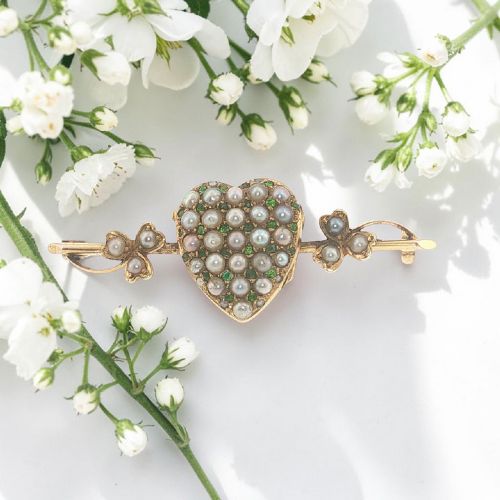
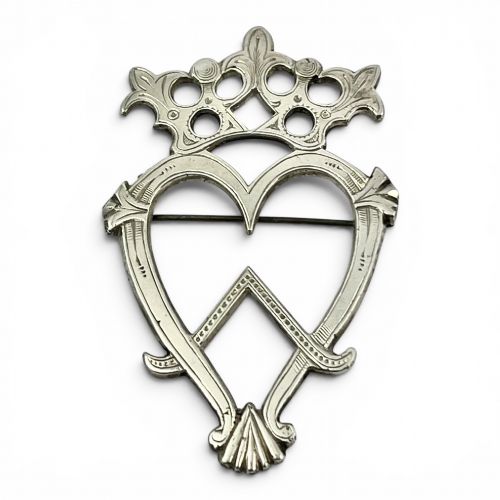
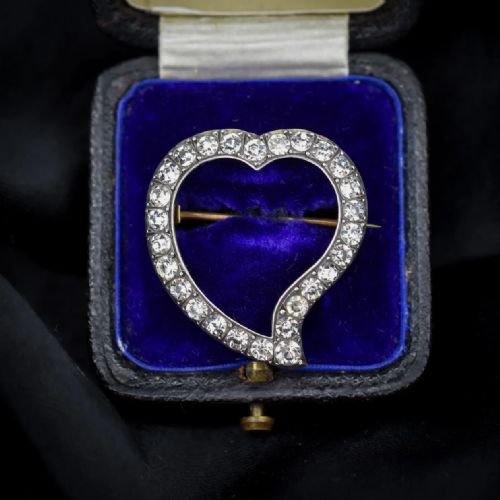
A Victorian heart brooch is a sentimental piece of jewellery shaped as a heart, originating primarily from the Victorian era alongside pieces dated around eighteen ninety and nineteen thirty. These items appear in several distinct configurations, including single heart lockets, double hearts, and witches heart designs.
The evidence shows forms embellished with gemstones and pearls, as well as puffy heart pendants and twin heart arrow motifs. Buyers frequently encounter versions executed in gold or sterling silver, often incorporating specific stones such as pearls, garnets, rubies, and paste.
Originating largely from the nineteenth century, these brooches represent enduring romantic sentiments popular during the period. The selection includes both pierced gold work and substantial hollow puffy configurations designed to be worn on garments.
Materials and construction
These brooches utilise metals such as eighteen carat gold, fifteen carat gold, nine carat gold, fourteen carat gold, and sterling silver as a structural base. Goldsmiths shaped these precious metals into delicate pierced frames or hollow puffy forms.
Craftsmen set seed pearls, green garnets, rubies, diamonds, peridots, opals, and old cut paste into the metalwork. Many examples feature detailed surface engravings and secure pin mechanisms fitted to the reverse.
Retail Price Guide 2026
Typical UK retail prices for victorian heart brooch, calculated from the Sellingantiques database of over a million retail prices indexed since 2003. This retail price guide relies exclusively on Sellingantiques data; no external sources or auction records are used, so the figures do not describe the wider market.
Listings feature items spanning the Victorian period, eighteen ninety, and nineteen thirty, constructed in gold, silver, pearls, garnets, and paste.
Distinctions in quality
Quality rests upon the weight and purity of the gold, demonstrated by pieces marked for higher caratages like eighteen carat versus lower alloys or silver. Finer examples display meticulous pierced metalwork and superior hand engraving rather than plain surfaces.
The choice of embellishments also distinguishes the range, with natural gemstones and well matched pearls elevating a piece above simpler paste or base metal compositions. The precision of the stone setting and the overall crispness of the original design dictate the standing of an individual brooch.
The Victorian Heart Brooch Glossary
- Puffy heart
- A hollow three dimensional heart shape formed from two stamped metal halves joined together. This technique created lightweight yet substantial looking jewellery during the nineteenth century.
- Witches heart
- A heart motif with a twisted or skewed tail at the base, historically symbolising falling head over heels in love. This distinct silhouette appears frequently in antique paste and silver jewellery.
- Seed pearl
- A very small natural or saltwater pearl, typically undrilled or half drilled, used en masse to encircle or accent jewellery designs. They require delicate setting techniques.
Frequently Asked Questions
What are these brooches made of?
These pieces utilise various grades of gold, including nine, fourteen, fifteen, and eighteen carat, alongside sterling silver. Craftsmen set them with stones such as seed pearls, garnets, rubies, diamonds, peridots, opals, and paste.
The metal provides a durable backing for intricate stone settings and delicate piercing work. Precious and semi precious gems enhance the visual appeal of each sentimental design.
How were they worn originally?
Victorian wearers pinned these items to the bodice, lapel, or collar of garments as tokens of affection or remembrance. Some double heart and locket configurations doubled as pendants suspended from chains.
The secure pin mechanisms on the reverse allowed them to fasten firmly to heavy fabrics. They served both as decorative dress accessories and deeply personal romantic statements.
How do I care for antique gold and pearl jewellery?
Store these delicate items separately in soft pouches to prevent scratching the gold and softer gems like pearls. Avoid immersing pearl set jewellery in liquid cleaners, as moisture can weaken the adhesive or damage the organic nacre.
Gentle surface cleaning with a dry microfibre cloth preserves the antique metal finish. Handle the pin stems carefully to avoid straining the original hinge and clasp mechanisms.