
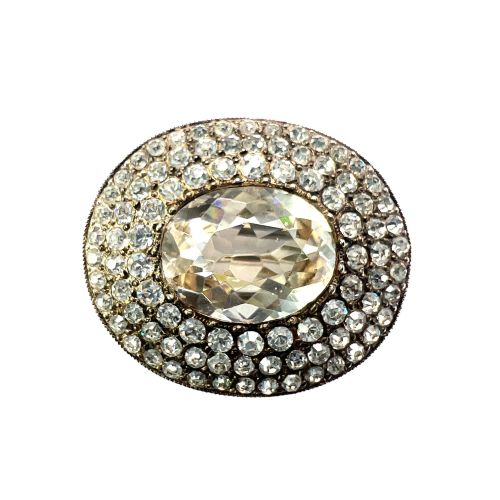
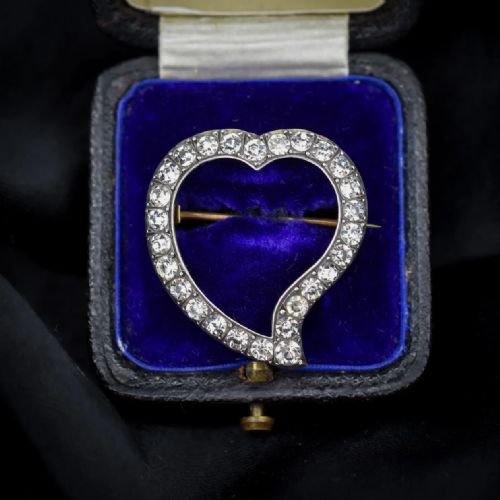
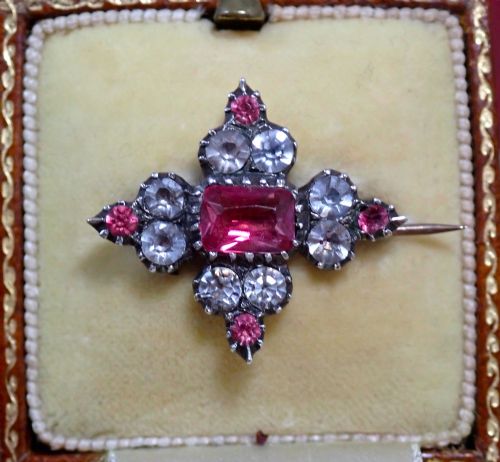


Georgian Paste Brooch
A georgian paste brooch brings centuries-old sparkle to your lapel, offering hand-cut brilliance set in silver and gold.
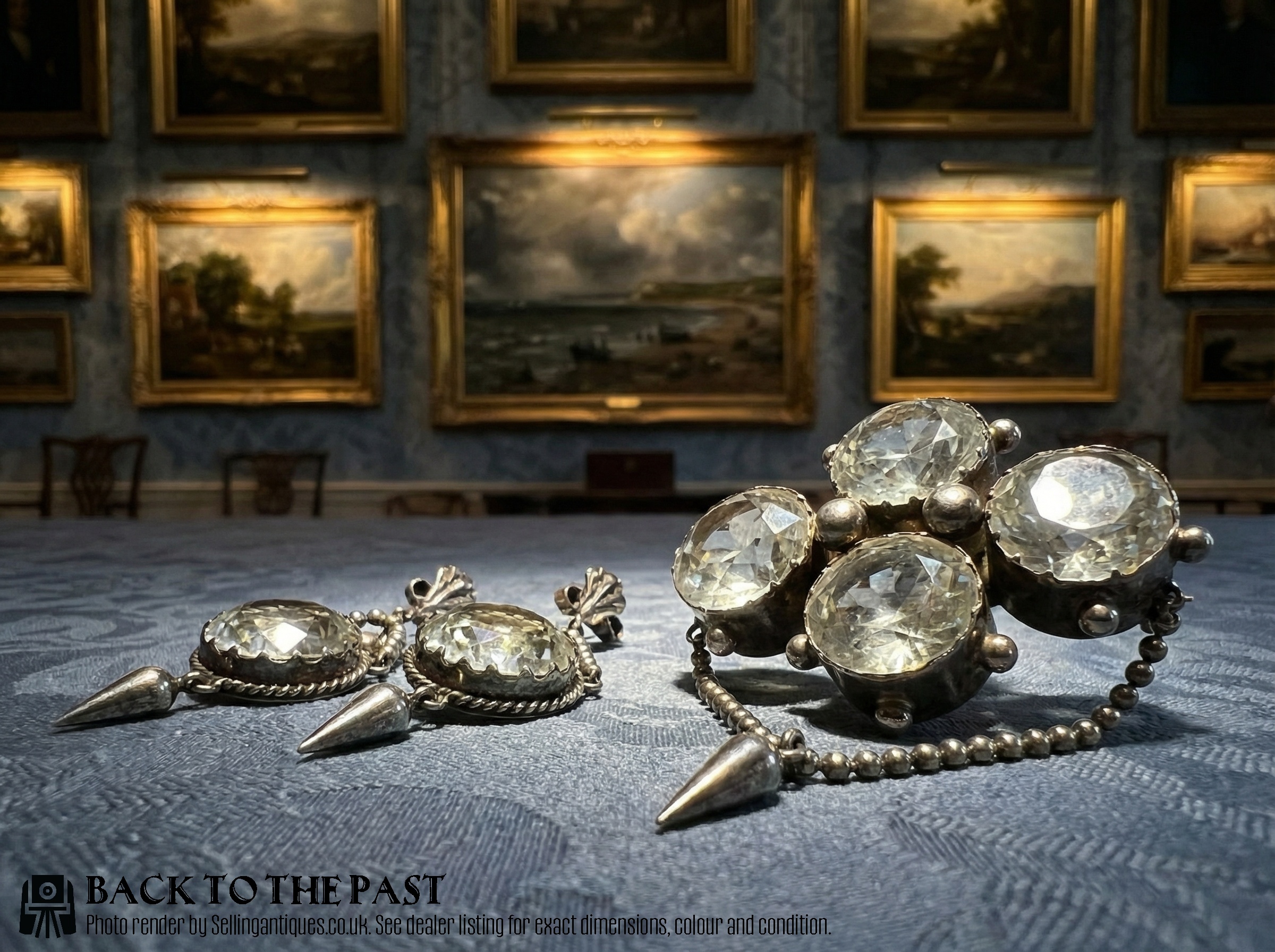
Georgian Paste Brooch
When you search for a georgian paste brooch, you are looking at eighteenth-century and nineteenth-century jewels fashioned from lead glass that mimics precious stones. The pieces meeting you here span the Georgian, Victorian, and Edwardian eras, reflecting enduring popularity across multiple reigns.
The forms vary widely, taking the shape of flowers, hearts, doves, crescents, sunbursts, and intricate giardinetti baskets. You will encounter silver settings, gold mounts, and combinations of both metals supporting the faceted glass.
While true Georgian originals appear alongside later Victorian interpretations and Edwardian pieces, each version relies on hand-cut glass to catch the light. These ornaments served as fashionable accessories for centuries, retaining their decorative appeal for modern wear.
How they were made
The makers of a georgian paste brooch typically utilised silver or gold settings to house hand-cut glass stones. Craftsmen often backed the glass with coloured foil to enhance the brilliance and depth of the paste.
Techniques included black dot paste work, where tiny dark spots were applied beneath the glass to simulate the natural inclusions found in genuine mined diamonds and gemstones. Metals were shaped by hand to create secure closed-back or open-backed settings for each individual stone.
Georgian Paste Brooch Retail Price Guide 2026
Typical asking prices for georgian paste brooch among the pieces listed under this phrase on Sellingantiques today, from the lower quarter to the upper quarter. They describe what is for sale here now, not the wider market.
Listings feature silver, gold, and glass paste across Georgian, Victorian, and Edwardian periods.
What varies in quality
The standard of a georgian paste brooch depends heavily on the precision of the stone-cutting and the integrity of the metalwork. Hand-cut facets that display sharp, crisp edges separate superior examples from softer, worn specimens.
Quality also shows in the subtlety of the foil backing and whether techniques like black dot work are executed with finesse. Weight, balance, and the intricacy of the underlying silver or gold mount define the upper tier of these pieces.
The Georgian Paste Brooch Glossary
- Paste
- Hand-cut lead glass used to imitate diamonds and coloured gemstones. It was faceted by hand to capture the light just as mined stones did.
- Foil back
- A thin layer of metallic sheet placed behind a paste stone to brighten its colour and increase reflectivity. This technique adds depth to the glass.
- Black dot paste
- A specific eighteenth-century method where a minute dark spot is painted on the culet of the stone to mimic the natural inclusions of a genuine diamond. It is a hallmark of early work.
- Giardinetti
- A style translating to little garden, depicting a small basket or vase filled with floral motifs. These designs were popular in Georgian and Victorian jewellery.
- Demi parure
- A matched set of jewellery consisting of a brooch and matching earrings. They were designed to be worn together for formal occasions.
Georgian Paste Brooch: Frequently Asked Questions
How do I wear a antique brooch safely?
Pin the piece firmly through sturdy fabrics rather than delicate silks to distribute the weight evenly. Ensure the pin mechanism sits securely in its clasp before venturing out.
Avoid exposing the metal and glass to moisture, perfumes, or hairsprays, as these substances can tarnish silver and damage fragile foil backings over time.
What is the difference between Georgian and Victorian paste?
Georgian pieces often feature closed-back settings and specific techniques like black dot work designed to mimic antique diamond characteristics. Victorian pieces frequently adapted these older styles, sometimes combining gold and silver with varied stone cuts.
Both eras prioritised hand-cut glass, but Victorian examples often reflect changing industrial methods and broader stylistic revivals.
Can I wear my brooch as a pendant?
Certain pieces are constructed with integrated loops or pivoting Bails that allow them to function as both a brooch and a pendant. Review the reverse of the mount to see if a loop is present for a chain.
If no loop exists, a conversion mount should be used by a professional rather than forcing modifications onto antique metalwork.