


Georgian Silver Brooch
A georgian silver brooch brings hand-cut paste, rose diamonds and foiled stones together in miniature works of art.
Georgian Silver Brooch
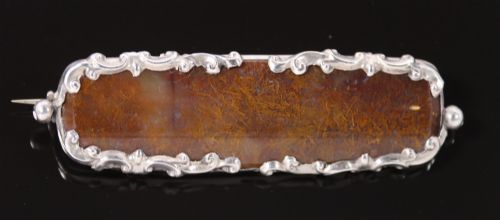
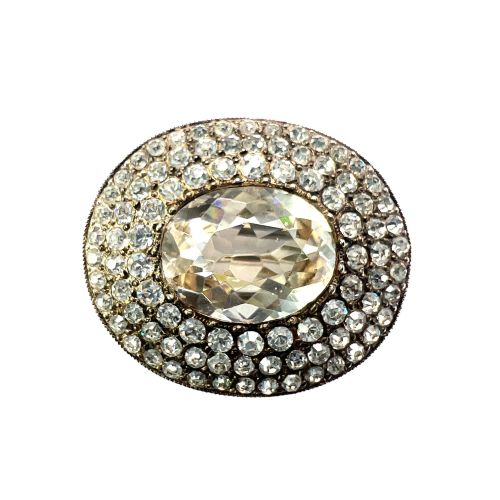
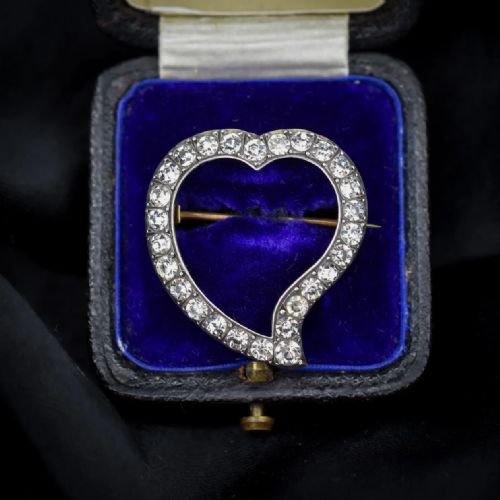
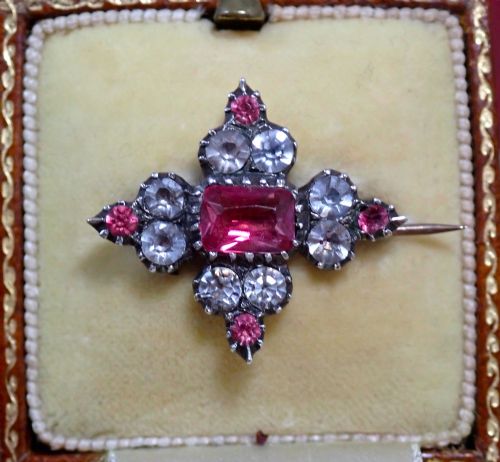
A georgian silver brooch gathers pieces originating from the 18th century, circa 1800, and later Victorian revivals. Buyers encounter diverse forms including paste glass clusters, witches hearts, flower baskets, and portrait miniatures.
The evidence shows examples set in silver, sterling silver, gold, and combinations of silver and gold. Many feature specific motifs such as doves, harps, serpents, crescents, and sunbursts.
The selection ranges from early Georgian work to Edwardian and Victorian interpretations, reflecting enduring tastes for rock crystal, moss agate, garnets, and foiled stones.
Materials and construction methods
Makers set stones in silver or combined silver with gold, often utilising foils beneath glass paste to enhance light reflection. Gems such as rose-cut diamonds, rubies, amethysts, and garnets are hand-cut and mounted closely together.
Techniques involve delicate collet settings and closed backs typical of the period, securing paste glass, moss agate, and rock crystal. Pins and mountings are hand-forged, aligning with the jewellery production methods of the 18th and 19th centuries.
Listings feature periods spanning the 18th century, circa 1800, Victorian, and Edwardian eras.
Evaluating quality and craftsmanship
Quality rests upon the precision of the hand-cut stones, the integrity of the foil backing, and the finesse of the metalwork. Pieces displaying meticulous attention to stone matching and secure collet settings stand apart.
The artistry of the underlying design, whether a detailed bird motif, a crisp paste cluster, or a miniature portrait, dictates the refinement of the finished object.
John Barry
The Georgian Silver Brooch Glossary
- Paste
- Hand-cut glass used as a gemstone substitute in historic jewellery. It is faceted and polished to mimic real stones.
- Foiled
- A thin sheet of metal placed beneath a transparent stone or paste to amplify its colour and brilliance. This technique is common in older jewellery.
- Collet
- A band of metal that holds a stone in place by being pushed over its edge. It provides a smooth, secure border around the gem.
- Giardinetti
- A jewellery design translating to little garden, featuring floral baskets or urns filled with various coloured stones. These motifs appear frequently in period brooches.
- Rose-cut
- A diamond or gemstone cut with a flat base and a domed crown consisting of triangular facets. It offers a soft, shimmering reflection rather than intense brilliance.
Georgian Silver Brooch: Frequently Asked Questions
What materials make up a georgian silver brooch?
These pieces combine silver, sterling silver, and gold settings with decorative elements like glass paste, moss agate, rock crystal, and gemstones such as garnets and rubies.
Foils placed beneath glass paste help amplify colour and luminosity within closed-back mounts.
How do I care for historic paste jewellery?
Keep these items away from water and moisture to protect the delicate metal foils sitting beneath the glass paste stones. Gentle dry cleaning with a soft cloth preserves the historic surface without causing damage.
Store each brooch separately in a lined box to prevent scratching the softer stones and metals.
What motifs appear on these brooches?
Common designs include floral baskets, sunbursts, crescents, serpents with turquoise eyes, and doves representing the Saint Esprit style. Heart shapes and crosses also feature prominently in the surviving examples.
Miniature portraits and moss agate panels introduce pictorial elements to the jewellery.
How are Georgian pieces distinguished from Victorian copies?
Georgian work typically employs closed-back settings and hand-cut stones tailored individually to the mount. Victorian interpretations often reflect revival styles, incorporating similar materials while exhibiting different construction nuances.
Examining the metalwork and setting techniques helps clarify the period of production.