


Vintage Emerald Brooch
A vintage emerald brooch brings vibrant green presence to a lapel, combining rich gemstones with decades of craftsmanship.
Vintage Emerald Brooch
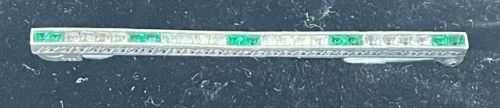
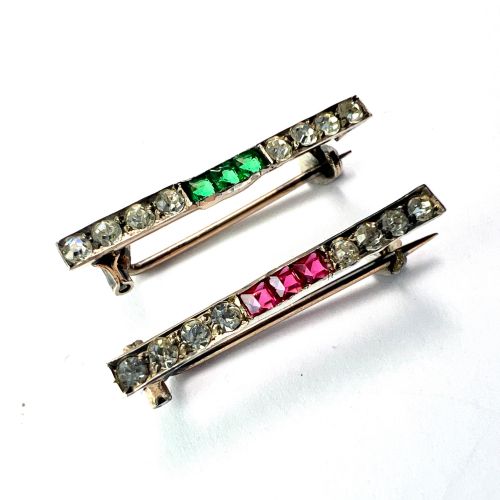
A vintage emerald brooch spans periods from the late nineteenth century through the mid-twentieth century, encompassing Victorian, Edwardian, Art Deco, and Retro designs. These pieces range from delicate bar brooches set in yellow gold to substantial platinum settings heavy with diamonds and rich green beryl.
The most frequent examples encountered here merge precious gems with base metals or higher-carat gold, often taking botanical or animal forms such as butterflies, frogs, and coronets. Buyers select these ornaments to wear upon coats, scarves, and structured jackets, where the central green stones draw the eye.
Makers utilised contrasting stones like rubies, sapphires, and paste alongside emeralds, creating vibrant polychromatic surfaces typical of past decades. Every item reflects the prevailing aesthetic of its era, moving from organic Victorian ribbon motifs to the geometric precision of the 1920s and 1930s.
Materials and construction
Goldsmiths worked with platinum, silver, and gold ranging from nine to eighteen carats, frequently mounting stones in mixed-metal settings to highlight the green hues of the emeralds. Platinum gained preference during the Art Deco years for its strength in holding intricate diamond pavé work securely around central gems.
Stones were secured using claw, bezel, or flush settings, while older pieces incorporated foil-backing beneath paste or lower-grade stones to increase brilliance. Hand-cut facets defined the era before standardised machine cutting, giving each gem a distinct personality under candlelight or daylight.
Listings feature emerald brooches paired with platinum, silver, and yellow gold across Victorian, Art Deco, and mid-century periods.
Evaluating the standard
The distinction between ordinary and exceptional pieces rests upon the saturation and clarity of the emeralds, alongside the integration of supporting diamonds and precious metals. Superior examples display balanced proportions, secure stone retention, and crisp metalwork that withstands close inspection.
Provenance and signature marks from established jewellers elevate an ornament, transforming a standard accessory into a documented work of wearable art. The integrity of the original pin mechanism and the absence of clumsy metal repairs further distinguish finer survivals from altered items.
Gubelin·E. Wolfe and Co·Asprey
The Vintage Emerald Brooch Glossary
- Bar brooch
- A narrow horizontal pin featuring central gemstones or decorative motifs. This form dominated late Victorian and Edwardian tailoring.
- Platinum
- A dense, durable white metal utilised extensively in twentieth-century fine jewellery. It allowed artisans to create delicate yet strong settings.
- Coronet
- A small crown-shaped ornament worn as a brooch. These designs often incorporate pearls and coloured gemstones to mimic royal insignia.
- Window brooch
- A design framing stones behind clear panels or open apertures to let light pass through. This configuration enhances the translucency of coloured gems.
Vintage Emerald Brooch: Frequently Asked Questions
How do I wear a vintage emerald brooch?
Pin the piece securely through heavy fabrics like wool coats, structured lapels, or thick scarves to support the weight of the metal and stones. Placing the ornament near the shoulder or collarbone keeps it stable during movement.
Avoid fastening these delicate pins to lightweight silks or loose knits that might sag or tear under the pressure of the clasp.
How do I tell Victorian from Art Deco pieces?
Victorian designs favour romantic motifs like butterflies, floral clusters, and yellow gold settings, often incorporating varied gemstone combinations. Art Deco pieces introduce geometric lines, platinum mounts, and stark contrasts between diamonds and green stones.
Examining the underlying metal construction and fastening style helps confirm the specific era of manufacture.
Are emeralds treated in vintage jewellery?
Many historic emeralds received traditional oil or resin treatments to improve clarity and fill natural surface-reaching fissures. These historical treatments differ from modern synthetic enhancements and remain standard for mined stones.
Consulting specialist reports helps determine the specific treatment history of significant emerald specimens.
How do I care for my brooch?
Clean these ornaments gently using a soft dry cloth to remove surface dust after wearing, keeping them away from harsh chemical solvents or ultrasonic cleaners. Emeralds require particular care due to their natural inclusions.
Store each piece separately in a lined jewellery box to prevent the metal and stones from scratching neighbouring items.