


Green Paste Brooch
A green paste brooch captures the brilliant eye of high-society jewellery using coloured glass to mimic fine emeralds.
What a green paste brooch is
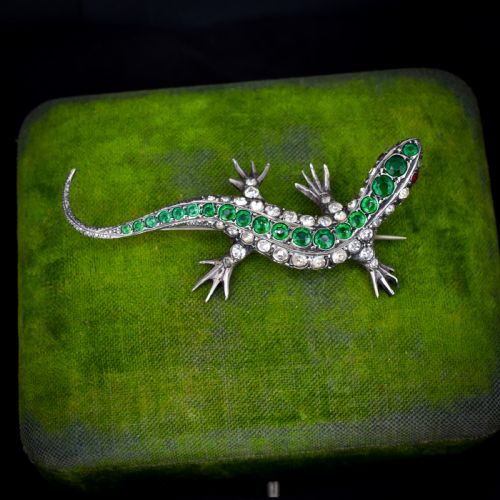
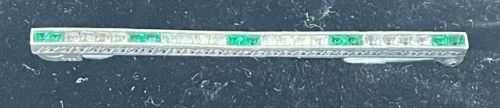
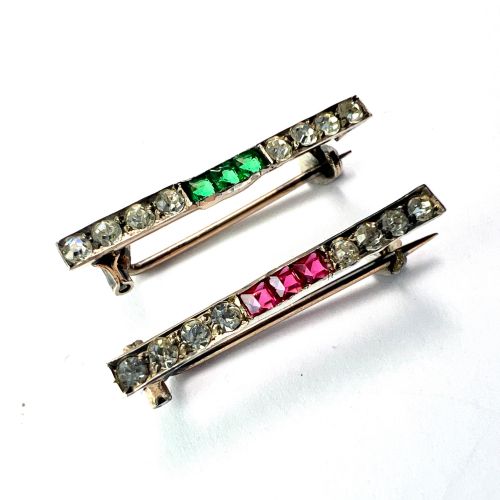
When you search for a green paste brooch, you find small pieces of jewellery designed to imitate genuine precious gems using moulded glass. The examples on this page span the Victorian and Edwardian eras alongside nineteenth century French work.
You will encounter distinct animal forms among these listings, including lizards and stags or antelopes. Other pieces present large geometric or floral designs set in substantial silver mounts.
Most items on this page originate from the Victorian period, reflecting the era's fondness for sentimental and naturalistic motifs. These pieces range from simple sterling silver pins to large gilt frames adorned with chalcedony.
How they were made
Makers formed the green paste stones from specialist glass mixtures, heating and pouring the material into moulds to replicate faceted gemstones. They paired these glass elements with precious metals like silver and silver gilt.
Craftsmen secured the stones into metal settings by hand, often utilising close-backed or open-backed foil techniques to enhance the brilliance of the glass. Some sophisticated pieces incorporate rose cut diamonds alongside the green paste.
Retail Price Guide 2026
Typical UK retail prices for green paste brooch, calculated from the Sellingantiques database of over a million retail prices indexed since 2003. This retail price guide relies exclusively on Sellingantiques data; no external sources or auction records are used, so the figures do not describe the wider market.
What varies in quality
The sophistication of the metalwork separates ordinary pieces from superior examples. Finely chased silver mounts and heavy silver gilt frames elevate the status of a piece far beyond standard production.
The clarity and depth of the glass paste itself dictate the visual impact of the jewel. High grade paste displays sharp facet edges and a convincing richness of colour that mimics natural beryl.
The Green Paste Brooch Glossary
- Paste
- Hand-cut and polished lead glass used to imitate gemstones. This material allows for bright colouration and deep faceting.
- Silver Gilt
- Silver that has been coated with a thin layer of gold. This treatment provides a warm yellow metallic finish.
- Chalcedony
- A cryptocrystalline form of silica used as a decorative stone in nineteenth century mounts. It offers a smooth, semi-translucent backdrop for gems.
- Rose Cut
- A vintage diamond cut featuring a flat base and a domed crown with triangular facets. It appears in combination with paste in select decorative pieces.
Frequently Asked Questions
What is green paste?
Green paste is a high-lead glass created specifically to imitate emeralds. Craftsmen cut and polished the material by hand to achieve the brilliance of mined gemstones.
During the Victorian and Edwardian periods, paste was prized for its own decorative qualities rather than solely as a substitute for precious stones.
How do I date a brooch?
Dating relies on the metalwork styles, the fastening mechanisms, and the overall design motifs. Victorian pieces often feature naturalistic subjects like lizards or stags.
Examining the metal alloy and the cut of the stones helps distinguish between Georgian, Victorian, and Edwardian examples.
Are these pieces solid silver?
Many listings feature solid silver or sterling silver mounts holding the glass stones. Some larger nineteenth century French pieces also incorporate silver gilt.
Testing the metal or checking for period hallmarks confirms the specific silver content used by the maker.
How should I wear one?
These brooches suit heavy fabrics like wool coats, scarves, or structured jackets capable of supporting the weight of the metal. Securing the pin properly ensures the safety of the antique mount.
Displaying the piece on lapels highlights the detailed silverwork and the vibrant colour of the paste.