


Victorian Insect Jewellery
Victorian insect jewellery brings miniature winged creatures to life in gold and precious stones, offering the naturalism that nineteenth-century collectors prized above all else.
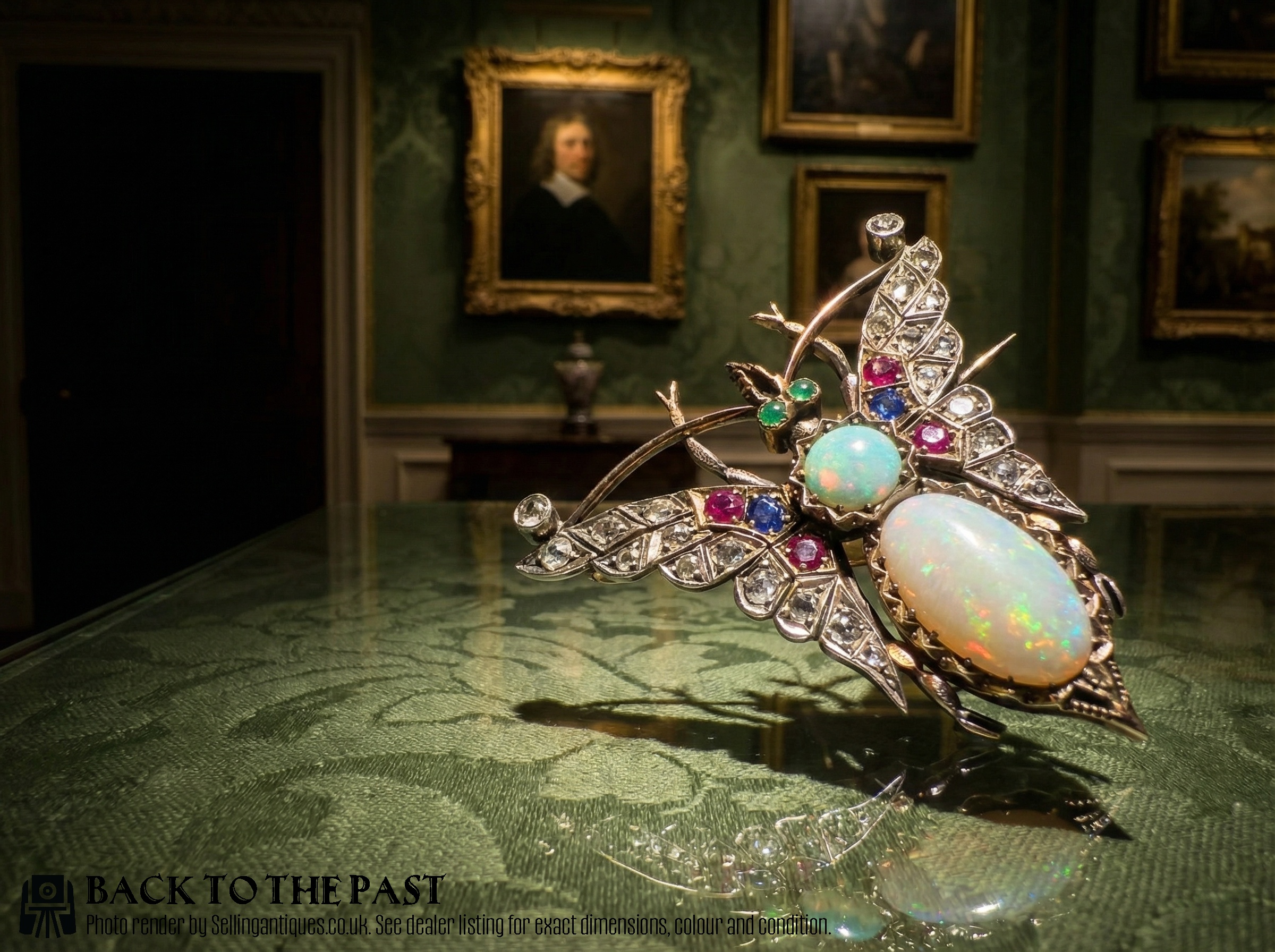
Victorian Insect Jewellery
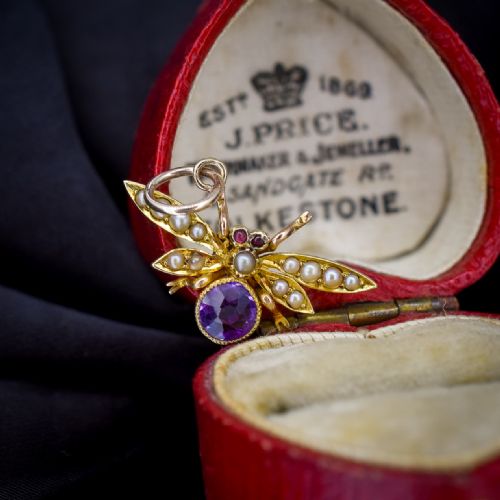
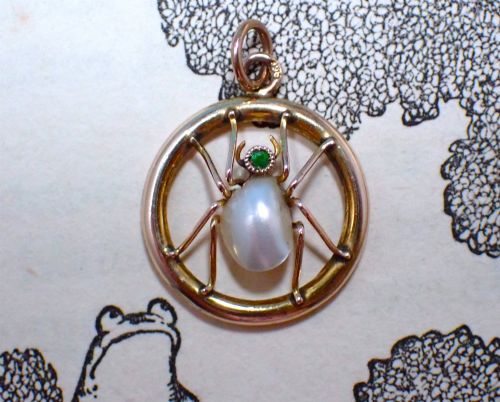
Victorian insect jewellery captures the fascination with naturalism that swept through the nineteenth century, translating beetles, flies, butterflies, and spiders into wearable art. You are looking at brooches, pendants, earrings, and convertible pieces fashioned from precious metals and set with diamonds, emeralds, rubies, and seed pearls.
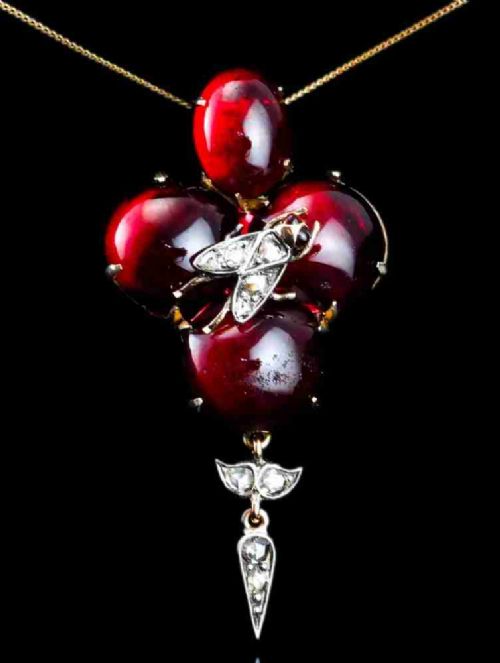
The most common version you will meet on this page is the brooch, often designed as a butterfly or a fly using yellow gold, silver, and gemstones like garnet or paste. These pieces range from simple 9ct gold dragonflies to elaborate multi-gem creations set with sapphires and diamonds.
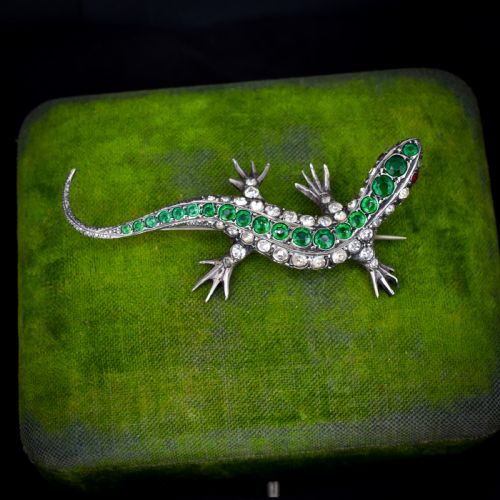
While the core of the selection sits firmly in the Victorian era, you will also encounter pieces bearing Edwardian and early twentieth-century dates, alongside occasional French items. The variety spans from modest silver lizard brooches to substantial 15ct gold butterfly pendants.
How they were made
Goldsmiths of the period shaped yellow gold and silver into realistic wings and bodies, often combining metals to ensure silver settings brightened the diamonds while gold formed the warm underpinnings of the insects. Stones like emerald, ruby, sapphire, and diamond were carefully cut and flush-set or prong-set to mimic the iridescent carapace and eyes of real creatures.
Intricate detailing relied on granulation, filigree, and hand-chasing to replicate the fine legs and antennae of spiders, beetles, and flies. Many surviving items were constructed to serve dual purposes, featuring clever mechanisms that allowed a brooch to transform securely into a pendant.
Victorian Insect Jewellery Retail Price Guide 2026
Typical asking prices for victorian insect jewellery among the pieces listed under this phrase on Sellingantiques today, from the lower quarter to the upper quarter. They describe what is for sale here now, not the wider market.
Materials across these listings span silver, yellow gold up to 21ct, diamonds, emeralds, rubies, sapphires, garnets, coral, labradorite, and seed pearls.
What varies in quality
The distinction between standard pieces and the finest examples rests on the naturalism of the design and the choice of materials. Superior items display meticulous attention to anatomical detail in the goldwork, coupled with well-matched, high-carat gemstones rather than simple glass pastes.
Versatility and provenance further elevate a piece, particularly when items incorporate convertible mounts that shift smoothly between a brooch and a pendant. The integration of rarer stones, such as Labradorite or fine cabochon garnets alongside diamonds, marks the upper tier of this naturalistic tradition.
The Victorian Insect Jewellery Glossary
- Brooch
- An ornamental piece of jewellery featuring a pin clasp on the back for fastening to clothing. Many Victorian insect brooches were constructed with hidden loops to double as pendants.
- Cabochon
- A gemstone shaped and polished with a smooth, rounded domed surface rather than faceted. This cut was frequently used for garnets and other stones in nineteenth-century settings.
- Convertible
- A piece of jewellery designed with detachable or folding fittings so it can be worn in multiple ways, such as both a brooch and a pendant.
- Paste
- Hand-cut glass used to imitate gemstones in antique jewellery. Green paste was commonly utilised to simulate emeralds in period pieces.
- Seed pearl
- Very small, naturally occurring or early cultured pearls often used in Victorian jewellery to trace the delicate outlines of wings and bodies.
Victorian Insect Jewellery: Frequently Asked Questions
How do I wear a antique insect brooch?
These pieces pin securely onto lapels, scarves, or heavy fabrics where the weight of the gold and gemstones is well supported.
Many examples feature built-in loops that let you thread a chain through the back, turning the brooch into a pendant.
Are these pieces made of solid gold?
The items utilise varying purities of gold, including 9ct, 14ct, 15ct, and 21ct yellow gold, alongside silver settings.
Silver was frequently paired with gold to provide a brighter backdrop for diamonds while keeping the structural warmth of gold.
What is Victorian naturalism?
Victorian naturalism is a nineteenth-century design movement inspired by the natural sciences, botany, and zoology.
Jewellery makers translated this enthusiasm directly into wearable representations of flora and fauna, focusing on lifelike accuracy.
Can I convert a brooch into a pendant?
Certain pieces are made as convertible items, equipped with integrated folding Bails or removable fittings specifically for this purpose.
Examine the reverse of the setting to see if a loop or pin mechanism has been included for chain use.