


Convertible Brooch Pendant
A convertible brooch pendant shifts effortlessly from shoulder to breastplate, offering dual wear through ingenious hidden loops or folding bails.
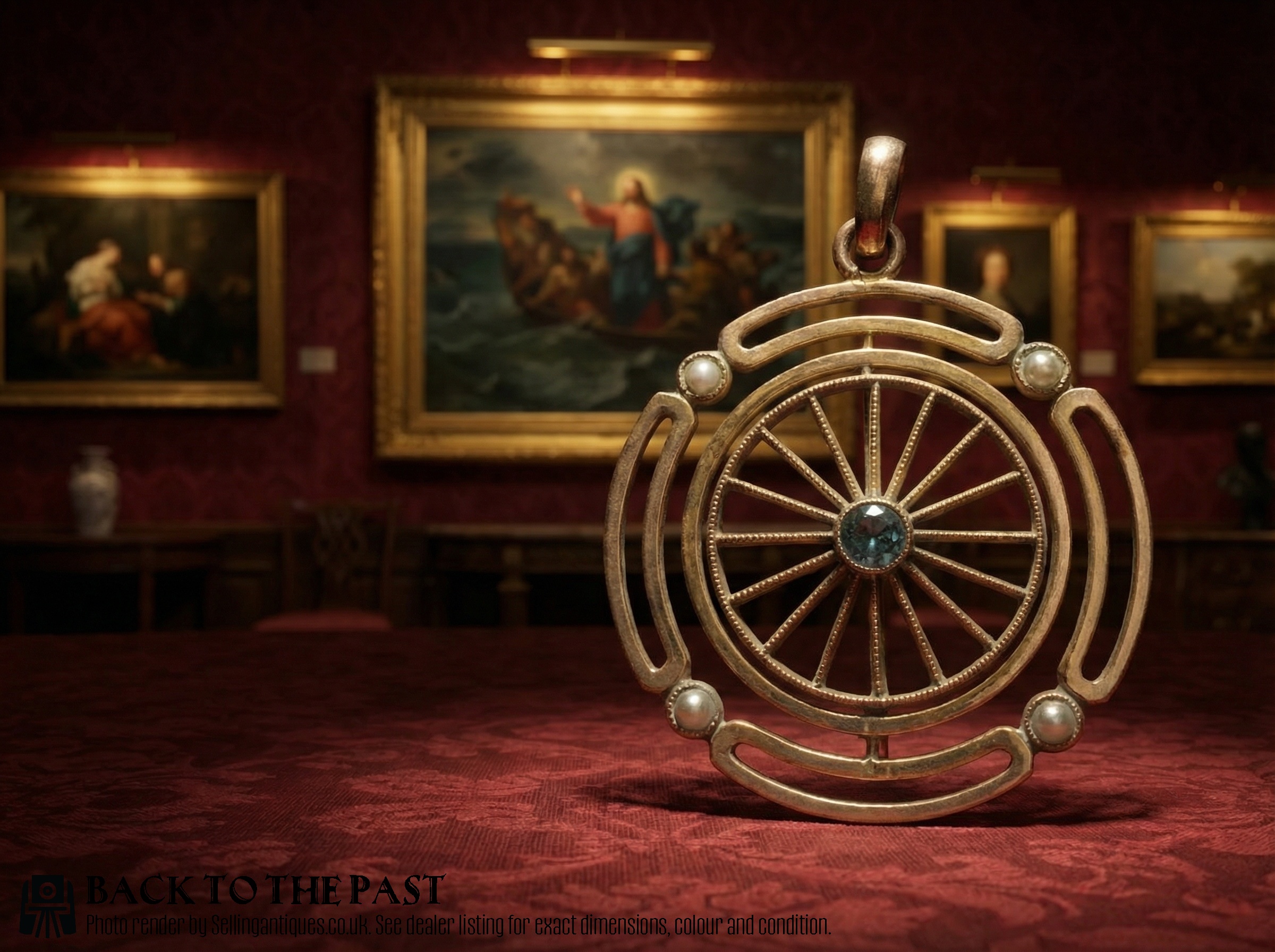
Understanding Convertible Brooch Pendants
When you search for a convertible brooch pendant, you are looking at dual-purpose jewellery designed to pin to garments or suspend from chains. The pieces found here span the Victorian, Edwardian, and nineteenth-century periods, capturing an era of clever mechanical versatility.
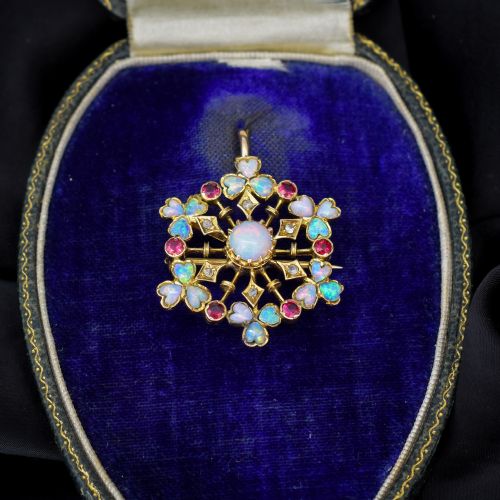
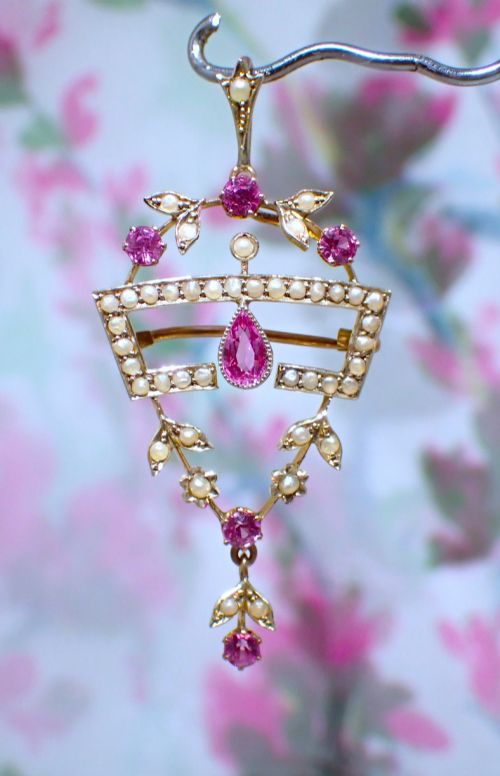
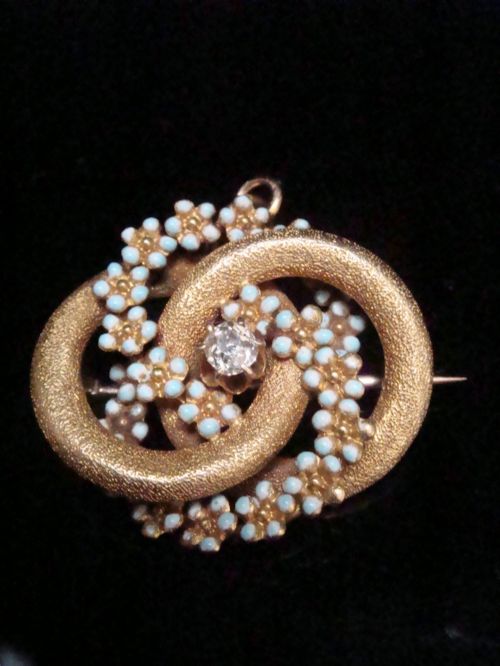
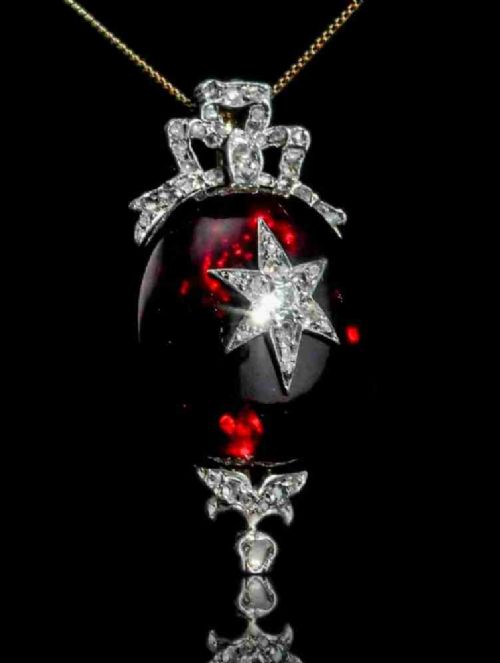
You will most frequently meet star motifs, floral clusters, and insect forms executed in gold, silver, and precious stones. These versatile jewels allow the wearer to alter their display without altering their collection.
Originating from workshops in France and across Britain, these items reflect a practical approach to fine jewellery. They transition smoothly from daytime pinning to evening suspension.
Materials and Construction
Metals such as fourteen-carat gold, eighteen-carat yellow gold, and sterling silver provide the structural foundation for these pieces. Silver is frequently employed in settings to brighten the appearance of diamonds.
Gems including opals, rubies, garnets, peridots, labradorite, and tigers eye are integrated into the designs using traditional claw and collet techniques. The mechanisms themselves rely on concealed hinges and removable bails that fold away flush against the reverse.
Retail Price Guide 2026
Typical UK retail prices for convertible brooch pendant, calculated from the Sellingantiques database of over a million retail prices indexed since 2003. This retail price guide relies exclusively on Sellingantiques data; no external sources or auction records are used, so the figures do not describe the wider market.
One particularly charming fly-motif pendant combines shimmering labradorite with diamonds, proving that Victorian insects were remarkably well-travelled.
Assessing Quality
Quality rests upon the seamless integration of the conversion mechanism and the crispness of the metalwork. A superior piece conceals its functional hinges entirely so that neither mode of wear compromises the aesthetic.
The choice of stones and the symmetry of cluster or star configurations also dictate the tier of the piece. Master jewellers matched stones for uniformity and arranged settings to maximise light return.
The Convertible Brooch Pendant Glossary
- Bail
- The loop on a pendant that suspends it from a chain. On convertible pieces, this part often folds down or detaches.
- Cabochon
- A gemstone shaped and polished with a smooth convex surface rather than faceted. This cut highlights the play of light in opals and garnets.
- Metamorphic
- A descriptive term for jewellery that changes form or function through mechanical ingenuity. These designs transform from brooches to pendants.
- Collet
- A band of metal that holds a gemstone in place by gripping its girdle. Early settings often utilise closed-back collets.
Frequently Asked Questions
How do I wear a convertible piece?
You deploy the hidden bail or loop on the reverse to thread a chain through for neckwear. Alternatively, use the pin stem and safety catch to secure it directly to clothing.
The mechanics are designed to sit comfortably against both skin and fabric without snagging garments.
Are these pieces fragile?
These items require the standard care associated with antique fine jewellery, particularly regarding older gemstone settings. The moving parts are robustly engineered but benefit from gentle handling during conversion.
Storing them in fitted boxes prevents strain on the pins and bails.
How do I date a convertible brooch pendant?
Dating relies on stylistic clues like star motifs, combined metal usage such as gold and silver, and specific stone cuts. Hallmarks and the style of the pin mechanism also offer clear chronological markers.
Victorian and Edwardian examples display distinct mounting characteristics that distinguish them from later reproductions.
What stones are typical for these?
Diamonds, garnets, rubies, and opals appear frequently across nineteenth-century examples. Peridots and labradorite also feature in specific Edwardian and French pieces.
These gems were chosen for their colour contrast and ability to catch candlelight.