


Victorian Celestial Jewellery
Victorian celestial jewellery brings together gold, diamonds and pearls in star and crescent forms that capture the night sky.
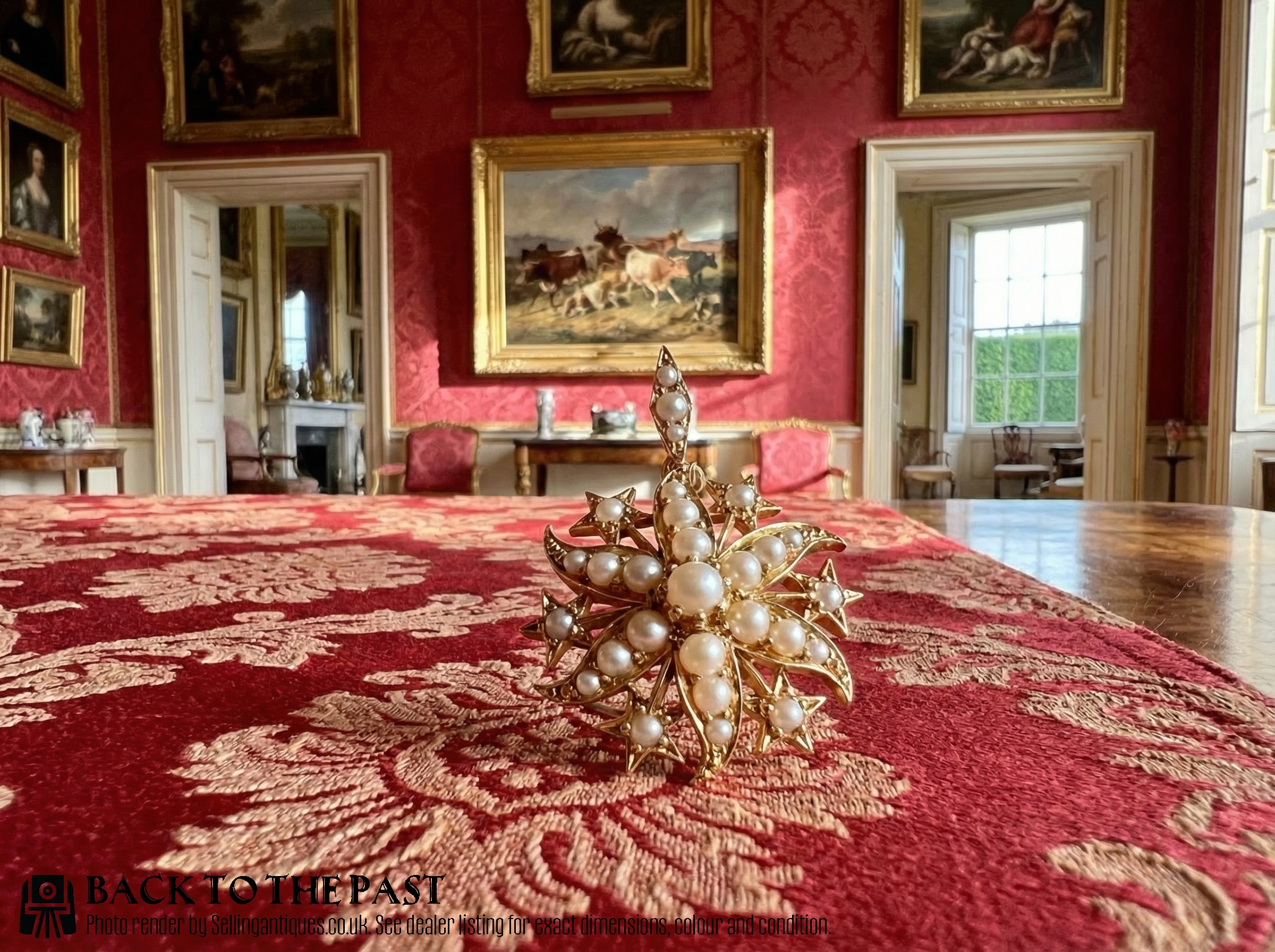
Victorian Celestial Jewellery
Victorian celestial jewellery comprises brooches, rings, pendants and earrings created during the nineteenth and early twentieth centuries. These pieces draw heavily on astronomical motifs, capturing stars, crescent moons, sunbursts and comets in wearable miniature.
The most common formats on this page are brooches and pendants, often designed to convert between the two, alongside rings and earrings. Makers utilised yellow gold, silver settings and platinum highlights to shape these celestial motifs.
Dating spans the Victorian and Edwardian eras, encompassing periods from the late nineteenth century up to nineteen-ten. Pieces frequently combine crescent moons with starbursts, often accompanied by smaller stones that echo starlight.
Materials and construction methods
Goldsmiths worked primarily in various purities of gold, including nine-carat, fifteen-carat and eighteen-carat, alongside silver settings for diamonds to enhance their white brilliance. Platinum also appears in combination with yellow gold on later pieces.
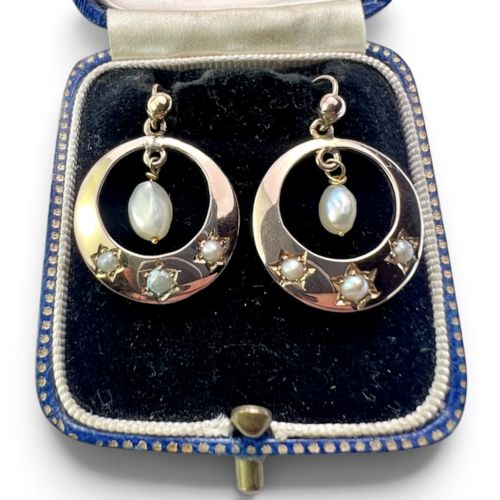
Gemstones were set using star-setting techniques where metal is pushed over the stone edges, alongside gypsy settings flush with the band and silver-backed collets for old-cut diamonds. Pearls, seed pearls, turquoise cabochons, rubies, sapphires and garnets punctuate the gold and silver work.
Victorian Celestial Jewellery Retail Price Guide 2026
Typical asking prices for victorian celestial jewellery among the pieces listed under this phrase on Sellingantiques today, from the lower quarter to the upper quarter. They describe what is for sale here now, not the wider market.
Standards of craftsmanship and stone selection
Quality rests in the precision of the stone setting and the crispness of the chased or engraved metalwork defining the celestial rays. Superior examples display well-matched, high-grade old European cut diamonds and carefully selected natural pearls or turquoise cabochons.
The architectural weight of the mount also dictates standard, with more substantial gold or silver frames providing structural integrity to delicate starbursts and hollow crescent tubes. Convertible mechanisms, allowing brooches to transform into pendants or tiaras, demand intricate engineering that separates finer pieces from simpler work.
The Victorian Celestial Jewellery Glossary
- Star-set
- A gemstone embedded flush into the metal with small triangular incisions radiating outwards to mimic starlight. This method protected the stone girdle while adding decorative brightness.
- Crescent brooch
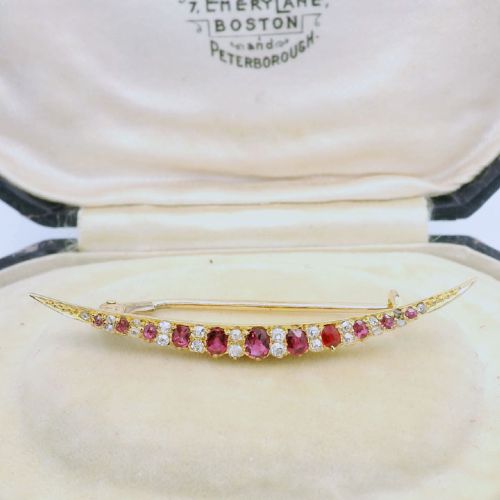
- An ornament shaped like a waxing or waning moon, frequently embellished with graduated stones. These pieces represent renewal and feminine power.
- Old European cut
- A brilliant-cut diamond shape typical of the nineteenth century featuring a small table, heavy crown and open culet. These stones catch candlelight and gaslight differently than modern cuts.
- Seed pearl
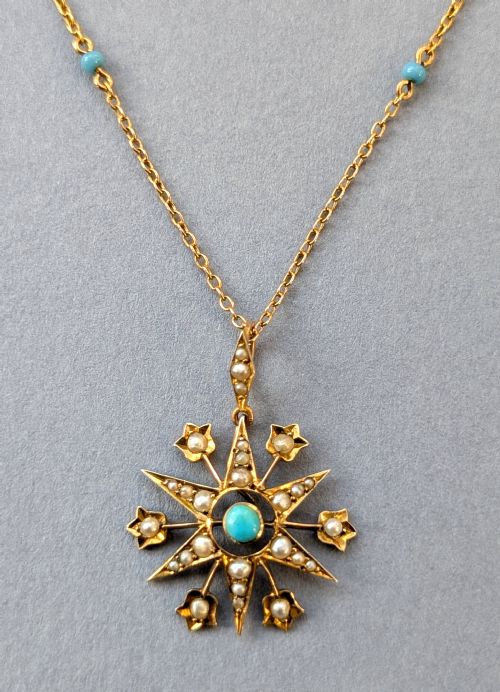
- A tiny, naturally occurring pearl often drilled and strung or glued onto gold pegs. They form delicate floral or stellar clusters in nineteenth-century designs.
- Cabochon
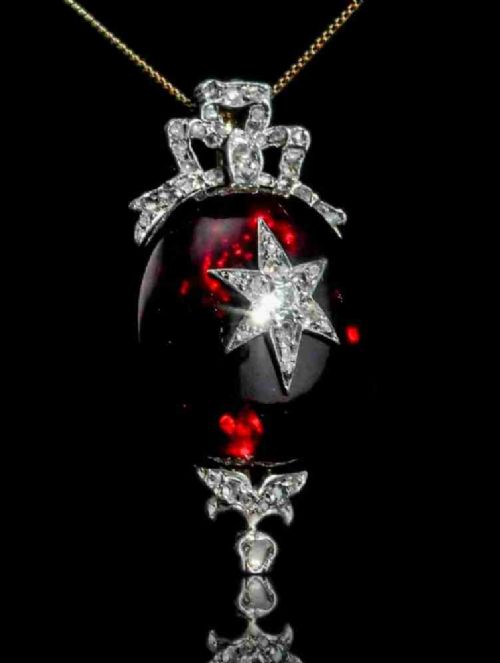
- A gemstone shaped and polished with a smooth convex surface rather than faceted facets. Turquoise, garnets and sapphires frequently appear in this form.
Victorian Celestial Jewellery: Frequently Asked Questions
What periods do these pieces span?
The selection covers items made during the Victorian and Edwardian eras, stretching from the late nineteenth century into the early twentieth century. Dates span specific decades such as eighteen-eighty through to nineteen-ten.
Craftsmanship evolves slightly across this timeframe, moving from heavier silver-topped gold Victorian clusters toward lighter Edwardian mountings and platinum accents.
How were star and crescent jewels worn?
Victorians wore these items pinned to lapels, bodices and hair, or suspended from chains as pendants. Many pieces featured detachable fittings allowing a single jewel to function as both brooch and pendant.
Rings and earrings were also popular, bringing celestial motifs into daily accessorising alongside larger statement tiara components.
What gemstones appear most often?
Diamonds dominate alongside pearls, seed pearls and turquoise cabochons. Rubies, sapphires and garnets also add flashes of colour to star and crescent designs.
Stones were chosen to contrast against yellow gold or to blend with silver settings that maximised the white reflection of old-cut diamonds.
How do I care for antique celestial jewellery?
These delicate gold and silver pieces require gentle handling, avoiding harsh ultrasonic cleaners that can dislodge seed pearls or turquoise. Professional checks on claw and star settings ensure stones remain secure.
Storage in individual soft pouches prevents the harder diamond surfaces from scratching softer gems like pearls and turquoise.