


Victorian Diamond Star Pendant
A victorian diamond star pendant captures the celestial romanticism of the nineteenth century, offering versatile convertible wear as both a brooch and a pendant.
Victorian Diamond Star Pendant
A victorian diamond star pendant is an intricate celestial jewel designed to catch candlelight and daylight alike through multi-pointed stellar motifs. These pieces frequently double as convertible brooches, allowing the wearer to adapt the mounting between a neck chain and a garment fastening.
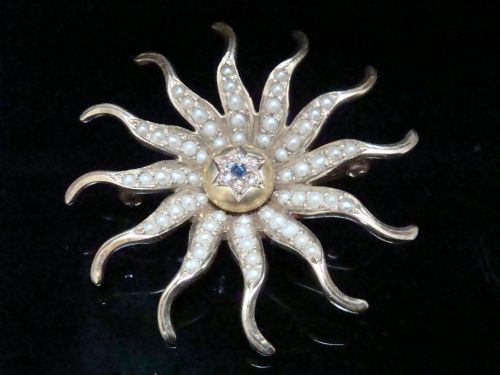
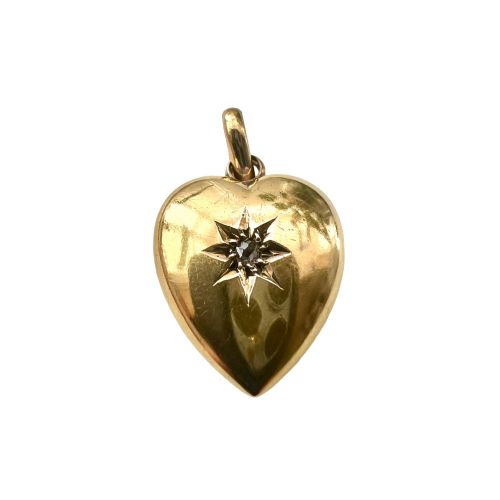
The selections on this page span the Victorian era, specifically drawing from the later decades of the nineteenth century around 1880 and 1890. Forms range from dedicated pendants and lockets to multi-functional tiaras, brooches, and necklaces featuring celestial starbursts.
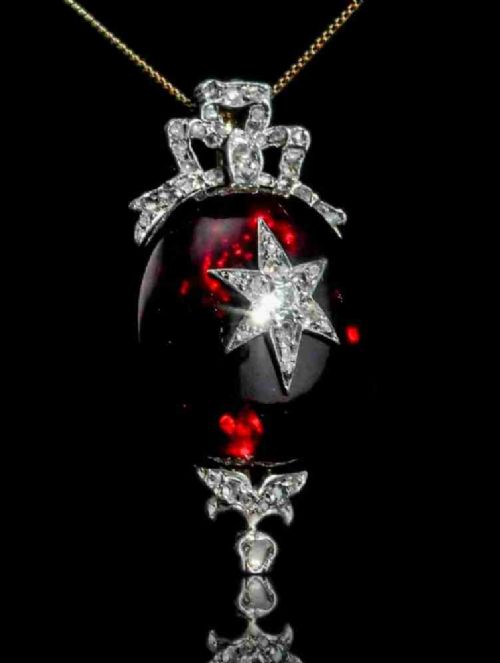
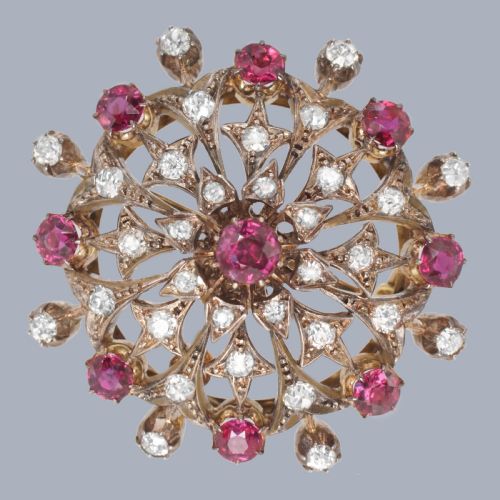
Makers of the period arranged old-cut diamonds in silver-topped gold settings to maximise the brilliance of the stones against dark backgrounds. Central motifs often incorporate pearls, rubies, garnets, or turquoise alongside the primary diamond clusters.
Materials and construction
Goldsmiths utilised silver-topped gold settings during the nineteenth century to mount old-cut diamonds securely while keeping the metalwork bright and white against the stones. The gold components typically appear in fifteen-carat and eighteen-carat yellow gold, providing structural warmth and durability.
Central stellar arrangements frequently integrate seed pearls, cabochon garnets, rubies, or turquoise alongside the diamonds to introduce rich colour contrasts. Jewelers constructed these multi-part assemblies with detachable fittings to enable the transformation between pendants, necklaces, and brooches.
Listings feature pieces incorporating fifteen-carat gold, eighteen-carat yellow gold, silver, diamonds, pearls, garnets, rubies, and turquoise.
Distinctions in quality
The caliber of a piece rests heavily on the symmetry of the star points and the proportional weight of the old-cut diamonds relative to the mounting. Finer examples display meticulous claw or collet work that holds stones firmly without obscuring their facets.
Versatility and original form also dictate distinction, particularly when convertible mechanisms for brooches and pendants remain entirely intact and functional. The inclusion of secondary gems, such as natural untreated rubies or well-matched seed pearls, elevates the overall execution of the design.
The Victorian Diamond Star Pendant Glossary
- Old-cut diamond
- A hand-faceted diamond cut during the nineteenth century featuring a smaller table, higher crown, and open culet designed to glow softly under artificial illumination.
- Silver-topped gold
- A manufacturing technique where a thin layer of silver is soldered over gold backing, allowing the face to remain bright white for diamond setting while maintaining structural strength.
- Convertible brooch pendant
- A versatile piece of jewellery fitted with a removable pin and a hidden loop, enabling the owner to wear it interchangeably upon a chain or pinned to clothing.
- Celestial starburst
- A decorative motif representing a glowing star with radiating points, highly popular in nineteenth-century jewellery design to symbolise guidance and eternity.
- Seed pearl
- A tiny, naturally occurring small pearl often utilised in clusters or borders within Victorian star pendants to add delicate texture.
Victorian Diamond Star Pendant: Frequently Asked Questions
How do I wear a convertible star pendant?
These pieces usually feature a hidden bail or loop alongside a detachable pin mechanism on the reverse. This dual construction allows the item to function equally well suspended from a neck chain or secured directly to a lapel.
When shifting between formats, ensure the pin catch locks securely to prevent loss when worn as a brooch. Alternatively, thread a suitably robust gold chain through the integrated suspension loop for pendant display.
What metals are typical in these pendants?
Nineteenth-century makers predominantly used fifteen-carat and eighteen-carat yellow gold for the structural body and reverse of the jewellery. The face holding the diamonds was frequently executed in silver to provide a bright, neutral background that complemented the stones.
This combination takes advantage of silver's cool tone for sparkle while utilising gold's strength and warmth for the mountings and chains. Hallmarks, where present, help confirm the specific gold purity used by the workshop.
Are these pieces fragile?
Victorian jewellery is robustly constructed but benefits from careful handling due to its age and intricate multi-pointed design. The delicate silver-topped settings and delicate seed pearl accents require gentle treatment to avoid bending the star rays.
Store the pendant in a dedicated box away from harder items to protect the old-cut diamonds and softer gems like turquoise or garnets. Avoid wearing them during rigorous physical activities to preserve the historical settings.
What stones accompany the diamonds?
Star pendants from the Victorian era frequently incorporate secondary gems at their centre or along the radiating points. Common additions include natural seed pearls, cabochon garnets, turquoise, rubies, and emeralds.
These coloured stones provide vibrant contrast to the monochromatic sparkle of the old-cut diamonds. Gem reports sometimes accompany specific pieces to verify the natural origins of rarer stones like untreated rubies.