


Victorian Star Pendant Necklace
A victorian star pendant necklace is a celestial piece of jewellery that brings nineteenth-century craftsmanship and starry motifs to modern wear.
Victorian Star Pendant Necklace
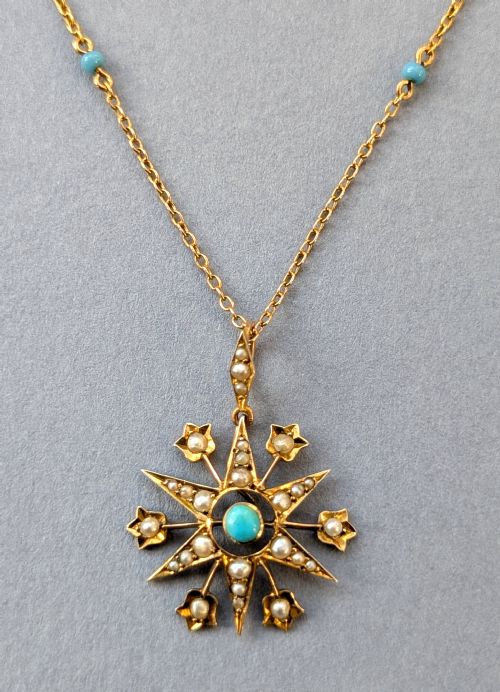
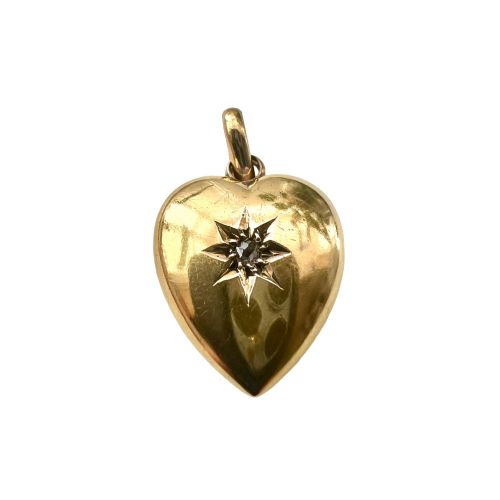
A victorian star pendant necklace combines nineteenth-century design with celestial motifs, appearing in periods from the Victorian era through to the Edwardian years. The pieces on this page span forms such as star pendants, pendant brooches, and necklaces set with stones like turquoise, diamond, and pearl.
The aesthetic leans heavily into celestial themes, incorporating garnet fringe drops, puffy hearts, and ruby accents alongside the central star motif. These ornaments reflect the romantic and naturalistic tastes of the late nineteenth century.
How They Were Made
Goldsmiths worked with 9ct, 12ct, 15ct, and 18ct yellow gold to form the backplates, chains, and settings for these stellar designs. Metal components were shaped by hand, incorporating secure collets to hold old-cut diamonds, garnets, and cabochons.
Gemstones including seed pearls, turquoise, emerald, opal, and red rock crystal were meticulously set into the gold frames. Pearls were often threaded or pegged into place, whilst diamonds received traditional old-cut facets to catch candlelight.
Materials documented across these listings include 9ct, 12ct, 15ct, and 18ct gold, paired with diamonds, turquoise, pearls, garnets, and opals.
What Varies in Quality
The distinction between standard examples and the finest pieces lies in the choice of stones and the complexity of the goldwork. Superior specimens feature larger, well-matched old-cut diamonds or substantial turquoise matrix stones integrated seamlessly into multi-layered starburst frames.
Construction quality reveals itself in the delicacy of the wirework and the security of the pearl settings. Finer examples maintain structural integrity whilst presenting intricate celestial rays and convertible brooch-pendant fittings.
The Victorian Star Pendant Necklace Glossary
- Starburst
- A decorative motif featuring radiating rays emulating a shining star, commonly set with diamonds or seed pearls. This design dominates nineteenth-century celestial jewellery.
- Seed Pearl
- A tiny, naturally formed pearl measuring under two millimetres, frequently used in tight clusters to form floral or stellar shapes. These small gems provide a delicate texture to gold backplates.
- Pendant Brooch
- A versatile piece of jewellery fitted with both a loop for a chain and a pin mechanism on the reverse. This dual function allowed the owner to wear the item pinned to a garment or suspended around the neck.
- Old-Cut Diamond
- A hand-faceted diamond cut before the advent of modern machinery, characterised by a smaller table, higher crown, and open culet. These stones display a soft, warm twinkle under artificial illumination.
- Cabochon
- A gemstone shaped and polished with a smooth, convex surface rather than faceted edges. This style is frequently utilised for turquoise, opal, and rock crystal in antique pieces.
Victorian Star Pendant Necklace: Frequently Asked Questions
What is the difference between Victorian and Edwardian star pieces?
Victorian pieces, produced during the reign of Queen Victoria, often showcase heavier gold weights and dense seed pearl or garnet clusters with deep sentimental symbolism. Edwardian items tend towards lighter, airier platinum and gold work with brighter diamond settings.
Both periods embraced celestial themes, but the Edwardian era introduced a softer, lace-like delicacy to the mounting of stones.
How do I care for antique pearl jewellery?
Antique pearls are organic gems that require gentle handling, as harsh chemicals, perfumes, and ultrasonic cleaners can damage their nacre. Wipe them gently with a soft, dry cloth after wearing to remove skin oils and cosmetics.
Store them away from harder metal pieces to prevent scratching, and avoid submerging pearl-set items in water.
What gold carats are common in these necklaces?
Nineteenth-century British jewellery commonly utilises 9ct, 15ct, and 18ct yellow gold, alongside occasional higher or lower carat variants depending on the maker's origin. These alloys often possess a warmer, deeper golden hue than modern commercial gold.
Hallmarks and stamps, where present, help confirm the specific gold standard and the year of assay.