


Victorian Garnet Necklace
A victorian garnet necklace is a deep red piece of period jewellery, prized for rich stones and warm gold work that suits evening wear.
Victorian Garnet Necklace
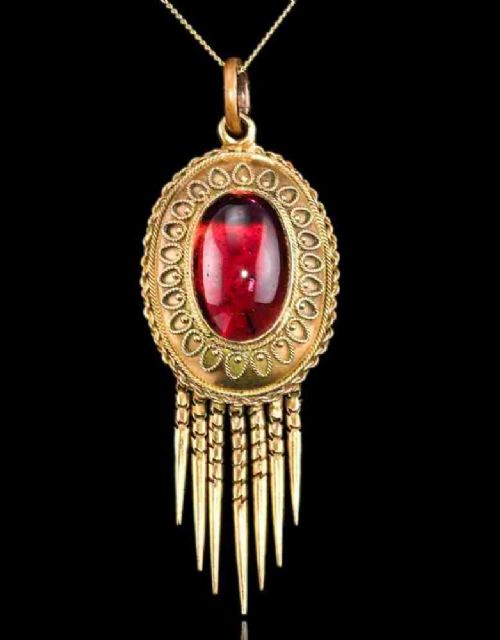
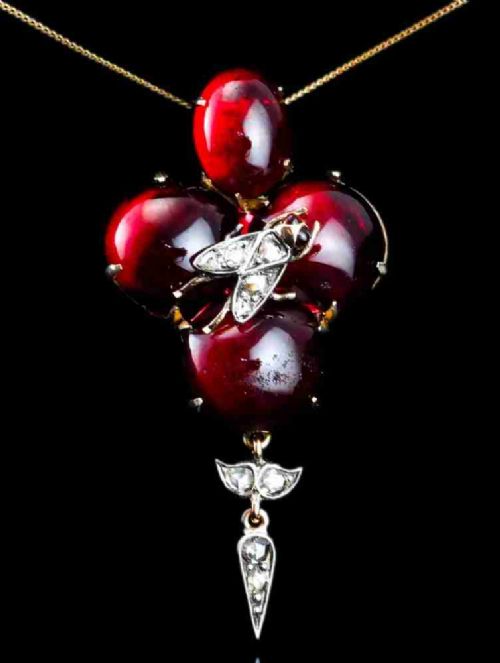
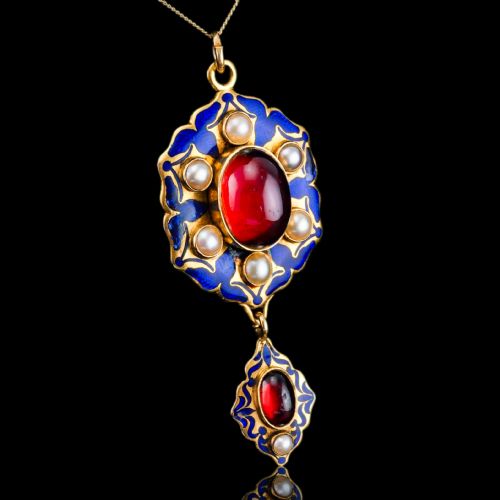
When you search for a victorian garnet necklace, you encounter pendants, fringe drops, riviere strands and lavalieres spanning the nineteenth century. These pieces combine deep red garnets with yellow or rose gold, often accented by seed pearls or diamonds.
The most common examples on this page date from the Victorian era, particularly the later decades around eighteen eighty, featuring Etruscan Revival, Renaissance Revival and Art Nouveau influences. You also find pieces stretching into the Edwardian period and nineteen thirty.
Forms range from simple cabochon pendants on slide chains to complex festoon necklaces and convertible brooch pendants. Each style reflects the evolving tastes of nineteenth century jewellers who drew inspiration from classical and Renaissance motifs.
Quality Variations
The distinction between ordinary and exceptional work rests on the weight of the gold and the precision of the stone setting. Finer pieces employ higher carat gold, such as fifteen or eighteen carat, alongside well matched natural garnets with strong brilliance.
Construction details also separate standard items from superior examples, particularly the complexity of revivalist metalwork like granulation and chased relief. Original clasps, integrated chains and well preserved enamel or pearl accents elevate the standing of a piece.
Several Victorian garnet necklaces double as brooches, offering versatile nineteenth century wearers a quick way to transition from daytime neckwear to evening lapel decoration.
The Victorian Garnet Necklace Glossary
- Cabochon
- A gemstone shaped and polished with a smooth convex surface rather than faceted. This style highlights the deep red internal glow of the garnet.
- Riviere
- A necklace composed of a continuous line of gemstones of similar size and cut, usually mounted in individual collet settings. These pieces sit closely around the neck.
- Lavaliere
- A pendant necklace featuring a central dangling ornament suspended from a finer chain. The style gained popularity during the late nineteenth and early twentieth centuries.
- Festoon
- A necklace design featuring draped chains or swags of beads and metal suspended between anchor points. This style creates a graceful, layered silhouette across the chest.
- Etruscan Revival
- A nineteenth century design movement inspired by ancient archaeological discoveries in Italy. Jewellery from this style utilises gold granulation and wirework.
Victorian Garnet Necklace: Frequently Asked Questions
How do I care for my necklace?
Store your antique jewellery separately in a soft pouch to prevent the stones and metal from scratching. Avoid exposing Victorian settings to harsh chemical cleaners or ultrasonic baths, as these can damage pearls and foils.
Clean the pieces gently using a soft, dry cloth after wearing to remove skin oils. Professional inspection of the prongs and settings helps ensure the stones remain secure over time.
Are these necklaces wearable daily?
Many pieces suit regular wear provided you handle them with care, especially items featuring delicate chain work or seed pearls. Consider removing your jewellery before swimming, exercising or sleeping to protect the historical metal.
Heavier pendant drops and intricate festoons function best as occasional evening wear. Checking the clasp and jump rings periodically ensures the piece stays secure while you move.
What gold carats were used?
Goldsmiths during the period worked with a range of purities, frequently utilising nine carat and fifteen carat gold in British pieces. Continental and later items often display fourteen carat or eighteen carat gold standards.
Silver was also employed, sometimes backed with gold, particularly in earlier settings designed to enhance the brilliance of the stones. Hallmarks and metal tests help identify the exact composition of each mounting.
How do I date a piece?
Dating relies on stylistic clues, mounting techniques and any accompanying hallmarks stamped onto the gold or silver. Etruscan Revival and Holbeinesque designs point firmly towards the middle and late nineteenth century.
Later Edwardian and nineteen thirty examples introduce softer floral lines and lighter platinum or gold frames. Comparing the construction methods with documented historical pieces provides a reliable window of origin.