


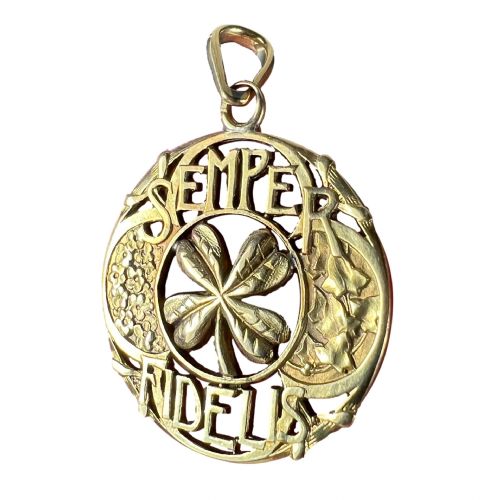
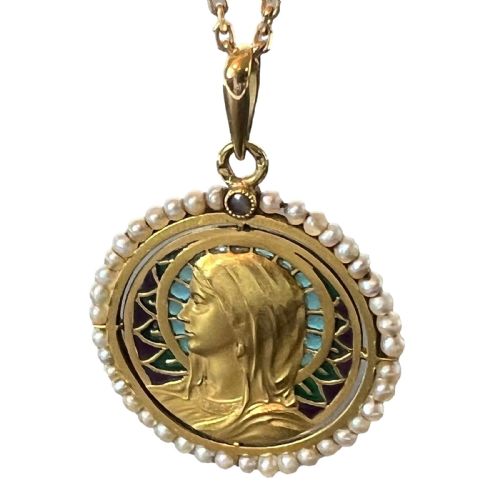
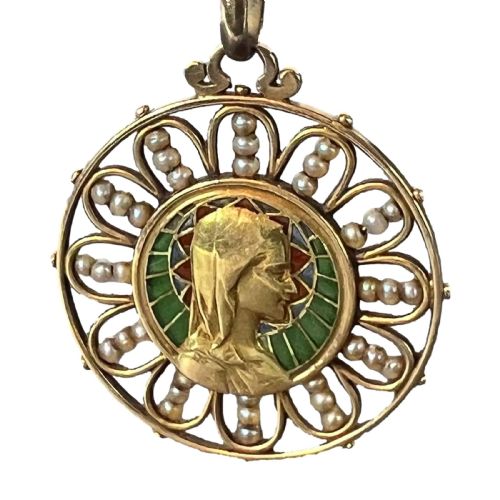


18k Gold Pendant
An 18k gold pendant brings together fine metalwork and miniature sculpture, offering wearable history from the Victorian, Edwardian and mid-century eras.
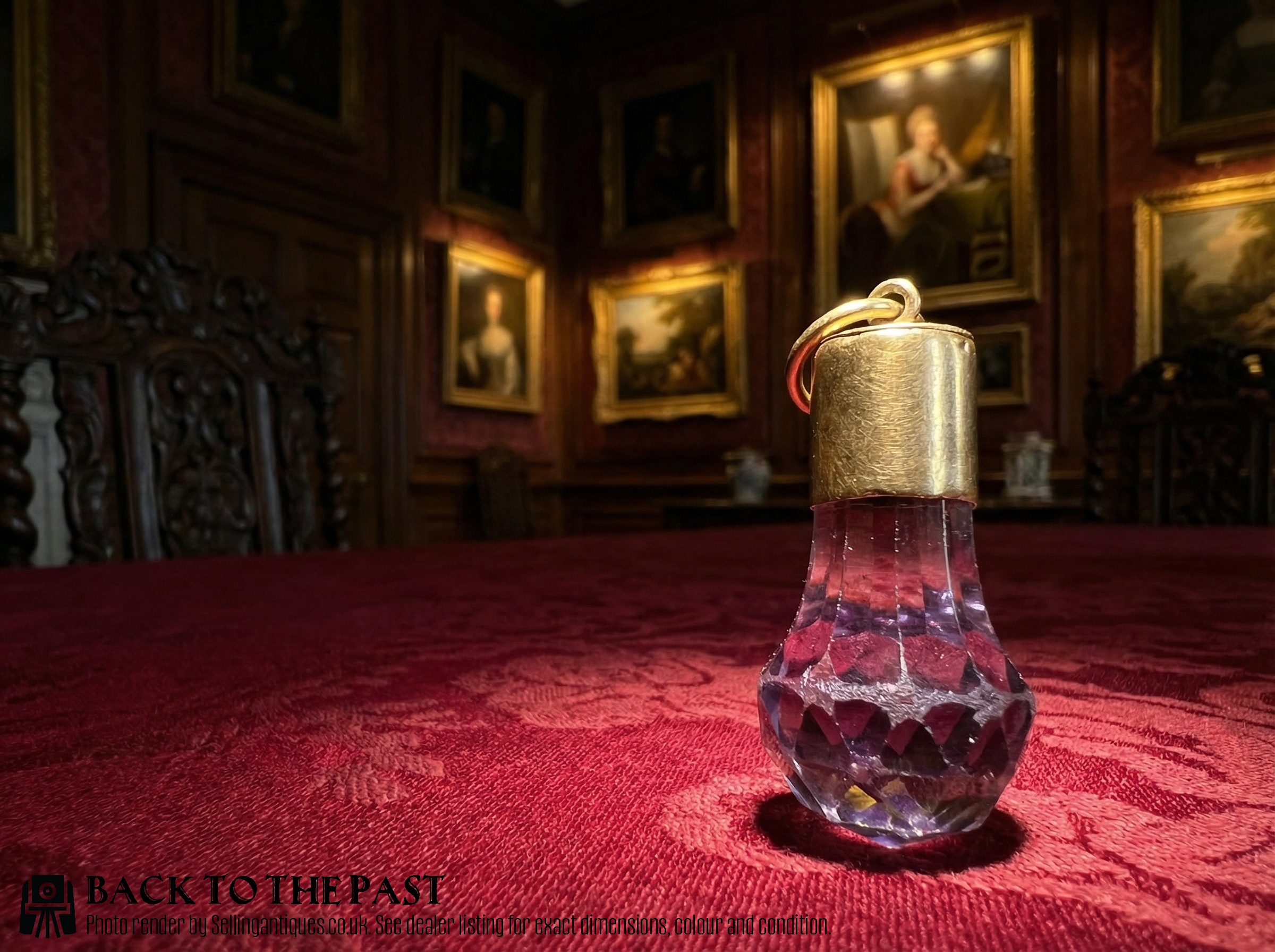
18k Gold Pendant
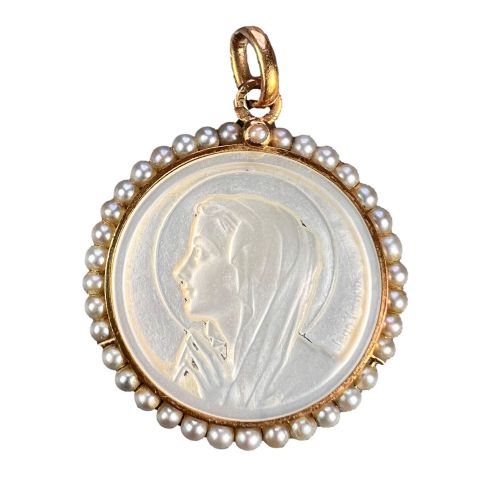
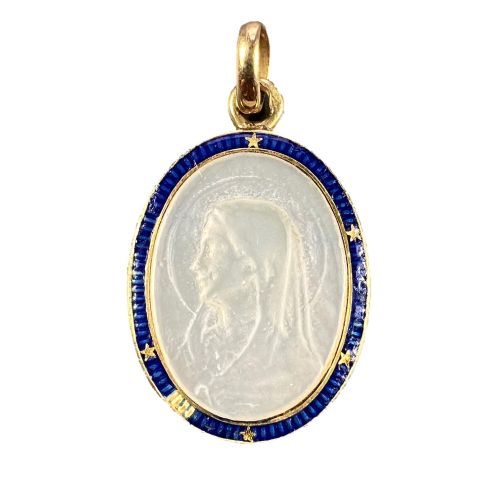
The 18k gold pendant category encompasses devotional medals, zodiac charms and romantic lockets originating largely from French workshops across the late nineteenth and early twentieth centuries. Pieces frequently feature depictions of the Virgin Mary, Madonna and Child, or astrological signs cast in high-purity yellow, rose or white gold.
Buyers encounter many examples bearing French hallmarks alongside signatures from notable medallists and designers. Formats range from simple stamped discs to complex multi-part items incorporating enamelling, pearls and gemstones.
How they were made
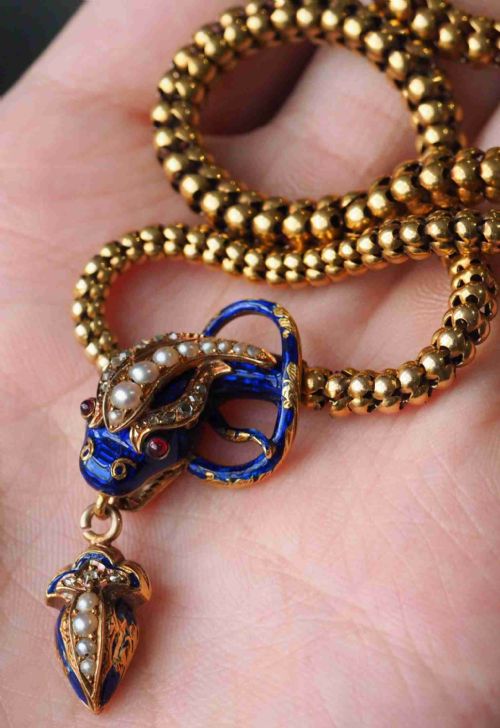
Craftsmen utilised 18-carat yellow, rose and white gold as the primary substrate, often shaping the metal through stamping, casting or delicate wirework. Surface decoration frequently involved polychrome enamel, plique-à-jour techniques that let light pass through translucent colour, and hand-engraving.
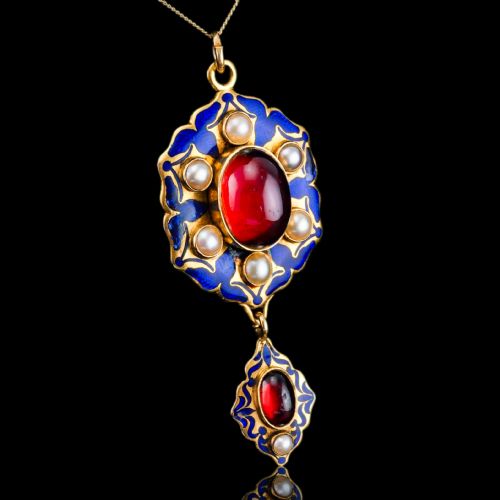
Many items incorporate set stones including diamonds, pearls, rubies, garnets, citrines and mother of pearl. Structural elements were joined by hand soldering, while portrait reliefs and devotional scenes were struck with hardened steel dies to capture intricate facial expressions and drapery.
18k Gold Pendant Retail Price Guide 2026
Typical asking prices for 18k gold pendant among the pieces listed under this phrase on Sellingantiques today, from the lower quarter to the upper quarter. They describe what is for sale here now, not the wider market.
What varies in quality
Quality rests heavily on the crispness of the original strike and the reputation of the designer or medallist whose signature appears on the metal. Finer examples display meticulous hand-chasing that sharpens details in hair, robes and lettering lost on mass-produced alternatives.
The preservation of delicate vitreous enamels and plique-à-jour panels also separates standard pieces from exceptional survivals. Superior items retain intact enamel without stress fractures, accompanied by secure original suspension loops and clear hallmarks.
Emile Monier·Paul Brandt·Perroud·Mazzoni·Pageli Perriat·Dropsy·Guilbert·Vernon·Sellier·Rasumny·Ovide Yencesse·Augis·Lasserre·Becker·Tricard
The 18k Gold Pendant Glossary
- Plique-à-jour
- An enamelling technique resembling miniature stained glass where enamel is fired without a backing, allowing light to shine through the transparent or translucent colour.
- Medal
- A flat, coin-like pendant usually struck with a pictorial or textual relief commemorating a religious figure, saint, or significant personal event.
- Hallmark
- An official stamp applied to precious metals indicating purity, origin, and sometimes the maker or assay office.
- Holbeinesque
- A Victorian revival style drawing inspiration from sixteenth-century jewellery designs attributed to Hans Holbein, typically featuring heavy enamelling and cluster gemstone settings.
- Vitreous enamel
- Glass fused to metal at high temperatures, producing a durable, glossy surface colour that resists fading over centuries.
18k Gold Pendant: Frequently Asked Questions
How were religious medals worn?
Religious medals were traditionally worn daily suspended close to the heart on a thin gold chain or fabric ribbon, serving as a personal talisman of protection and faith.
Many examples include small loop attachments designed specifically to thread onto necklaces or charm bracelets alongside other personal mementos.
How do I date a gold pendant?
Dating involves examining stylistic cues such as the flowing lines of Art Nouveau, the geometric rigour of Art Deco, or the heavy symbolism typical of the Victorian era.
Maker marks, stamped hallmarks, and the specific composition of the gold or accompanying gemstones further narrow down the decade of production.
What is plique-à-jour enamel?
Plique-à-jour is a demanding enamelling method where molten glass is suspended within open gold wire cells without a solid backing plate.
This technique creates a stained-glass effect that glows when illuminated by natural light passing through the transparent colours.