


French Gold Medal
A french gold medal carries the precise engraving and devotional iconography characteristic of late nineteenth and early twentieth century European goldsmithing.
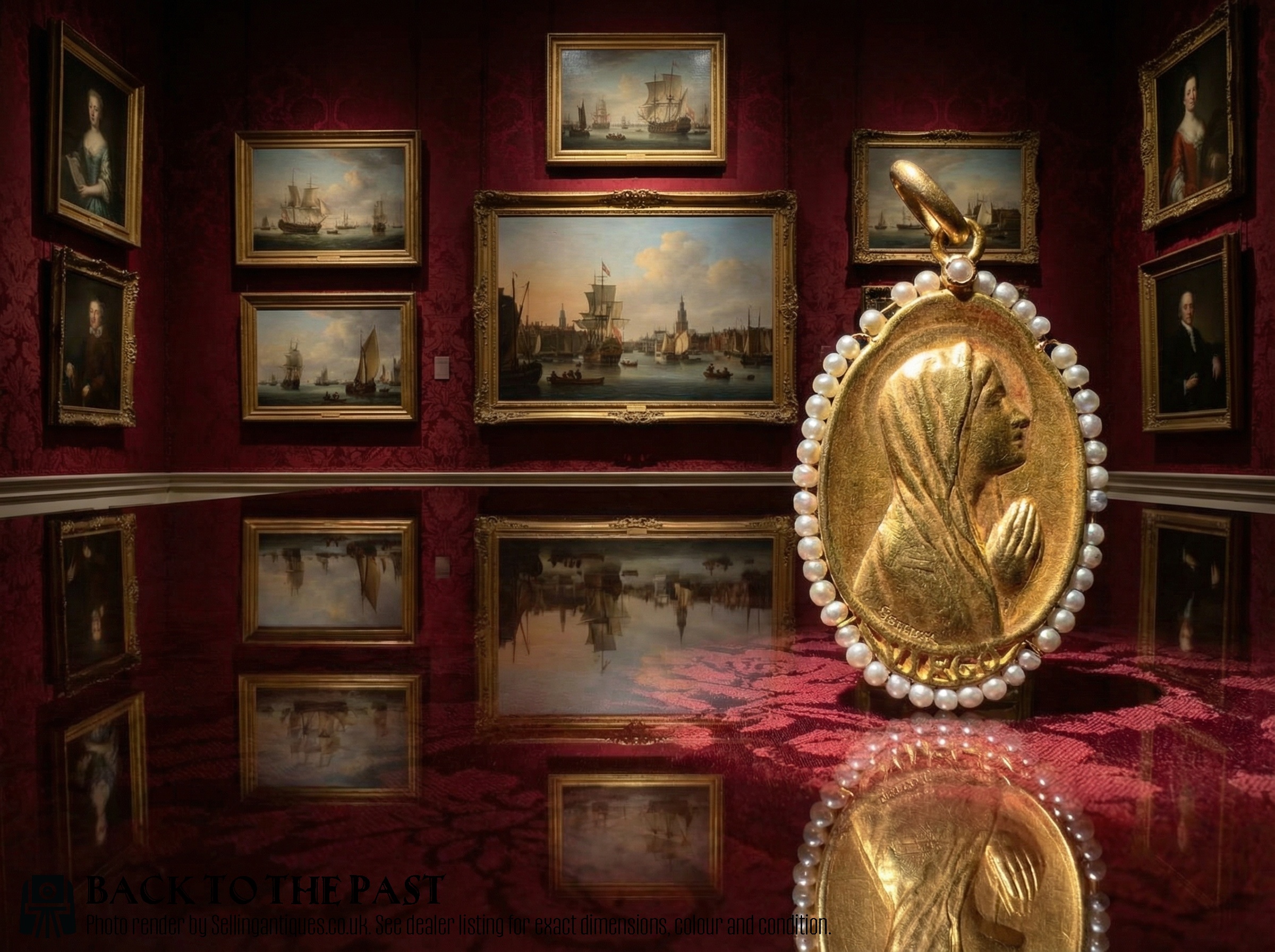
French Gold Medal
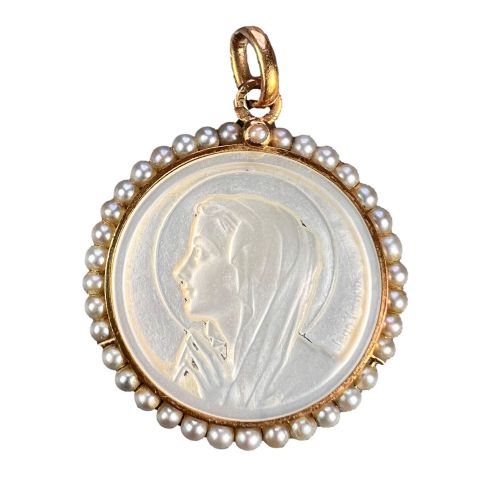
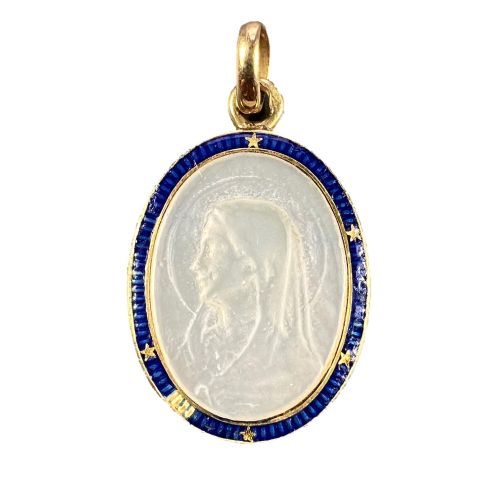
A french gold medal typically takes the form of a pendant or charm designed to be worn on a necklace. These pieces serve primarily as religious pendants, devotional objects, or commemorative tokens.
The selections span periods from eighteen ninety through the nineteen fifties, encompassing Art Nouveau, Belle Epoque, Art Deco, and mid-century designs. Pieces depicting the Virgin Mary, Madonna and Child, and Saint Christopher appear most frequently.
How they were made
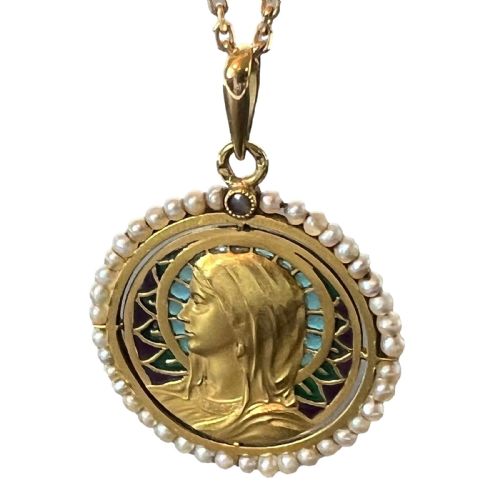
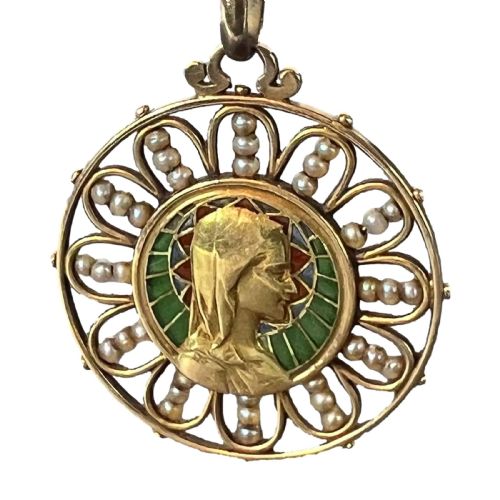
Artisans shape these medals predominantly from eighteen karat yellow, rose, or white gold. Enamel work, including translucent plique-a-jour techniques, adds colour to robes, halos, and floral wreaths.
French Gold Medal Retail Price Guide 2026
Typical asking prices for french gold medal among the pieces listed under this phrase on Sellingantiques today, from the lower quarter to the upper quarter. They describe what is for sale here now, not the wider market.
Motifs include religious figures, zodiac symbols, hunting horns, and floral wreaths executed in Art Nouveau and Art Deco styles.
What varies in quality
The depth and clarity of the metal relief define the standard of execution. Medals bearing signatures from known artists display sharper detailing in hair, folds of fabric, and facial expressions.
The integration of secondary materials like enamel or mother of pearl distinguishes standard devotional items from finer workshop pieces. Intricate piercing and hand-chased borders separate simpler production runs from superior examples.
Emile Monier·Paul Brandt·Emile Dropsy
The French Gold Medal Glossary
- Plique-a-jour
- Enamelling technique where enamel is applied without a backing, creating a translucent stained glass effect that lets light pass through.
- Hallmark
- Official stamp pressed into the metal to indicate gold purity and country of origin.
- Devotional medal
- Small pendant struck with religious imagery intended for personal prayer and protection.
- Relief
- Sculptural technique where figures project from a flat background surface.
- Mother of pearl
- Iridescent inner layer of shell used as a backing or inset material.
French Gold Medal: Frequently Asked Questions
What is a french gold medal?
A french gold medal is a small devotional or commemorative pendant struck in eighteen karat gold. They frequently depict religious figures such as the Virgin Mary or Saint Christopher.
These items date largely from the late nineteenth century through the mid-twentieth century. They were produced by various Parisian workshops and individual medallists.
How do I wear a medal pendant?
These medals hang from chains as pendant necklaces or attach to bracelets as charms. Their small loop attachments accommodate standard fine chains.
Collectors often pair them with period gold chains or wear multiple medals together. They function as both personal jewellery and historical artefacts.
Who made these medals?
Numerous identified artists and medallists designed these pieces for French workshops. Names like Emile Dropsy and Paul Brandt appear frequently on the margins.
Maker marks and hallmarks stamped onto the metal help identify the specific atelier or designer. These signatures indicate the high standard of nineteenth and twentieth century French die-striking.
What materials are used?
Eighteen karat yellow, rose, and white gold form the primary structure of these objects. Enamel, mother of pearl, and seed pearls frequently accent the gold surfaces.
Plique-a-jour enamel appears in finer devotional pieces to create translucent coloured details. The combination of gold purity and decorative inserts defines each piece.