




18k Gold Medallion
An 18k gold medallion brings together fine metalwork and miniature portraiture, carrying religious figures, zodiac signs, or floral wreaths from the late eighteenth century into the mid-twentieth century.
18k Gold Medallion
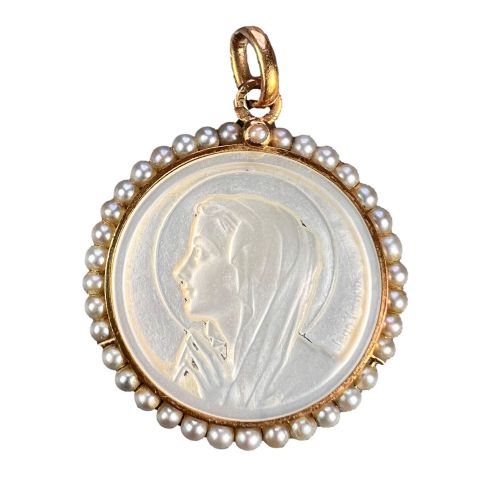
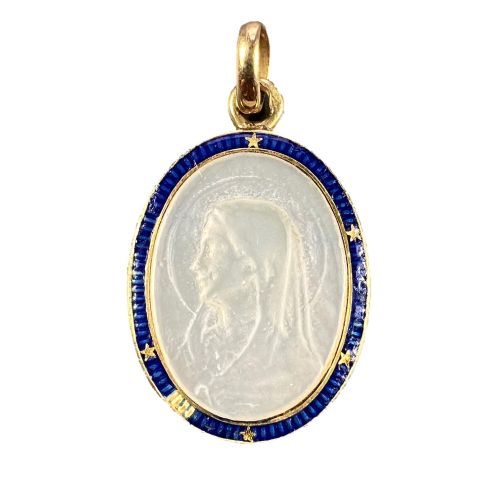
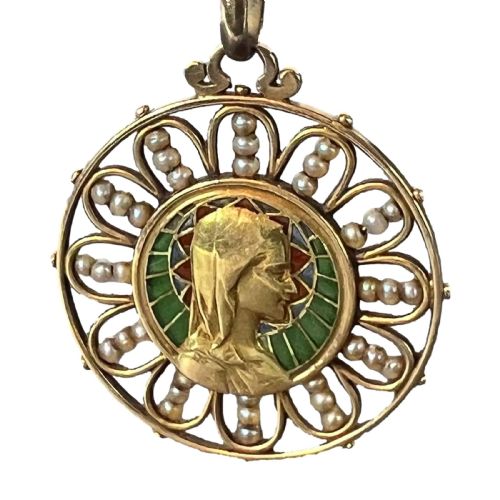
When you search for an 18k gold medallion, you encounter pendant medals, charms, and religious tokens originating primarily from France across the late nineteenth and early twentieth centuries. These objects take the form of small, wearable plaques cast in yellow, rose, or white gold, often bearing devotional images of the Virgin Mary, Madonna and Child, or saints.
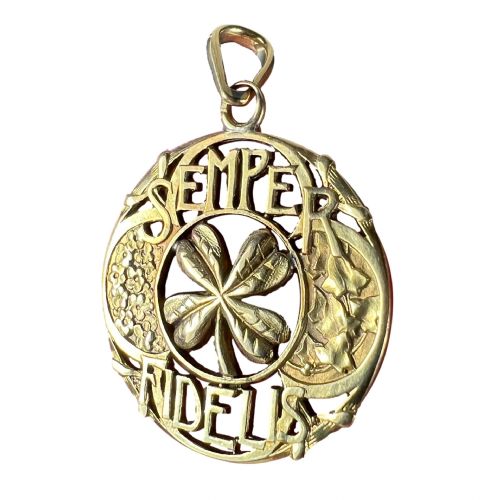
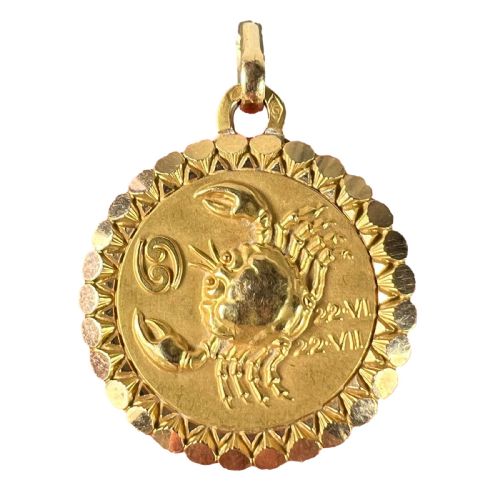
Beyond religious iconography, the selection includes zodiac starsigns, floral wreaths, armorial shields, and miniature painted panels framed in high-purity gold. Most pieces date from the Belle Epoque and Art Nouveau periods, reflecting the intricate craftsmanship of European workshops from the 1890s through the 1930s.
Materials and technique
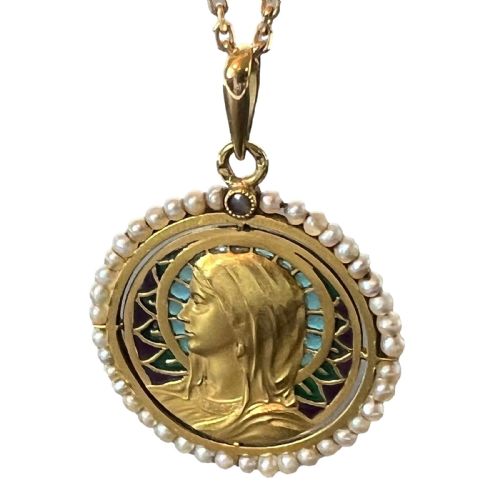
Makers shaped these pendants from 18-carat yellow, rose, and white gold, utilising casting, stamping, and hand-engraving techniques to define the portraits and borders. Many examples incorporate translucent plique-a-jour enamel, opaque coloured enamel, or seed pearls set along twisted wire frames and sunburst motifs.
Several pieces combine the metal base with organic materials such as mother-of-pearl plaques or agate panels, allowing artists to paint miniature portraits directly onto the stone. Skilled medallists signed their miniature reliefs, ensuring the metal frames complemented the central carved or painted subjects.
18k Gold Medallion Retail Price Guide 2026
Typical asking prices for 18k gold medallion among the pieces listed under this phrase on Sellingantiques today, from the lower quarter to the upper quarter. They describe what is for sale here now, not the wider market.
Materials recorded across the inventory include 18ct yellow, rose, and white gold, combined with enamel, mother-of-pearl, agate, and pearls.
Distinctions in quality
The complexity of the surrounding metalwork, such as twisted wire frames, applied seed pearls, or integrated floral wreaths, adds structural and visual depth. Pieces that retain their original suspension loops and clear maker punches command greater interest from collectors.
Emile Monier·Paul Brandt·Perroud·Mazzoni·Perriat·Guilbert·Vernon·Emile Dropsy·Sellier·Rasumny·Ovide Yencesse·Tairac
The 18k Gold Medallion Glossary
- Medallion
- A large metal disc or plaque, often worn as a pendant, bearing a portrait, symbol, or inscription in relief.
- Plique-a-jour
- An enamelling technique where the enamel is applied without a backing, creating a stained-glass effect that lets light pass through the transparent colours.
- Charm
- A small decorative trinket suspended from a bracelet or pendant loop, frequently shaped as a personal symbol or religious token.
- Mother-of-pearl
- The iridescent inner layer of mollusc shells, carved and polished to form smooth backing panels for engraved gold reliefs.
- Relief
- Sculptural work where the figures project from a flat background, defining the portraits on these metal medals.
18k Gold Medallion: Frequently Asked Questions
What is an 18k gold medallion?
An 18k gold medallion is a small wearable plaque or pendant fashioned from high-purity gold, featuring engraved or relief-cast imagery.
These pieces typically depict religious figures, zodiac signs, or family crests, often originating from French workshops during the late nineteenth and early twentieth centuries.
How were these pendants worn?
Original owners wore these pieces suspended from fine gold chains around the neck or attached to charm bracelets.
Religious pendants served as personal devotional items or protective tokens, while zodiac and floral medals functioned more as decorative ornaments.
How do I care for antique gold jewellery?
Maintain antique gold and enamel pendants by storing them individually in soft pouches to prevent surface scratches.
Avoid harsh chemical cleaners, especially on pieces containing enamel, mother-of-pearl, or seed pearls, using only a soft cloth for gentle cleaning.
How can I tell the period of a medal?
Dating relies on stylistic markers such as the flowing organic lines of Art Nouveau, the geometric symmetry of Art Deco, or specific maker signatures.
Small assay marks stamped onto the metal surface also help identify the country of origin and purity standard.