


French Religious Jewellery
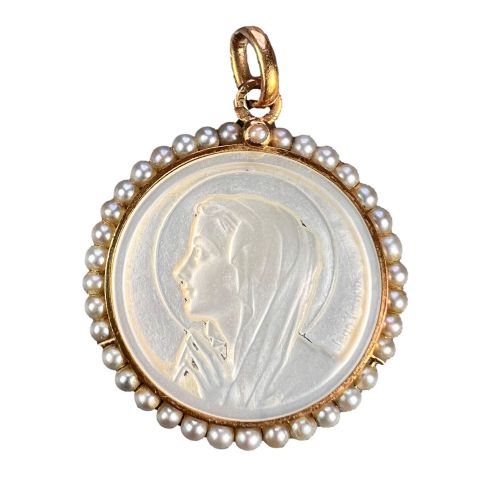
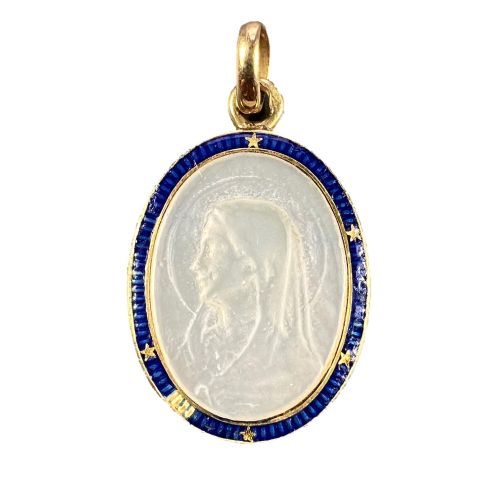
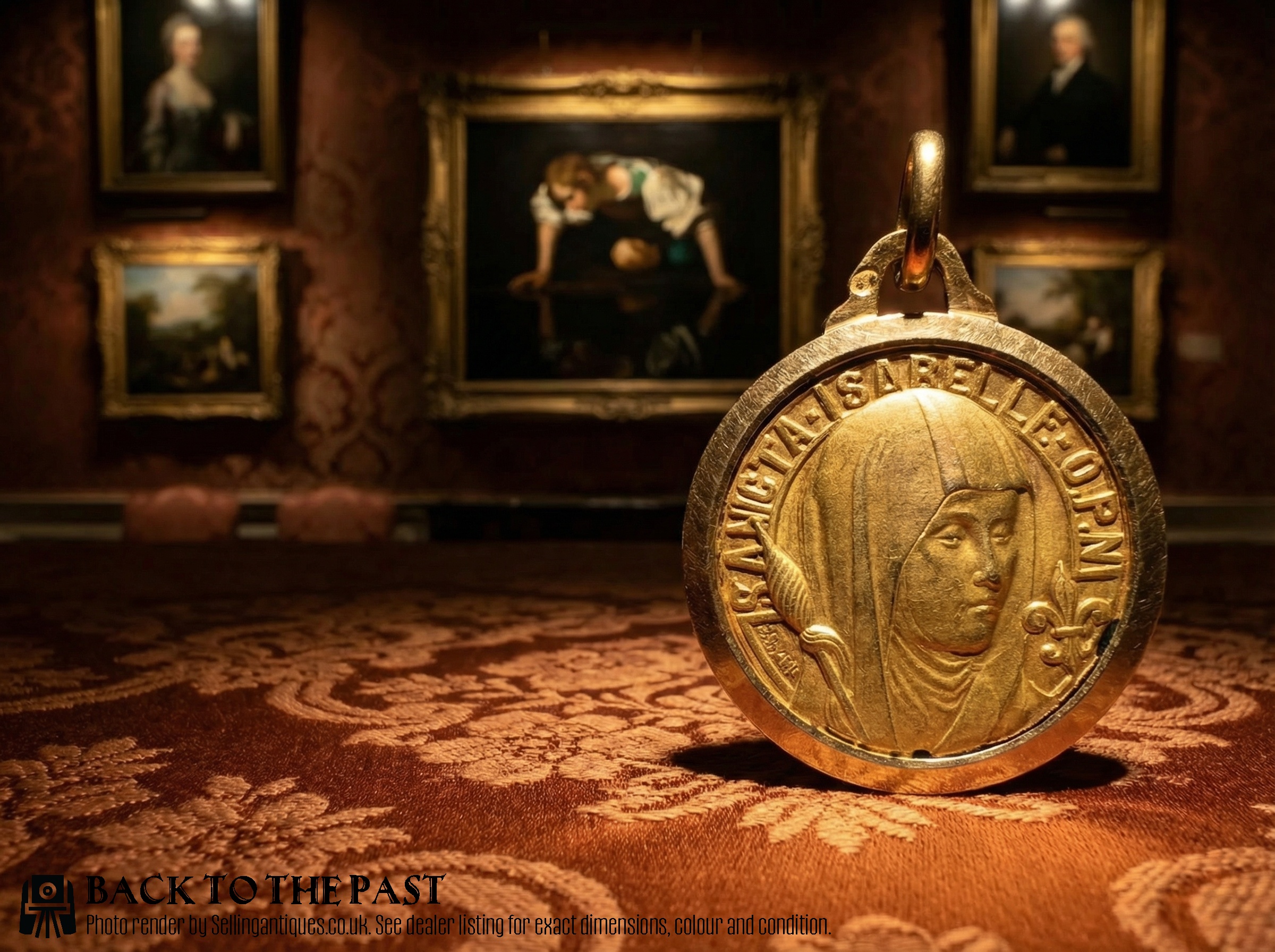
French religious jewellery brings together golden devotional medals and pendants carrying figures like the Virgin Mary, the Madonna and Child, and Saint Christopher.
French Religious Jewellery
French religious jewellery consists mainly of pendants, charms, and medals created for personal devotion. Pieces range from the Georgian period through the nineteenth and twentieth centuries, taking the form of round, oval, or cross-shaped medals.
The version you are most likely to meet on this page is an 18K yellow gold pendant from around 1910, depicting the Virgin Mary. These items often combine religious iconography with distinct stylistic movements such as Art Nouveau and Art Deco.
Makers and medallists produced these items in varied forms, including travel medals, miraculous medals, and devotional charms. Mother of pearl, enamel, and seed pearls frequently accent the gold work to highlight the central figures.
How They Were Made
Makers forged these devotional items primarily in 18K yellow, rose, and white gold, often shaping the metal into detailed medals and crosses. The gold provides a warm ground for hand-engraved figures and raised relief portraits of saints.
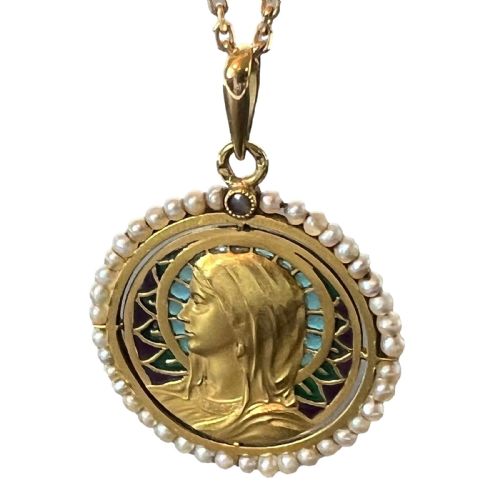
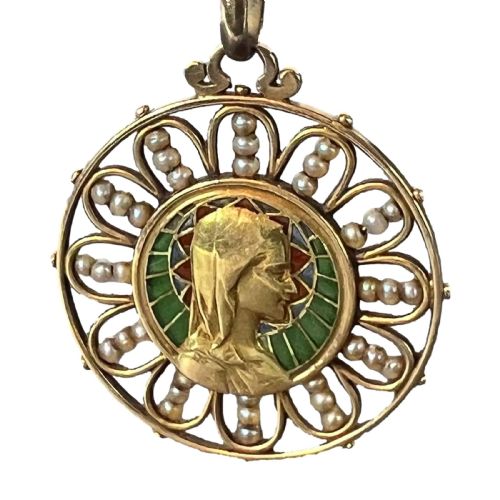
Enamel work adds colour and depth, particularly through techniques like plique-a-jour, which allows light to pass through the translucent coloured glass. Seed pearls and mother of pearl are frequently integrated as border decorations or sculptural backgrounds.
French Religious Jewellery Retail Price Guide 2026
Typical asking prices for french religious jewellery among the pieces listed under this phrase on Sellingantiques today, from the lower quarter to the upper quarter. They describe what is for sale here now, not the wider market.
Listings span from the Georgian period through the 1960s, with a strong concentration of pieces dated around 1910.
What Varies in Quality
The standard of engraving and sculptural relief defines the upper tier of these pieces. Medals designed by known artists show finer details in facial expressions and drapery folds compared to standard commercial outputs.
Material complexity also separates individual items. Pieces incorporating translucent plique-a-jour enamel or natural seed pearls require greater technical skill than plain gold stampings.
Emile Monier·Paul Brandt·Mazzoni·Pageli Perriat·Emile Dropsy·Guilbert·Vernon·Sellier·Rasumny·Ovide Yencesse·Tairac
The French Religious Jewellery Glossary
- Plique-a-jour
- An enamelling technique where enamel is applied within a cellular metal framework without a backing, resembling miniature stained glass. This method lets light shine directly through the translucent colours.
- Miraculous Medal
- A specific devotional medal associated with an apparition of the Virgin Mary, usually featuring a standard oval shape and specific Marian symbols. They were widely distributed across France as tokens of grace.
- Seed Pearl
- Very small natural pearls, often drilled and strung or used as decorative borders on pendants and rings. They bring a delicate, luminous texture to nineteenth and twentieth-century designs.
- Sacred Heart
- A Christian symbol representing the heart of Jesus Christ as a symbol of divine love, often shown radiating flames or surrounded by thorns. It appears frequently on French devotional medals.
French Religious Jewellery: Frequently Asked Questions
Who wore French religious pendants?
Catholics in France wore these pendants as personal expressions of faith, protection, and devotion. They were often given for significant life events like first communions, confirmations, or weddings.
Families passed them down through generations, keeping the medals close as protective talismans or daily reminders of patron saints and holy figures.
How do you wear a religious pendant today?
You can hang these gold charms and medals from a fine chain around the neck as a pendant necklace. They also work well added to a charm bracelet alongside other small golden trinkets.
Their moderate scale makes them versatile for layering with modern jewellery or wearing simply on their own as a focal point.
How can you tell the period of a medal?
Stylistic clues within the metalwork often reveal the era of production. Art Nouveau pieces display flowing, organic floral lines from the late nineteenth and early twentieth centuries, while Art Deco items feature geometric symmetry.
Maker signatures stamped onto the metal also help anchor pieces to specific active periods of known Parisian medallists and workshops.