



French 18k Gold Charm
When choosing a french 18k gold charm, you encounter miniature artworks recording devotion, affection and personal identity from the late nineteenth and early twentieth centuries.
French 18k Gold Charm
A french 18k gold charm encompasses small pendants, medals and markers originally worn on bracelets or chains during the Belle Epoque, Art Nouveau and Art Deco periods. These items record religious devotion, romantic sentiment, gambling luck and zodiac signs through miniature sculptural forms.
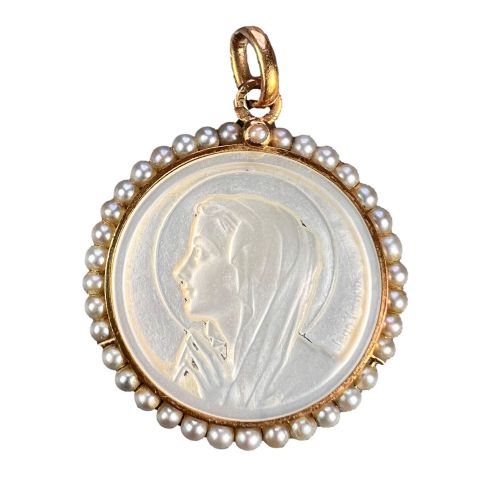
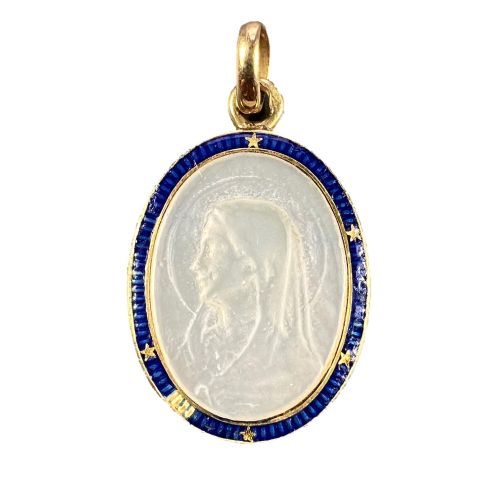
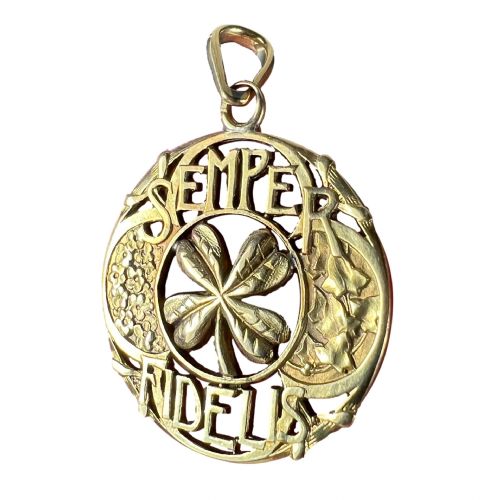
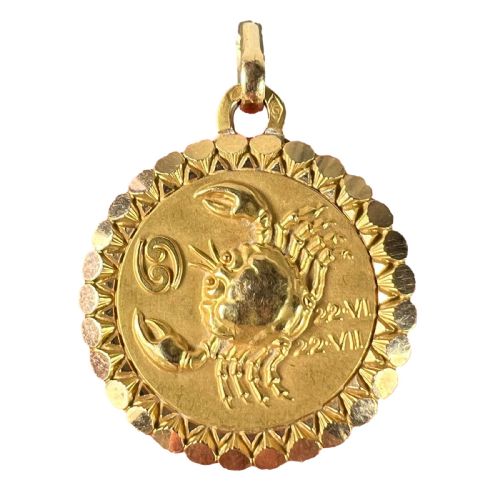
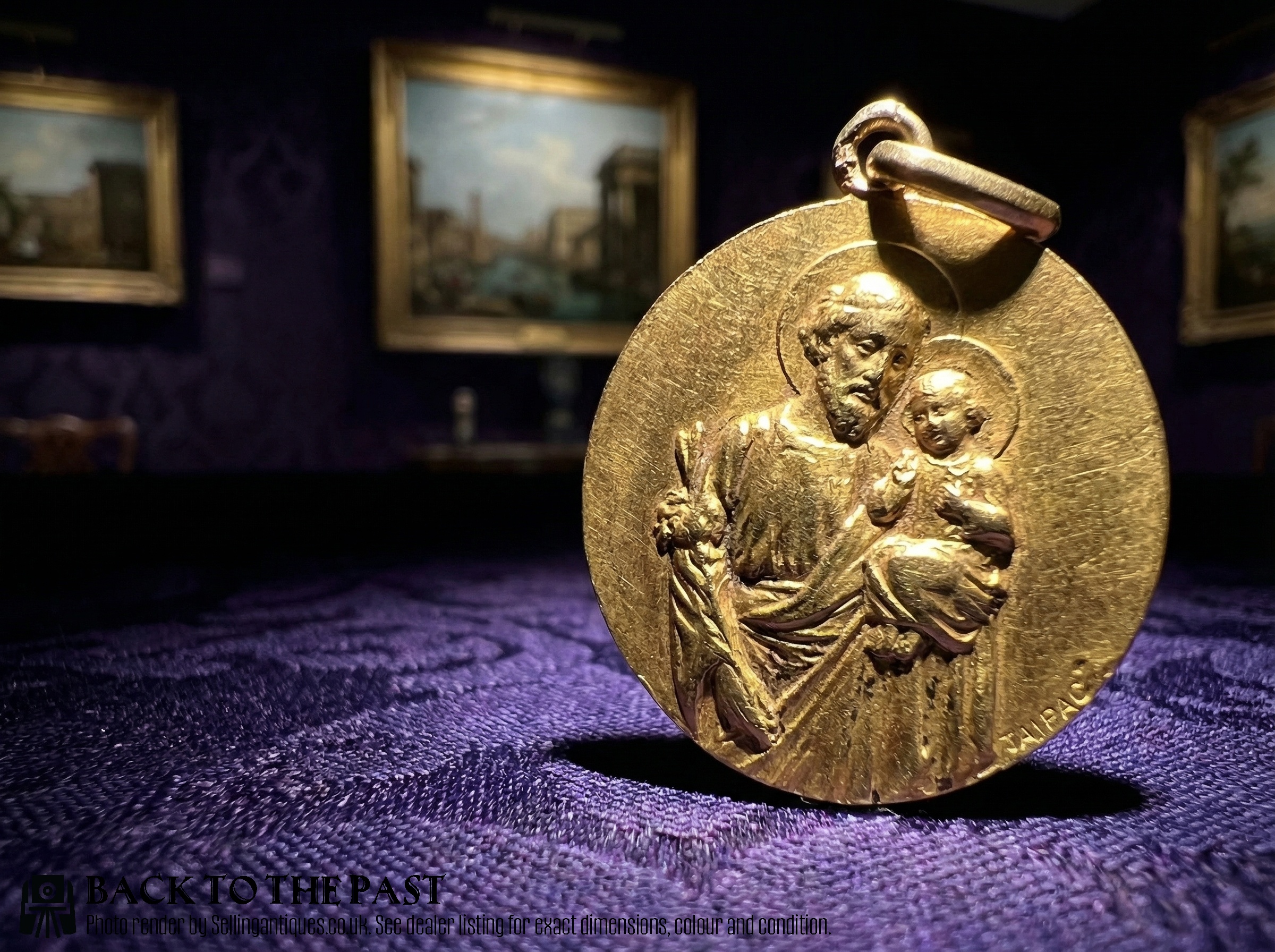
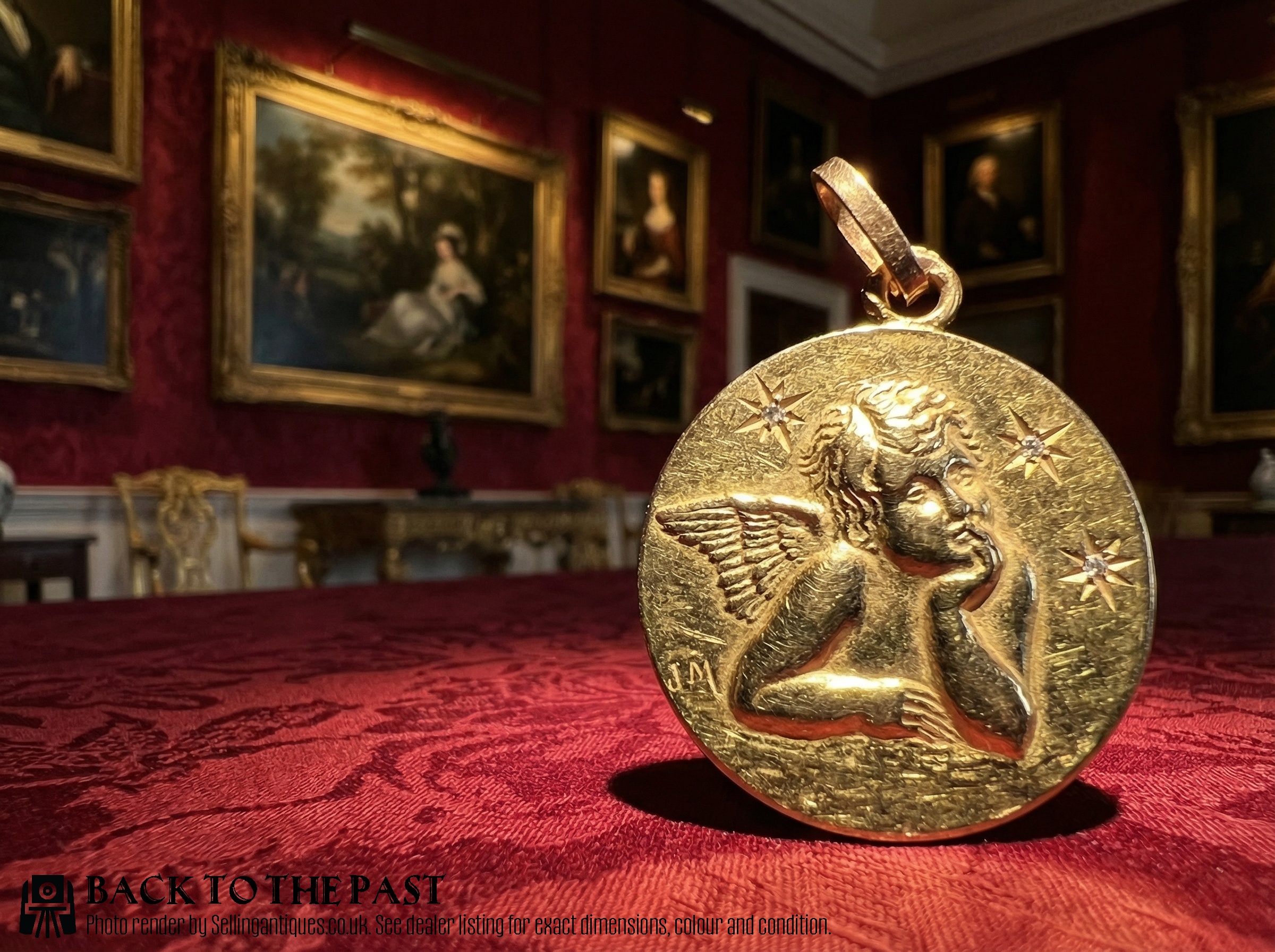
The most common examples on this page are devotional medals featuring the Virgin Mary, Madonna and Child or various saints, often created by named medallists. Alongside these religious pieces, sentimental love tokens, four-leaf clovers, animal figures and astrological signs appear regularly.
Makers produced these works in yellow, rose and white 18k gold, frequently combining precious metals with enamel, mother of pearl or gemstones. Collectors find these pieces functioning as both personal amulets and sophisticated examples of miniature French goldsmithing.
Materials and Techniques
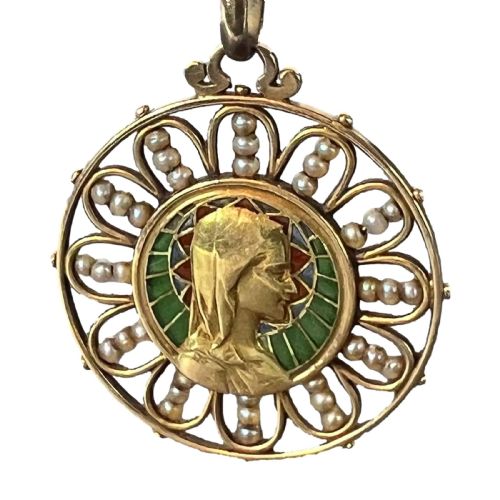
Goldsmiths utilised 18-karat yellow, rose and white gold as the primary structural material for these pendants, shaping the metal through casting, stamping and delicate wirework. Twisted wire frames and filigree borders frequently surround the central motifs.
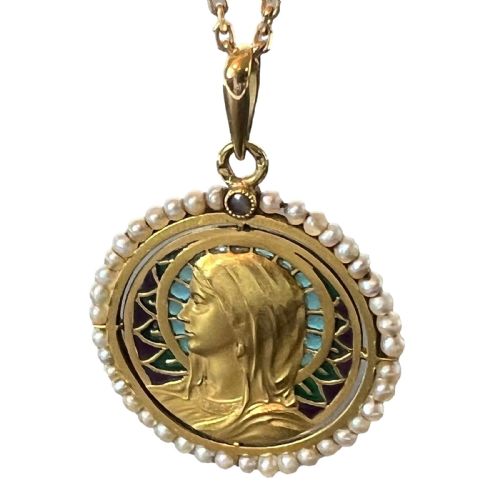
Colour entered these designs through translucent and opaque enamel techniques, including plique-a-jour, which allows light to pass through the enamel cells like stained glass. Artisans also incorporated mother of pearl plaques, carved shell and small seed pearls to add texture and contrast to the gold surfaces.
French 18k Gold Charm Retail Price Guide 2026
Typical asking prices for french 18k gold charm among the pieces listed under this phrase on Sellingantiques today, from the lower quarter to the upper quarter. They describe what is for sale here now, not the wider market.
Listings span periods from eighteen ninety through nineteen fifty, capturing Art Nouveau, Art Deco and mid-century French jewellery production.
Evaluating Quality
Quality in these miniatures rests upon the crispness of the modelled relief and the skill involved in any enamel work. Pieces designed by documented artists display superior facial expressions, drapery folds and lettering compared to anonymous workshop output.
The sophistication of the secondary decoration, such as hand-engraved floral wreaths, twisted wire bezels and translucent plique-a-jour cells, distinguishes exceptional goldsmithing from standard production.
Emile Dropsy·Paul Brandt·Augis·Ovide Yencesse·Perroud
The French 18k Gold Charm Glossary
- Plique-a-jour
- An enamelling technique where enamel is applied to open cells without a backing metal, creating a translucent effect similar to miniature stained glass windows. This method demands high technical skill to avoid cracking during firing.
- Medal
- A flat or slightly domed metal disc bearing a stamped or engraved devotional or commemorative image. These often feature suspension loops for wearing as pendants.
- Witch's heart
- A stylized heart amulet with an inwardly curved tail, traditionally symbolizing romantic entrapment or love. In French jewellery, these often incorporate gemstones or engraved motifs.
- Miraculous medal
- A specific devotional medal depicting the Virgin Mary based on apparitions reported by Catherine Labouré in eighteen thirty. These items hold specific religious iconography including stars and the letter M.
- Filigree
- Delicate wirework soldered together in open lace-like patterns to form decorative borders or entire pendant bodies. Goldsmiths use twisted gold threads to achieve intricate geometric or floral designs.
French 18k Gold Charm: Frequently Asked Questions
What are french 18k gold charms?
These items are small wearable gold objects produced in France during the late nineteenth and early twentieth centuries. They encompass religious medals, love tokens, zodiac signs and lucky symbols.
Craftsmen formed them from 18-karat gold, often integrating enamel, mother of pearl and gemstones into miniature sculptural designs.
How were these charms used?
People wore these pieces suspended from charm bracelets, chatelaines or neck chains as personal talismans. Religious medals served as daily expressions of faith and protection.
Other designs communicated romantic affection, celebrated astrological birthdays or marked special occasions with secret messages and miniature mechanisms.
How can I tell the periods apart?
The aesthetic style provides the clearest indication of date within the evidence span from eighteen ninety to nineteen fifty. Late nineteenth-century pieces lean towards naturalistic floral engraving and rose gold.
Art Nouveau examples introduce flowing lines and plique-a-jour enamel, while Art Deco items favour geometric motifs, dice, compasses and cleaner typography.
Who made these gold charms?
Many pieces bear the marks or signatures of established French medallists and jewellery workshops. Prominent designers whose names appear on these items include Emile Dropsy, Paul Brandt, Augis, Ovide Yencesse and Perroud.
These artists signed their metalwork, allowing collectors to identify specific sculptural hands behind the miniature reliefs.