
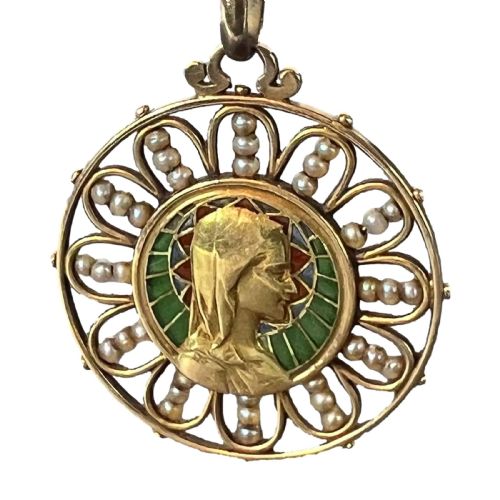


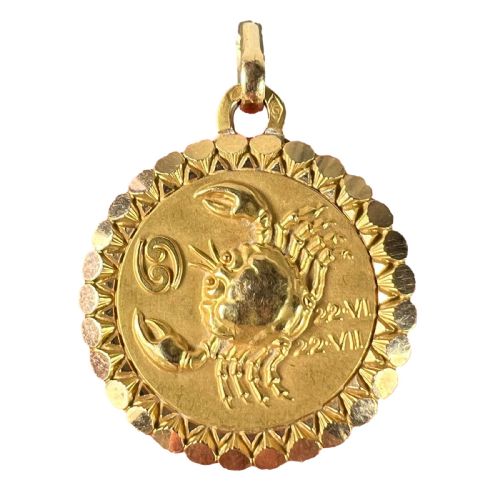


18k Yellow Gold Pendant
An 18k yellow gold pendant brings together fine metalwork and lasting personal symbolism from the late nineteenth and early twentieth centuries.
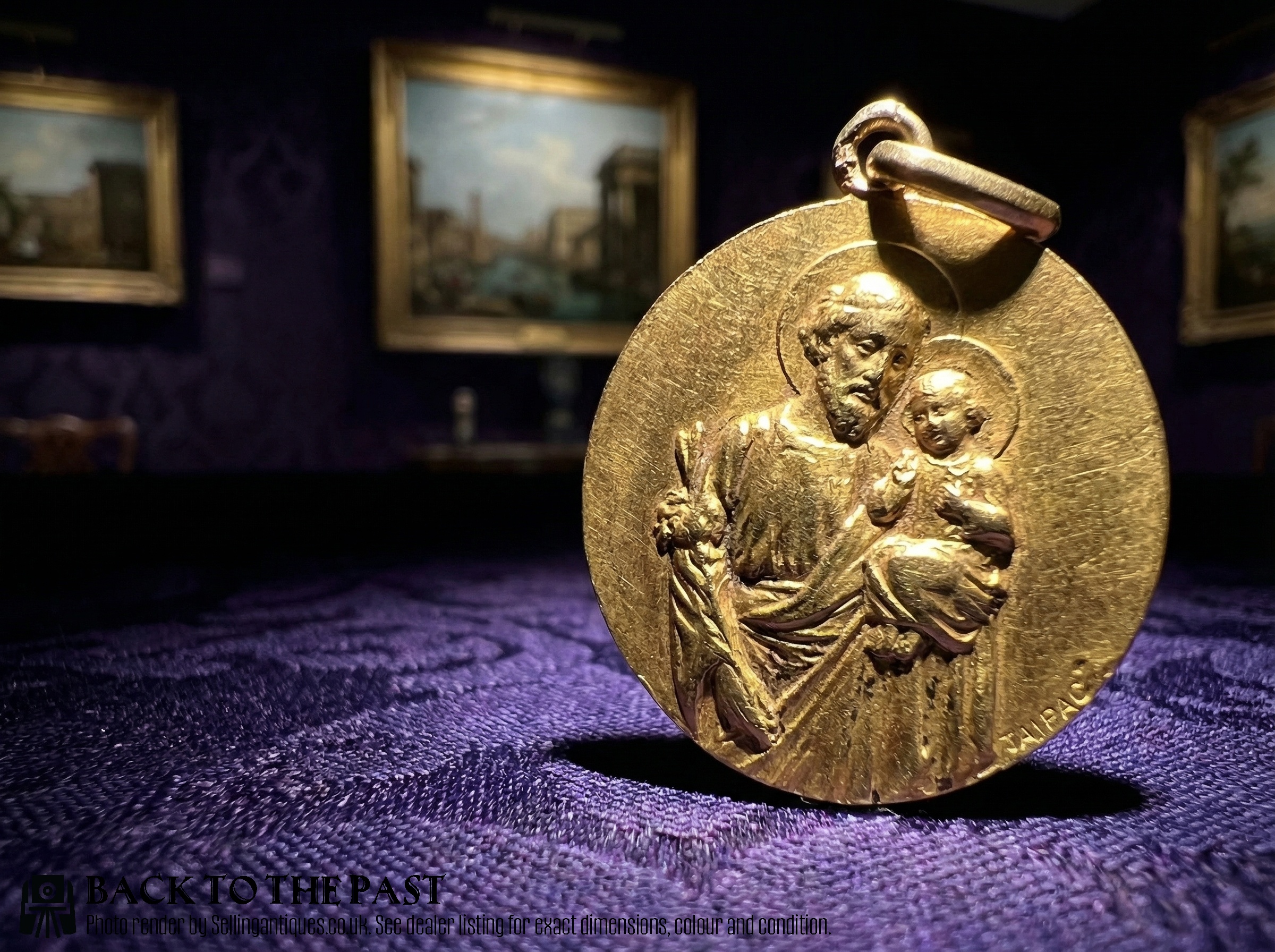
18k Yellow Gold Pendant
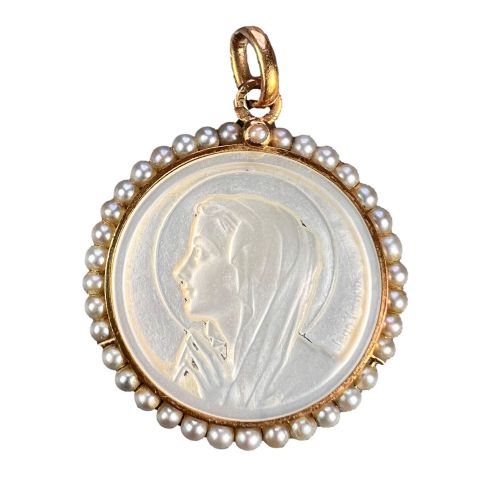
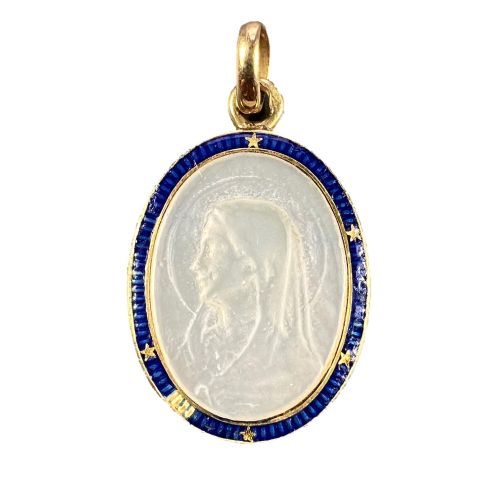
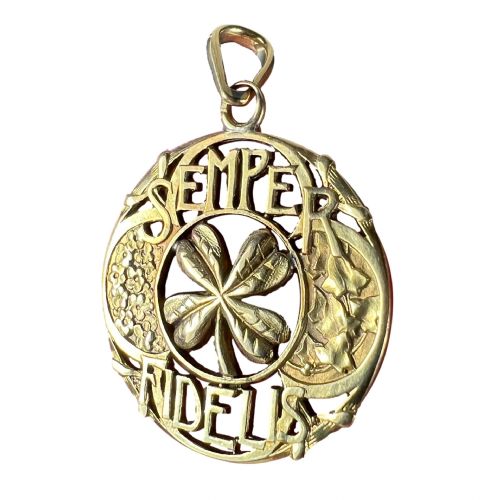
When searching for an 18k yellow gold pendant, a buyer encounters a diverse group of ornaments spanning the Edwardian period, Art Nouveau, Art Deco and the mid-century. The selection centres heavily on French religious and devotional medals, charms, lockets and zodiac pieces.
Religious motifs dominate the form, particularly depictions of the Virgin Mary, the Madonna and Child, and sacred hearts. Alongside these spiritual tokens, the inventory includes romantic love tokens, zodiac star signs, and figural charms.
Most examples originate from French workshops and makers active around nineteen-ten, utilising high-purity gold alongside enamel, mother of pearl and seed pearls. These items functioned historically as personal talismans, commemorative gifts and expressions of faith.
How they were made
The primary material across the selection is 18-carat yellow gold, often shaped through stamping, casting and delicate wirework. Goldsmiths employed twisted wire frames, filigree and rose gold accents to add depth and texture to the designs.
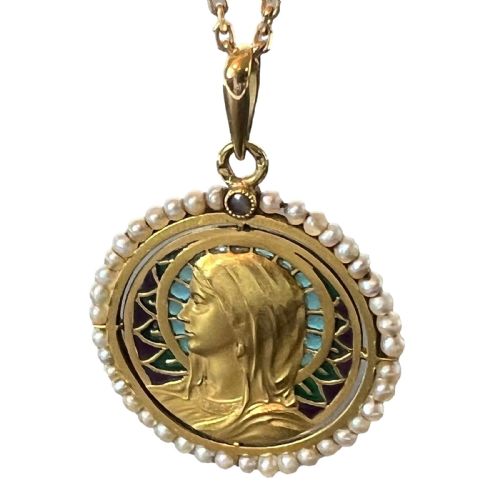
Colour and lustre arrive through specialised decorative techniques like plique-à-jour enamel, which creates a translucent stained-glass effect, alongside opaque red or blue enamel work. Many pieces incorporate mother of pearl plaques or small seed pearls set by hand into the gold body.
18k Yellow Gold Pendant Retail Price Guide 2026
Typical asking prices for 18k yellow gold pendant among the pieces listed under this phrase on Sellingantiques today, from the lower quarter to the upper quarter. They describe what is for sale here now, not the wider market.
Materials recur across the archive in yellow gold, white gold, plique-à-jour enamel, seed pearls, and mother of pearl.
What varies in quality
Enamelling technique further separates the tiers of production, with translucent plique-à-jour requiring exceptional skill to execute without flaws across the gold cells. The integration of carefully matched pearls and well-executed hand engraving elevates the overall execution.
Emile Monier·Paul Brandt·Perroud·Mazzoni·Pageli Perriat·Dropsy·Guilbert·Vernon·Sellier·Rasumny·Ovide Yencesse·Tairac·Chiappe·Augis·Lasserre·Bouix·Becker·Merrin·Tricard
The 18k Yellow Gold Pendant Glossary
- Plique-a-jour
- An enamelling technique where enamel is applied in cells without a backing, allowing light to shine through the transparent material like stained glass.
- Medal
- A flat, coin-like devotional or commemorative ornament stamped with figural scenes and inscriptions, frequently worn suspended from a chain.
- Locket
- A hinged pendant designed to open and enclose a small photograph, lock of hair or keepsake.
- Filigree
- Delicate wirework soldered into open, lace-like patterns of scrolls and floral motifs upon the gold surface.
- Carat
- The measure of purity for gold alloys, where 18-carat denotes a composition containing seventy-five percent pure gold.
18k Yellow Gold Pendant: Frequently Asked Questions
How were religious medals worn?
Devotional medals were typically suspended from fine gold chains close to the heart as personal symbols of faith and divine protection. Owners often wore them daily alongside other protective talismans.
Many examples feature integrated loops or jump rings specifically designed for attachment to necklaces or charm bracelets.
What is plique-a-jour enamel?
Plique-a-jour is a challenging glass-fired technique that resembles miniature stained glass by omitting a solid backing behind the coloured enamel. Light passes directly through the translucent cavities held within the gold framework.
This method appears on finer Edwardian and Art Nouveau pendants to create luminous wings, halos, and floral accents.
How do I identify a maker's mark?
Maker marks and assay stamps are typically struck directly onto the suspension ring or the reverse edge of the gold pendant body. These tiny punch marks record both the gold standard and the workshop responsible for the piece.
Consulting maker registries helps attribute unsigned or initialed medals to specific French medallists of the period.