


Antique Gold Medal
An antique gold medal carries intricate devotional iconography or commemorative detail, crafted in rich yellow or rose gold from the late nineteenth and early twentieth centuries.
Antique Gold Medal
When seeking an antique gold medal, collectors encounter primarily French devotional pendants, watch fobs and commemorative pieces dating from the late nineteenth century through to the interwar period. These pieces frequently take the form of round or oval pendants intended to be worn on chains or carried as personal tokens.
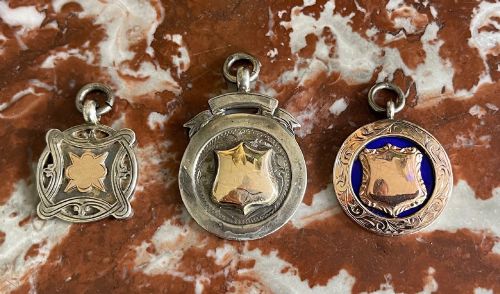
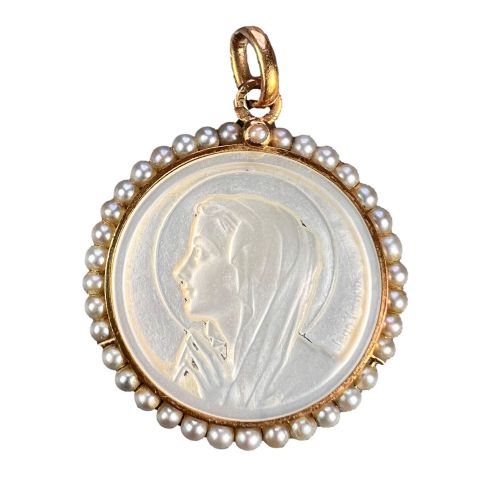
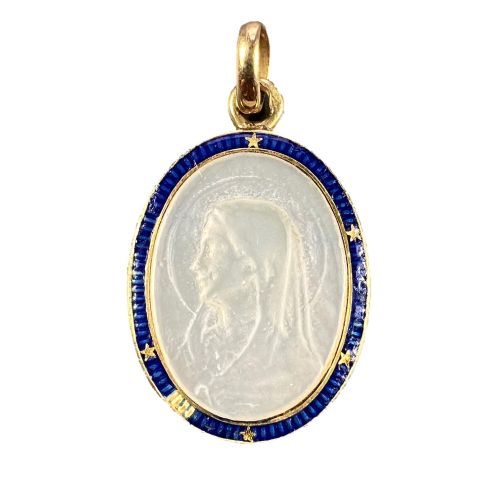
The selection on this page centres heavily upon French religious subjects, particularly representations of the Virgin Mary, the Madonna and Child, Saint Christopher and the Sacred Heart. Alongside these devotional issues, buyers also find sports medals, masonic pieces and monogrammed presentation items from British and French sources.
Materials and methods of construction
The metal foundation of these pieces relies predominantly upon eighteen-carat yellow or rose gold, alongside occasional uses of white gold and nine-carat gold for specific British and continental issues. Goldsmiths shaped the metal through stamping and casting, then finished the surfaces with hand-engraving.
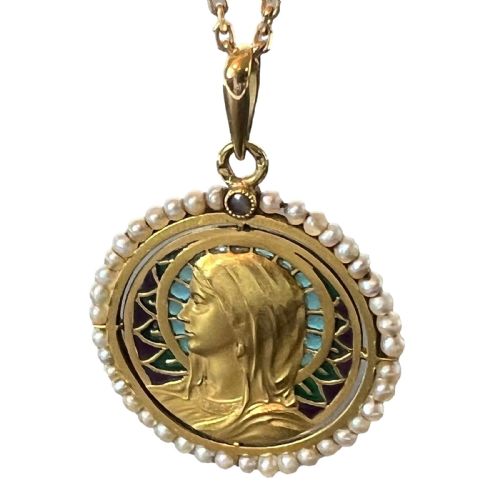
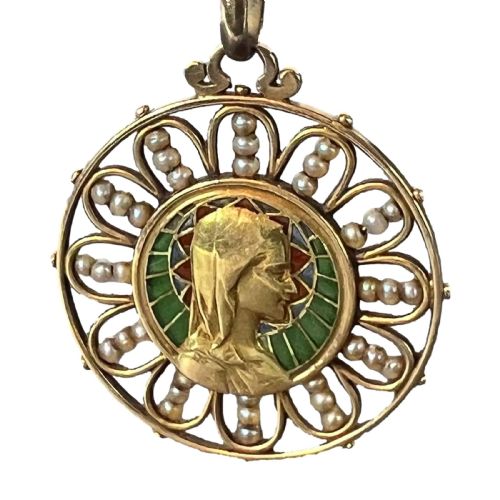
Colour and texture were often introduced through specialised enamel work such as translucent plique-à-jour, which lets light pass through the design, or opaque red enamel set against polished gold. Artisans also incorporated natural materials like mother-of-pearl and seed pearls to frame the central relief subjects.
Listings span the period from the late nineteenth century through to the nineteen fifties, encompassing Victorian, Art Nouveau and Art Deco aesthetics.
Distinguishing quality across the range
Quality in these medals rests upon the crispness of the original relief work and the reputation of the medallist or workshop responsible for the design. Pieces bearing signatures from known artists display superior depth and facial expression in the figures compared to generic commercial strikings.
The inclusion of fine decorative techniques such as multi-coloured enamel, plique-à-jour compartments or pearl borders elevates an example significantly. Preservation of the delicate enamel work and sharpness of the hand-engraved inscriptions further separate standard commemorative items from exceptional collector pieces.
Emile Monier·Paul Brandt·Mazzoni·Pageli Perriat·Emile Dropsy·Sellier·Rasumny·Ovide Yencesse·Tairac·Guilbert·Vernon·Lasserre·Karo
The Antique Gold Medal Glossary
- Plique-a-jour
- An enamelling technique where enamel is applied to open cells without a backing, resembling miniature stained glass. This method allows light to illuminate the translucent colours.
- Medallion
- A large metal coin-like object created to commemorate an event, person or institution. In jewellery contexts, these are often adapted with suspension loops to be worn as pendants.
- Watch Fob
- A short chain or ornament attached to a pocket watch, frequently featuring a small medal or seal at the end. They were popular accessories for men's waistcoats during the Victorian and Edwardian eras.
- Belle Epoque
- A period of French history spanning the late nineteenth century to the First World War, characterised by elegant design and refined craftsmanship. Jewellery from this time often uses light gold scrollwork and natural pearls.
- Art Nouveau
- A stylistic movement prominent around nineteen hundred featuring flowing, organic lines inspired by natural forms. Medals from this aesthetic often incorporate sinuous plant motifs and female profiles.
Antique Gold Medal: Frequently Asked Questions
What are antique gold medals made from?
These pieces are principally fashioned from eighteen-carat yellow, rose or white gold, though occasional examples utilise nine-carat gold. Artisans frequently added enamel work, mother-of-pearl and seed pearls to enhance the central metal designs.
Contrasting gold tones are sometimes combined within a single piece, particularly in floral or wreath motifs dating from the turn of the twentieth century.
How were these medals originally worn?
Devotional medals were suspended from gold neck chains and worn close to the heart as personal expressions of faith. Watch fobs served a functional purpose on pocket watch chains before being repurposed as charms or pendants.
Many examples feature integrated suspension rings or jump rings specifically designed for attachment to jewellery cords or heavy chatelaines.
How can I identify the maker of a medal?
Maker marks and artist signatures are often stamped directly onto the surface of the metal, usually near the rim or on the reverse side. Famous nineteenth and twentieth-century French medallists frequently signed their work in low relief.
Assay office stamps and purity hallmarks can also provide clues regarding the geographic origin and approximate period of manufacture.
Are these medals handmade?
The primary form was typically produced using steel dies and mechanical presses to achieve the detailed relief, but the finishing was strictly manual. Skilled craftspeople executed the fine hand-engraving, enamel placement and gemstone setting by hand.
This combination of die-stamping for precision and handwork for finishing allowed workshops to produce consistent iconography with individual artistic character.