


Virgin Mary Pendant
When you search for a virgin mary pendant, you discover devotional medals and charms cast in gold to wear close.
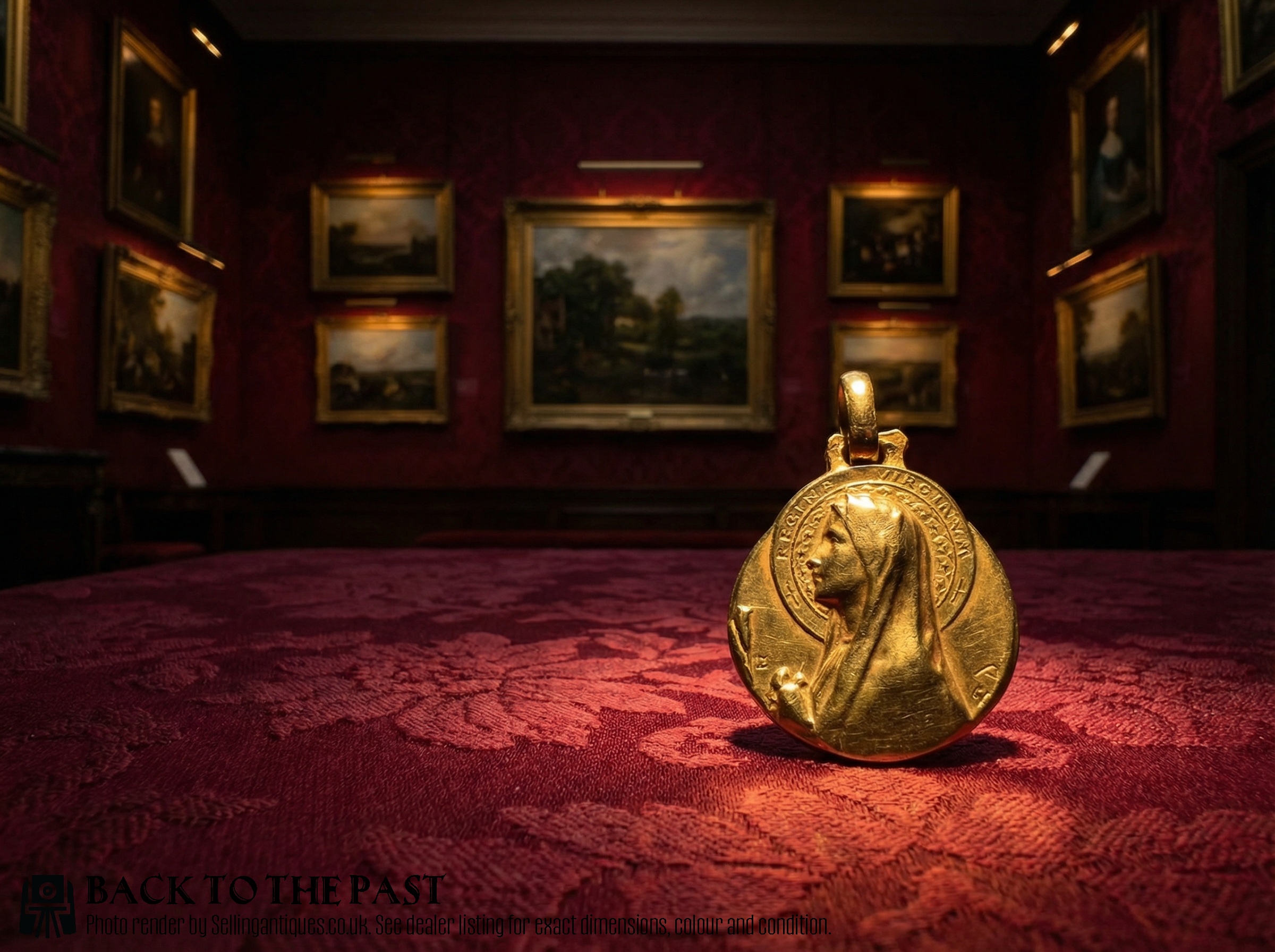
Virgin Mary Pendant
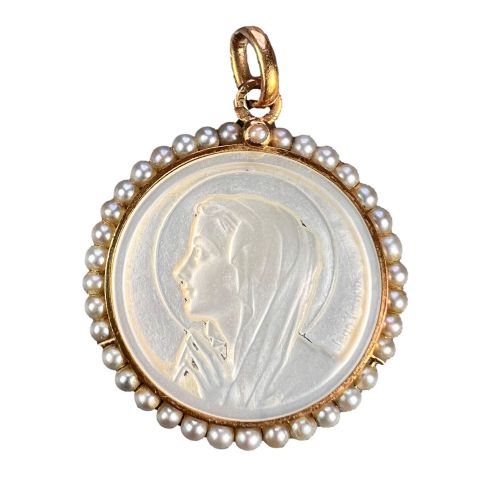
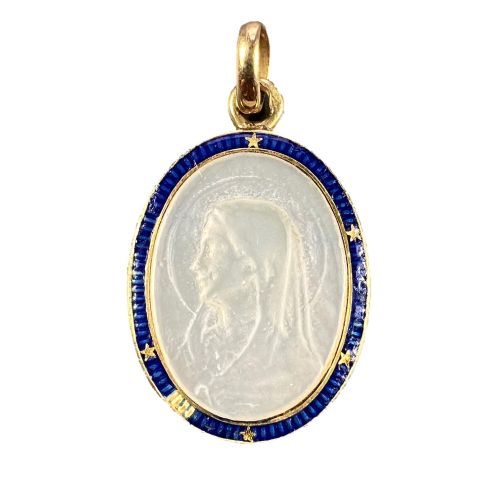
A virgin mary pendant takes the form of a small devotional medal or charm, designed to be worn on a chain as a personal talisman. The pieces found here originate largely from France, spanning the late nineteenth century through to the mid-twentieth century.
Most examples depict the Virgin Mary or the Madonna and Child, often inscribed with Latin titles or phrases such as Ave Maria. They serve simultaneously as items of jewellery and objects of quiet religious devotion.
Makers utilised various traditional formats, including oval medals, framed charms, and pierced designs. These items frequently incorporate imagery associated with specific shrines, such as Notre Dame of Lourdes.
How they were made
These items are constructed primarily from 18ct yellow, rose, or white gold, providing a warm and durable metal base for intricate sculptural work. The figures of the Madonna and surrounding motifs are typically cast or stamped in relief.
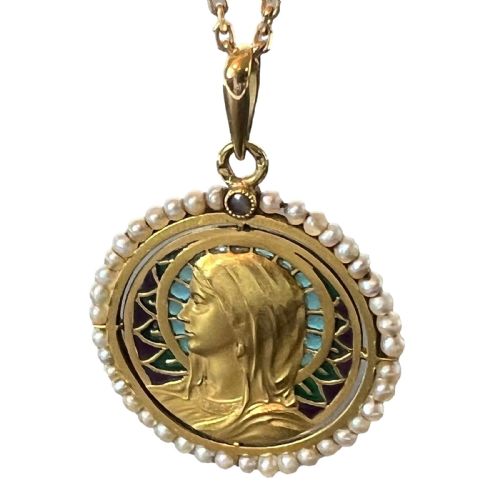
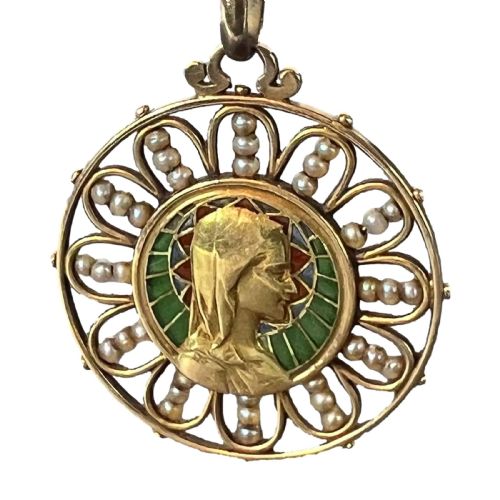
Enamel work frequently enhances the surface, with translucent plique-à-jour techniques allowing light to pass through coloured glass panels set within the gold frame. Other examples employ carved mother of pearl backgrounds or seed pearls applied as decorative borders.
Virgin Mary Pendant Retail Price Guide 2026
Typical asking prices for virgin mary pendant among the pieces listed under this phrase on Sellingantiques today, from the lower quarter to the upper quarter. They describe what is for sale here now, not the wider market.
Listings span seven distinct decades, beginning around 1890 and extending through the 1950s.
What varies in quality
The complexity of the surrounding technique dictates the finer tier of examples. Plique-à-jour enamel demands exceptional skill from the artisan, separating standard stamped medallions from translucent work.
Emile Monier·Pageli Perriat·Emile Dropsy·Mazzoni
The Virgin Mary Pendant Glossary
- Plique-a-jour
- An enamelling technique where the enamel is applied without a backing metal, creating a stained-glass effect that lets light pass directly through the design.
- Medal
- A flat, coin-like devotional object struck or cast with religious imagery, often pierced at the top with a suspension loop for wear.
- Seed Pearl
- Tiny, naturally occurring pearls often used in jewellery to create delicate borders or floral accents around central motifs.
- Mother of Pearl
- The iridescent inner layer of mollusc shells, carved and polished to provide a shimmering background for gold religious figures.
Virgin Mary Pendant: Frequently Asked Questions
What metals were used?
The pieces recorded here are constructed primarily in 18ct gold, appearing in yellow, rose, and white variations.
This high gold purity ensures the medals retain their rich tone and structural integrity over a century of wear.
How do I date a medal?
Dating relies on stylistic shifts, moving from late nineteenth-century floral engraved rose gold to Art Nouveau enamel work and mid-century modernism.
Maker signatures also help anchor pieces to specific active periods during the late nineteenth and early twentieth centuries.
How were they worn?
These items were traditionally suspended from delicate gold chains to rest near the heart as a daily devotional object.
They functioned both as personal protective talismans and as expressions of Catholic faith.
What is a miraculous medal?
A miraculous medal is a specific devotional design commissioned following reported Marian apparitions in Paris during the nineteenth century.
These pieces typically feature distinct iconography relating to grace and prayer, captured in gold relief.