


Antique Religious Pendant
An antique religious pendant holds centuries of devotion, shifting from Victorian crosses to delicate French medals in gold and enamel.
Antique Religious Pendant
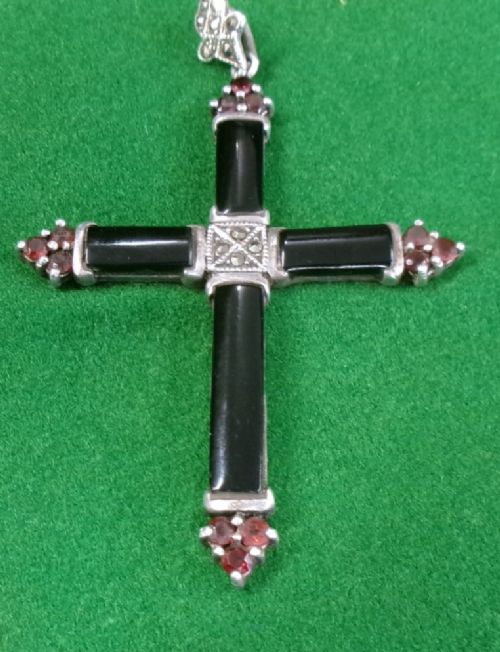
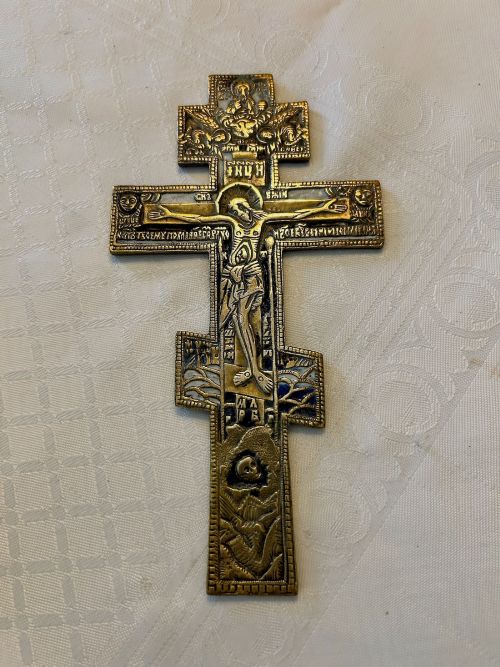
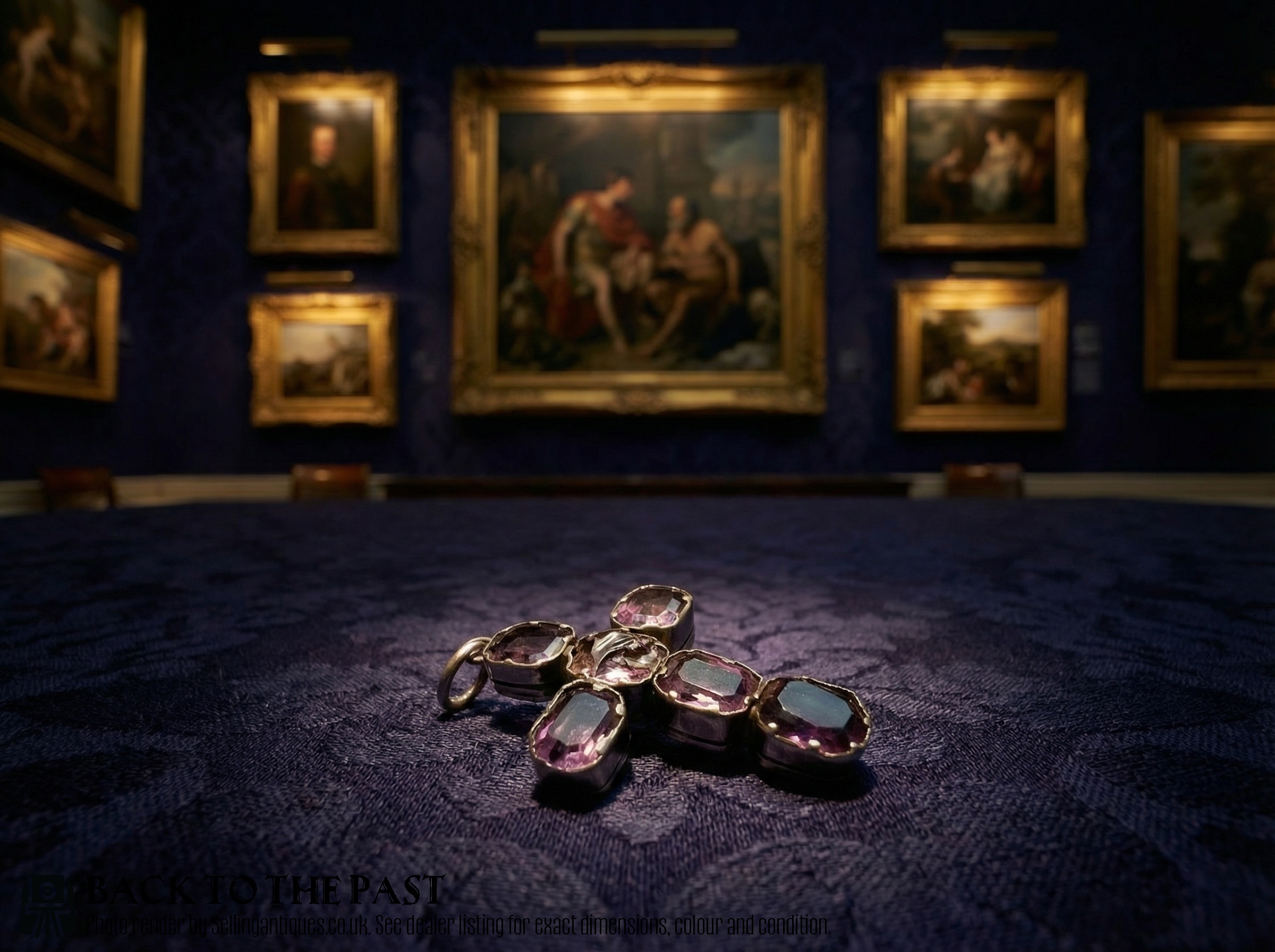
When you search for an antique religious pendant, you encounter devotional jewellery spanning the nineteenth and early twentieth centuries. These pieces take the form of crosses, lockets, crucifixes, and round medals depicting figures such as the Virgin Mary, Jesus Christ, and Saint Christopher.
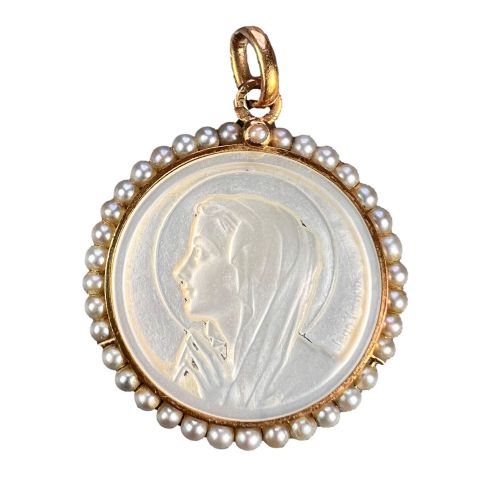
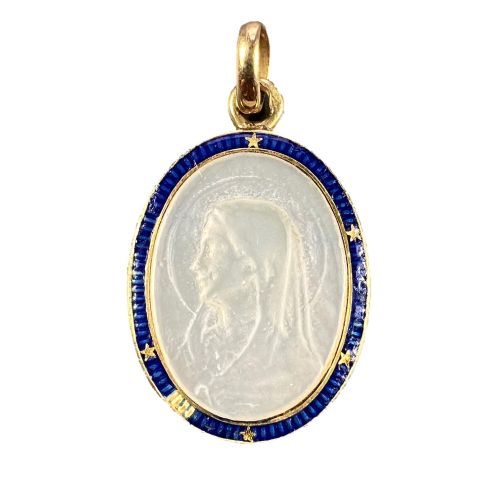
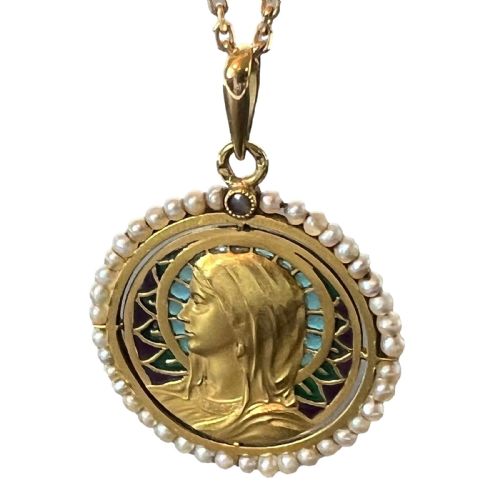
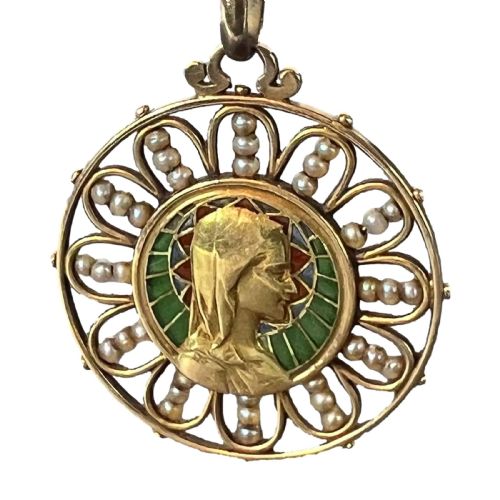
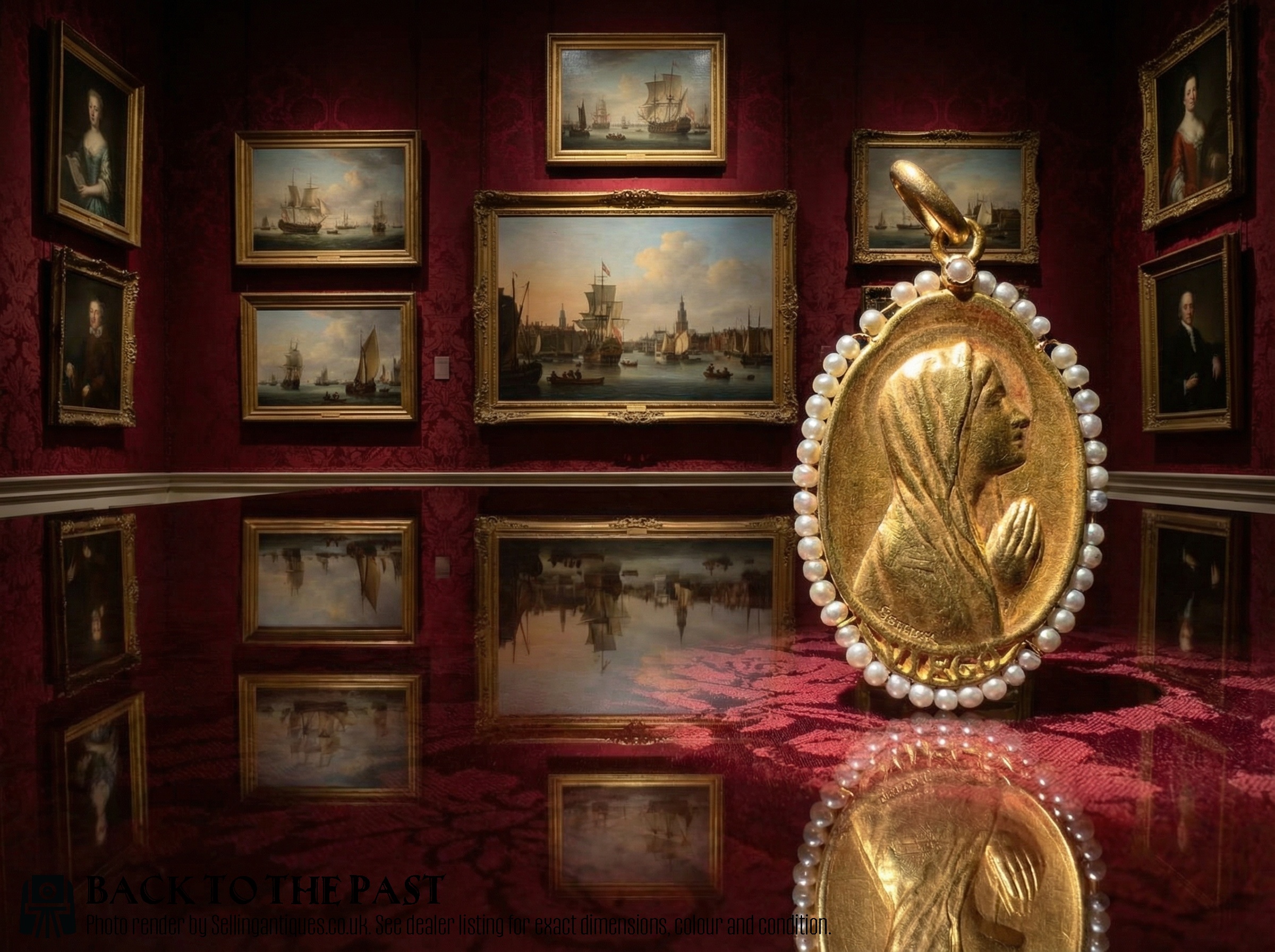
The most common examples on this page originate from France and Britain, dating from the Victorian and Edwardian eras up to the 1930s. French devotional medals frequently feature detailed bas-relief portraits of the Madonna and Child alongside intricate enamel work.
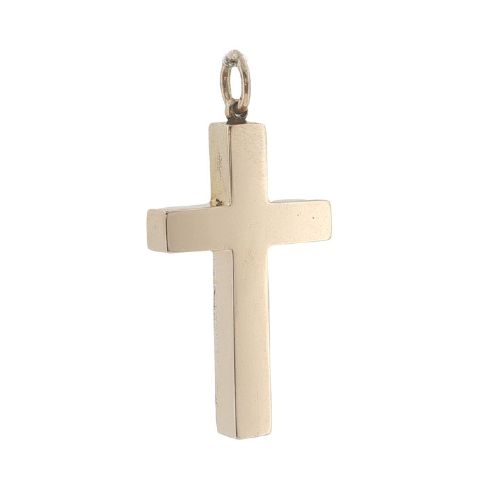
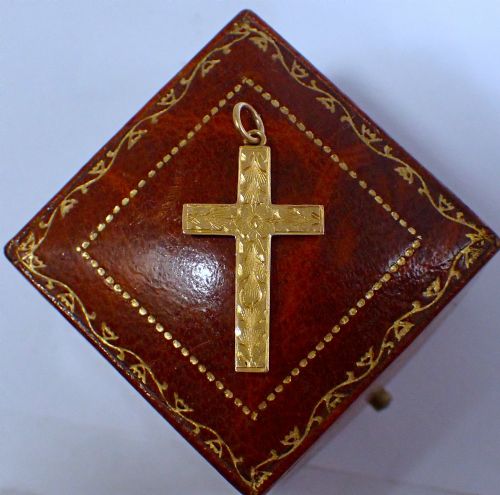
British pieces lean heavily toward gold and silver crosses, often bearing hallmarks for Birmingham from the early 1900s. These range from simple engraved designs to substantial brooches that double as pendants.
Materials and construction
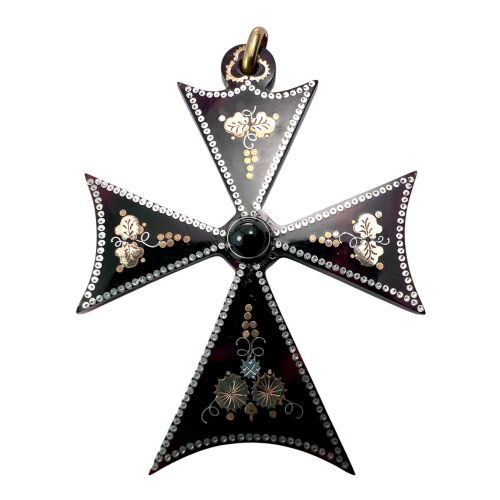
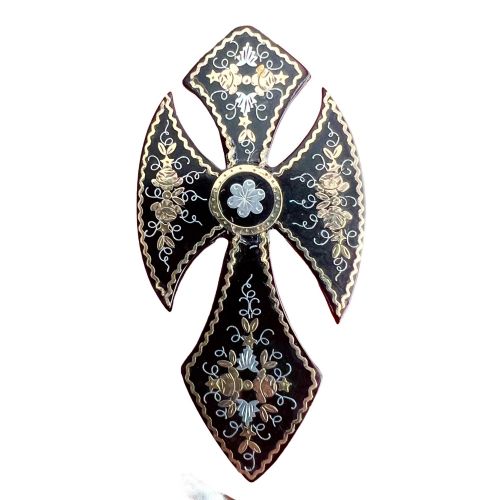
Goldsmiths utilised yellow gold, rose gold, and silver, varying in purity from nine-carat up to eighteen-carat standards. Pique work, gold and silver inlay, and bronze also appear across the inventory.
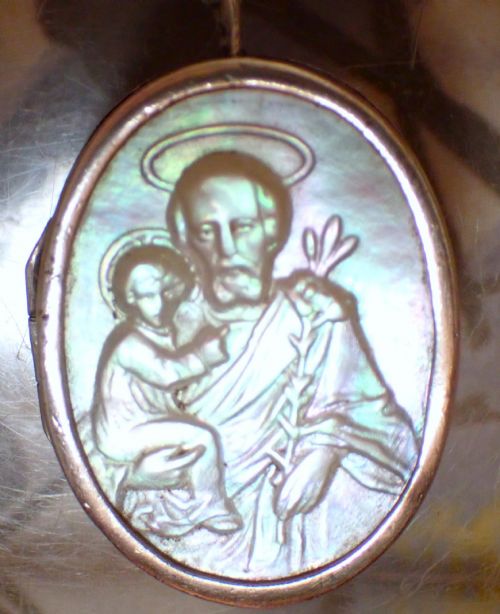
Enamel serves as a primary medium for adding colour to these devotional items, featuring translucent plique-à-jour techniques that let light pass through the design. Carved mother-of-pearl provides an iridescent base for sacred figures mounted in precious metal frames.
Antique Religious Pendant Retail Price Guide 2026
Typical asking prices for religious pendant among the pieces listed under this phrase on Sellingantiques today, from the lower quarter to the upper quarter. They describe what is for sale here now, not the wider market.
Distinctions in execution
The complexity of the enamel work dictates the tier of the piece, with fragile plique-à-jour requiring superior skill compared to opaque surface fills. Well-preserved pearl and diamond accents further elevate the refinement of the object.
Emile Monier·Paul Brandt·Mazzoni·Pageli Perriat·Emile Dropsy·Guilbert·Vernon·Sellier·Rasumny·Ovide Yencesse·Tairac
The Antique Religious Pendant Glossary
- Plique-a-jour
- An enamelling technique where translucent enamel is fired without a backing, resembling miniature stained glass. This method allows light to illuminate the coloured sections of the medal.
- Medal
- A flat, coin-like pendant struck or cast with a religious image on one or both sides. These were frequently issued to commemorate shrines or personal devotions.
- Crucifix
- A cross bearing the figure of the body of Christ, known as the corpus. They appear in gold, silver, and wood with metal overlays across the Victorian period.
- Pique
- The decorative process of inlaying tiny points or patterns of gold and silver into tortoise-shell or other dark substrates. It creates a striking contrast on cross pendants.
Antique Religious Pendant: Frequently Asked Questions
How do I date a gold cross?
Examine the hallmarks stamped on the metal loop or reverse of the cross. British pieces often feature assay office marks and date letters that pinpoint the exact year of manufacture.
Stylistic cues such as heavy Victorian engraving or Edwardian openwork also help narrow down the decade when hallmarks are absent.
Were these medals worn daily?
Many of these items served as personal talismans or tokens of faith worn close to the heart on chains. Their sturdy eighteen-carat gold and silver construction was intended to withstand regular wear.
Finer pieces with delicate plique-à-jour enamel were likely reserved for special Sundays and significant religious milestones.
What is a miraculous medal?
A miraculous medal is a specific devotional pendant designed after an apparition of the Virgin Mary reported in nineteenth-century Paris. They typically display standard iconography associated with specific prayers and protection.
French makers produced these widely in gold and silver throughout the Belle Epoque.
How do I care for antique enamel?
Protect enamelled pendants from sharp knocks and harsh chemical cleaners that can discolour or fracture the glass paste. Store them separately in lined boxes to prevent scratching against other jewellery.
Clean gently with a soft dry cloth rather than soaking in water or ultrasonic baths.