

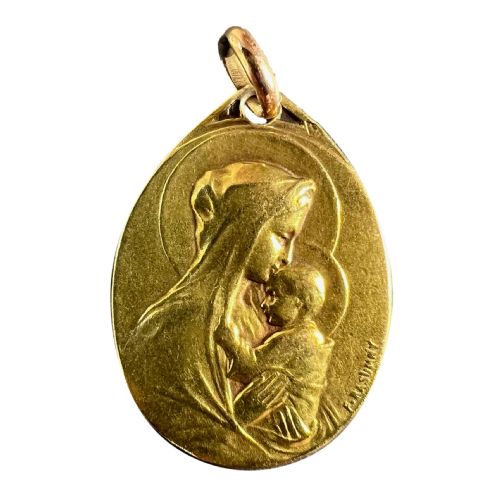
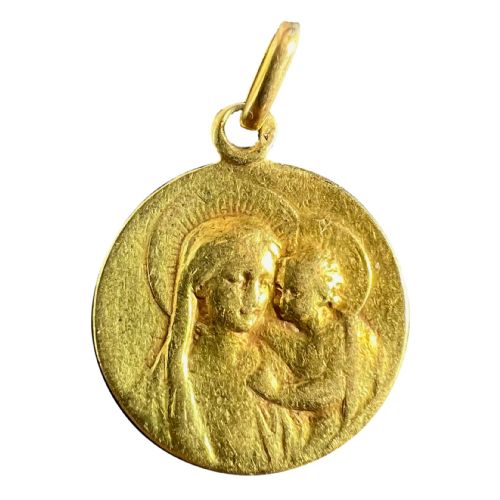
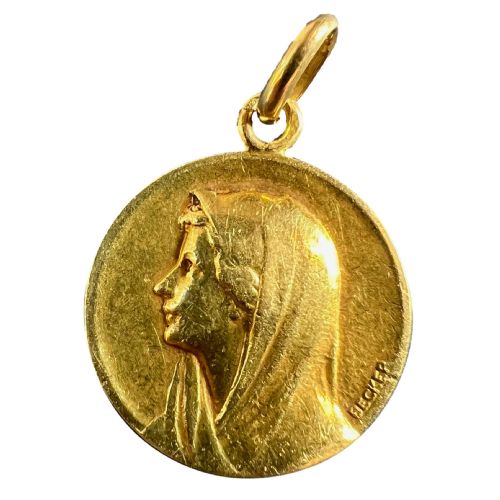
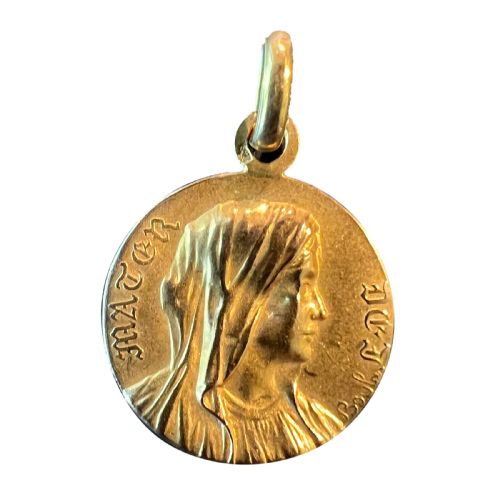
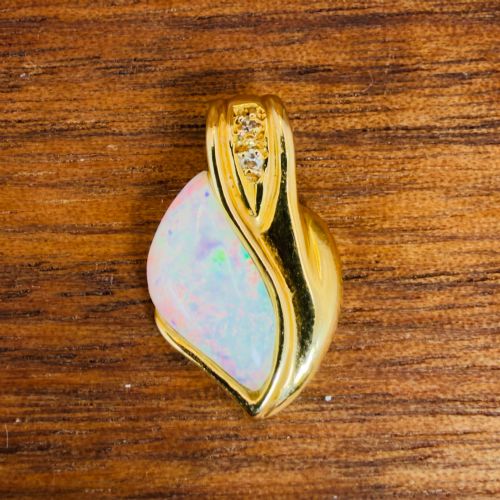
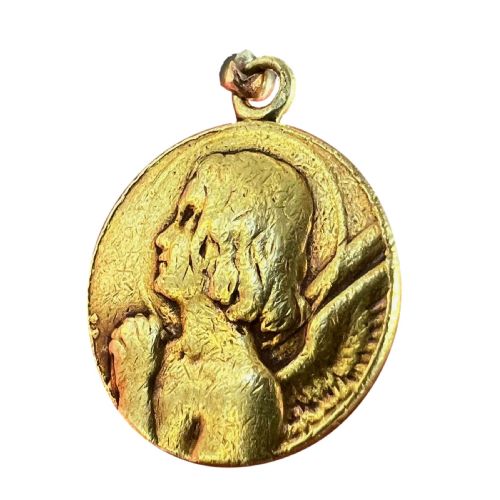
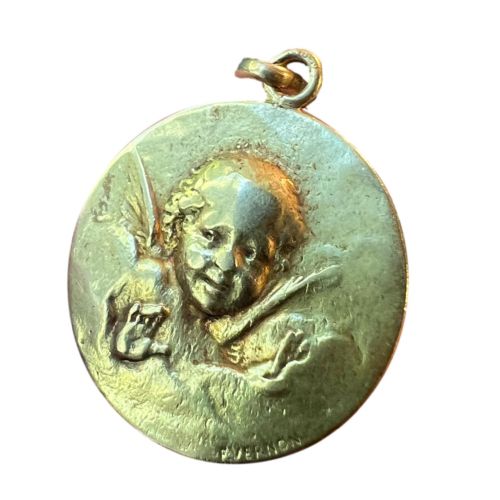
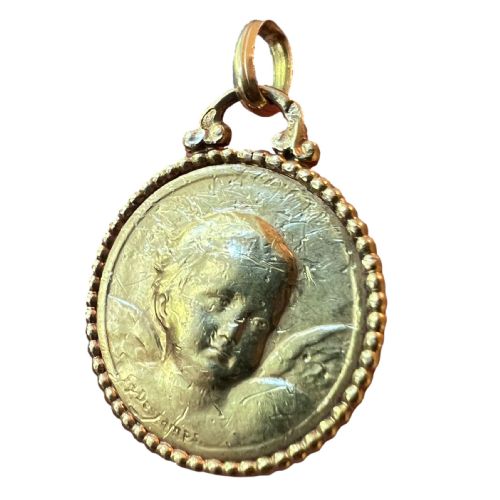
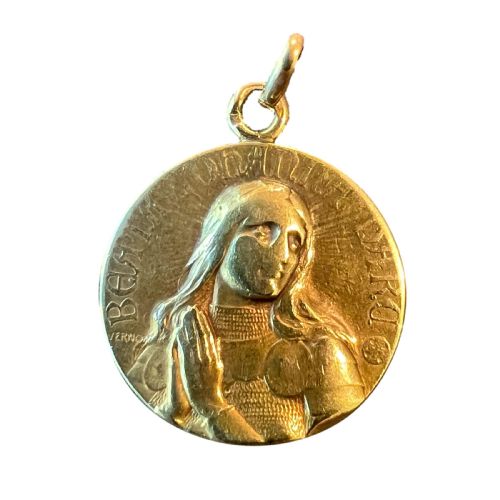
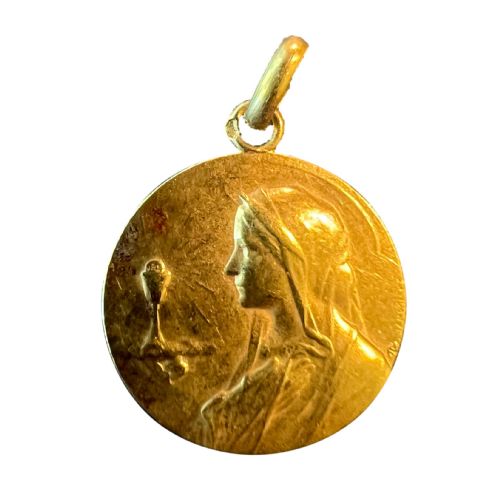
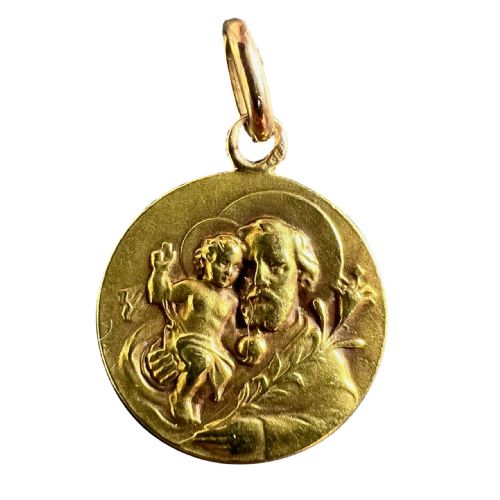
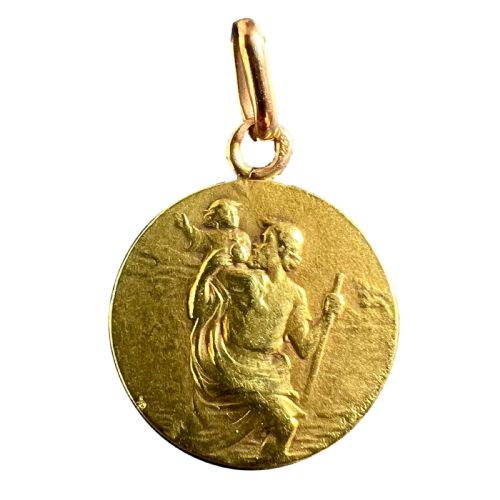
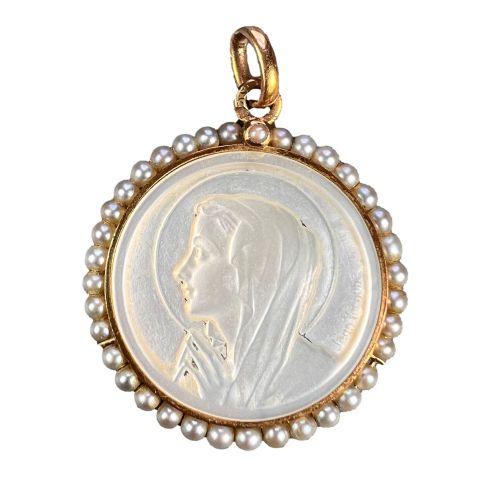
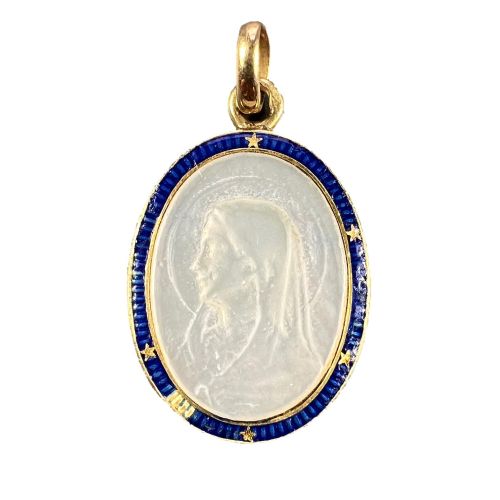


18k Gold Charm
An 18k gold charm carries personal history and miniature artistry, most often seen here in French religious and figurative pendant medals.
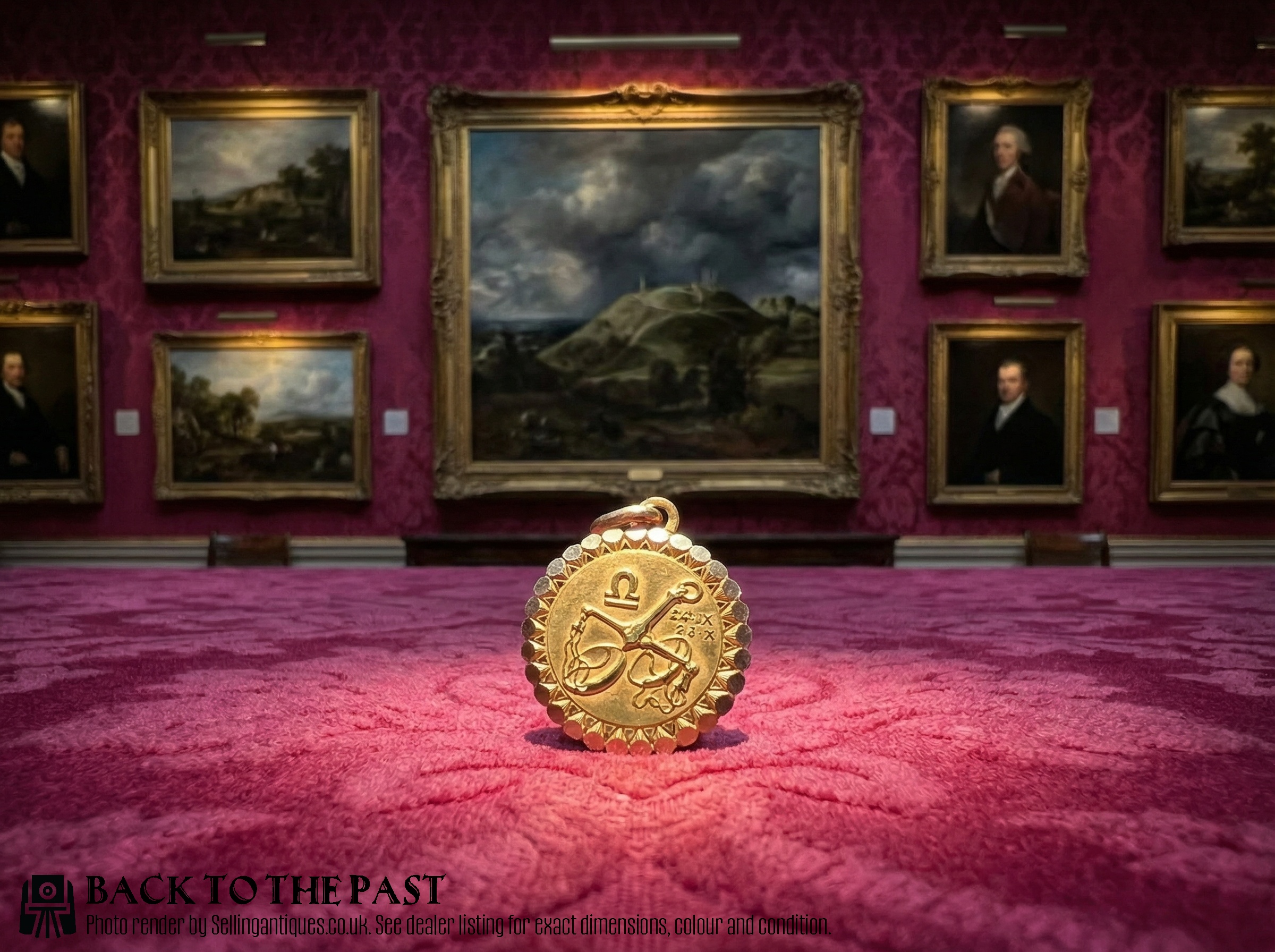
18k Gold Charm
The most common examples on this page depict the Virgin Mary, Madonna and Child, or sacred hearts, alongside zodiac signs, floral motifs and sentimental tokens. They function as personal talismans designed to be suspended from chains or linked via spring rings.
The selection ranges from early devotional medals dating back to the late nineteenth century up to mid-century geometric and figurative designs. Each item reflects the specific aesthetic concerns of its decade, whether the flowing lines of Art Nouveau or the structured symmetry of the 1920s and 1930s.
How they were made
The construction relies heavily on 18ct yellow and rose gold, shaped into frames, medals and twisted wire borders. Goldsmiths utilised stamping and engraving techniques to build high relief surfaces that catch the light.
Colour arrives through vitreous enamel applications, including translucent plique-a-jour methods that allow light to pass through the pigment. Artisans combined these enamels with seed pearls, mother of pearl and occasional rose cut diamonds.
Many medals incorporate fine hand-carved details on mother of pearl discs, held securely within custom gold bezels. Signatures and maker marks are frequently stamped directly into the reverse of the gold fields.
18k Gold Charm Retail Price Guide 2026
Typical asking prices for 18k gold charm among the pieces listed under this phrase on Sellingantiques today, from the lower quarter to the upper quarter. They describe what is for sale here now, not the wider market.
Materials recur across 18k yellow and rose gold, paired frequently with polychrome enamel, mother of pearl and seed pearls.
What varies in quality
The distinction between standard production and exceptional work rests on the crispness of the artisan's strike and the depth of the metal relief. Finer examples display meticulous hand-chased finishing that brings out individual facial expressions and drapery folds.
Enamelling quality creates a clear hierarchy, particularly in translucent plique-a-jour pieces where even glass distribution without fractures requires advanced skill. The integration of secondary materials like pearls and citrine stones also indicates the original tier of production.
Emile Monier·Paul Brandt·Perroud·Mazzoni·Pageli Perriat·Dropsy·Guilbert·Vernon·Sellier·Rasumny·Ovide Yencesse·Tairac·Chiappe
The 18k Gold Charm Glossary
- Plique-a-jour
- An enamelling technique where the enamel is applied without a backing, resembling miniature stained glass. This method lets light pass directly through the translucent coloured glass areas.
- Medal
- A flat or slightly domed disc struck with figurative imagery, commonly religious or commemorative in nature. These pieces often feature suspension loops for wear as pendants.
- Witch's heart
- A stylised heart pendant shape with an indented, twisted tail pointing to one side. This romantic motif symbolised being consumed by love.
- Spring ring
- A circular hollow connector featuring a spring-loaded internal mechanism operated by a tiny protruding thumb tab. They often appear as oversized connector components in these listings.
18k Gold Charm: Frequently Asked Questions
What are these gold charms made of?
The listings consist entirely of pieces fashioned from 18k yellow and rose gold. Many incorporate decorative elements such as enamel, seed pearls, mother of pearl and citrine.
Maker marks and purity stamps are frequently found on the reverse sides or suspension loops of the medals.
How were religious medals worn?
Historical evidence shows these religious pieces served primarily as devotional pendant medals worn close to the heart on gold chains. They were commissioned for significant life events, feast days or protective travel.
The inclusion of loops and connectors allowed them to be secured easily to charm bracelets or neck chains alike.
How do I identify the period?
Stylistic cues provide the clearest timeline, moving from ornate Victorian floral engraving through the organic curves of Art Nouveau to geometric Art Deco designs. Plique-a-jour enamel and specific figurative subjects also align with French production trends between 1890 and 1930.
Maker signatures help cross-reference active workshop dates recorded in jewellery history.
Are these pieces French in origin?
The vast majority of the inventory originates from France, encompassing both religious devotional medals and secular charms. Parisian and regional workshops produced these items across multiple decades.
Occasional pieces from other European traditions appear, though French maker signatures dominate the selection.