

Victorian Turquoise Jewellery
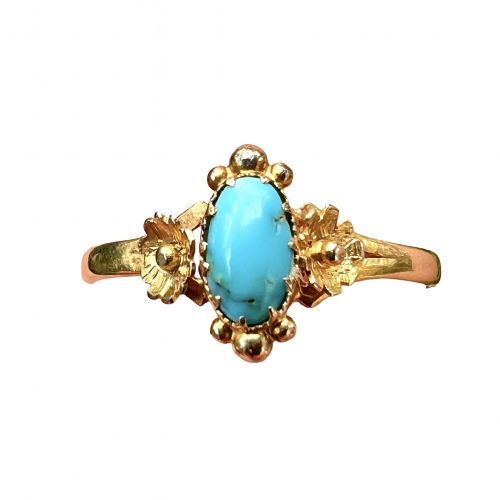
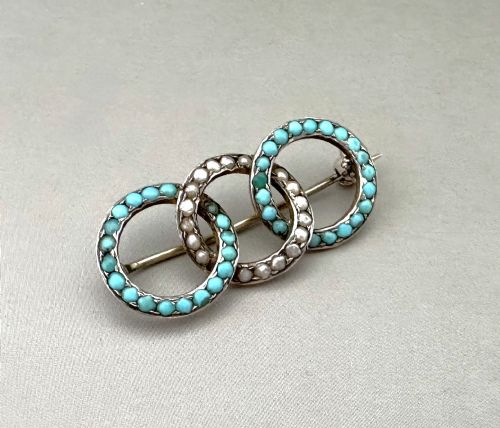
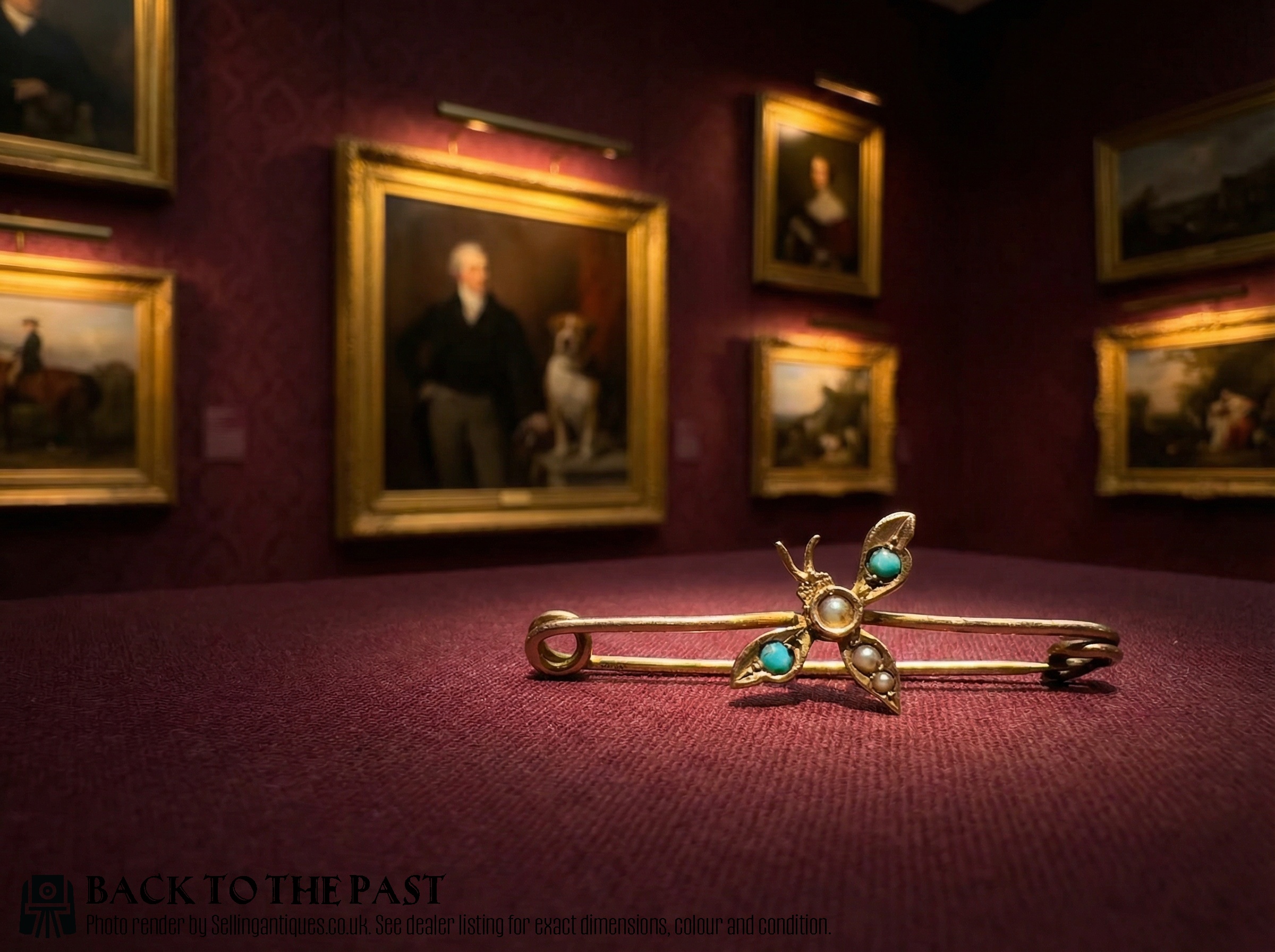
Victorian turquoise jewellery brings together vibrant blue stones, seed pearls and warm gold in rings, pendants and brooches designed to catch the eye.
Victorian Turquoise Jewellery
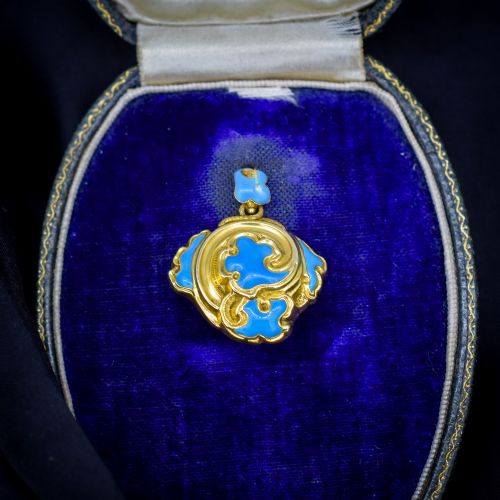
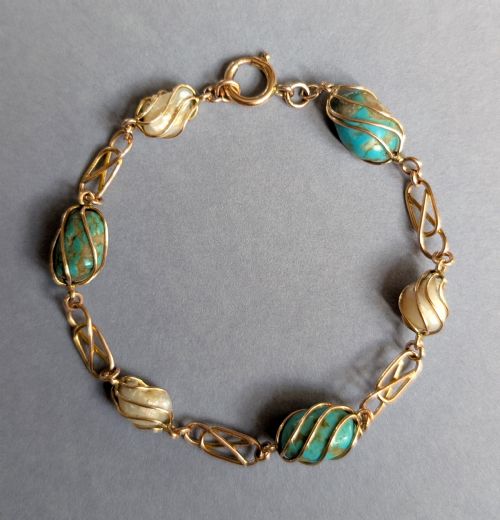
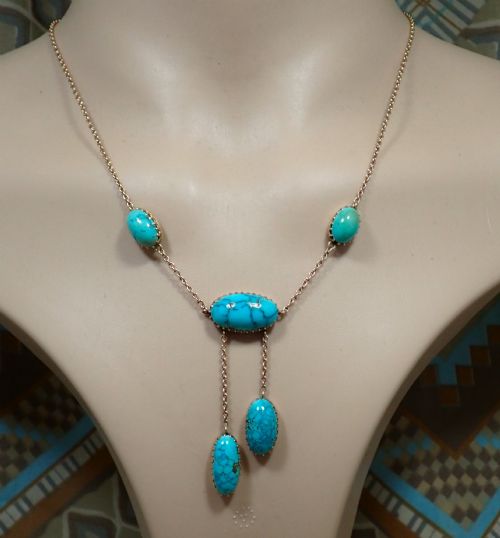
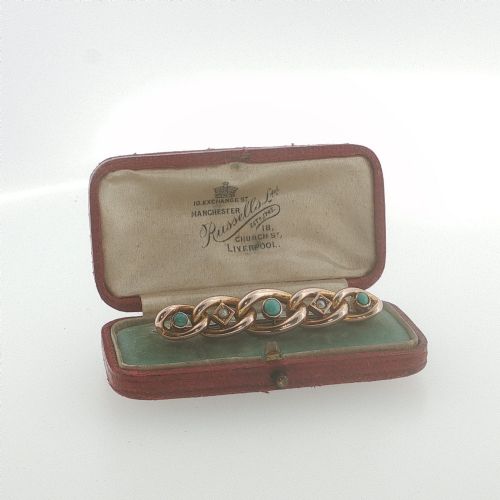
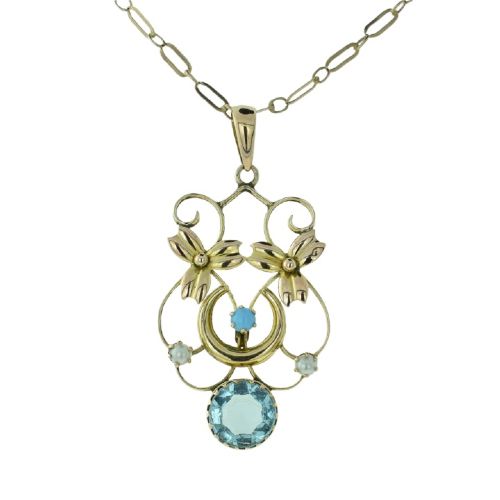
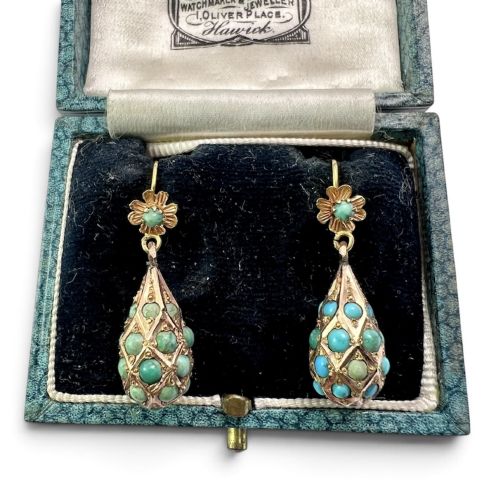
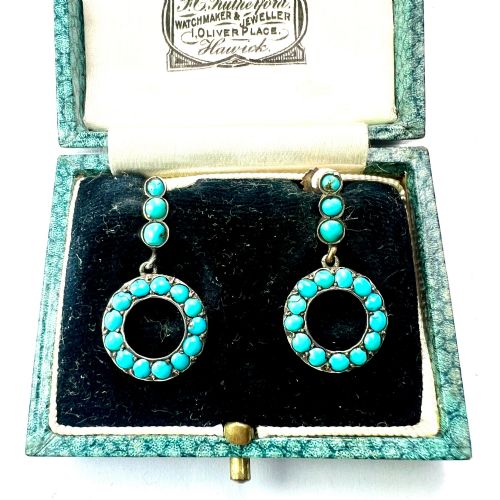
When you search for victorian turquoise jewellery, you encounter a varied selection of rings, earrings, necklaces, brooches and bracelets spanning the nineteenth and early twentieth centuries. The pieces range from straightforward floral cluster rings and star pendants to elaborate longuard chains, lockets and multi-stone bracelets.
You are most likely to meet 9ct and 18ct gold settings combined with seed pearls, diamonds and matrix turquoise in styles that cross from pure Victorian ornamentation into Edwardian, Arts and Crafts and revival movements. These items served as sentimental gifts, mourning pieces and everyday adornments for the Victorians.
The assortment includes distinct regional touches such as Ottoman style silver pendants, French lockets and Austro-Hungarian work alongside domestic British output bearing hallmarks for Chester and other assay offices.
Materials and construction
Makers set turquoise cabochons and natural pearls into yellow, rose and white gold graded at 9ct, 12ct, 15ct and 18ct, alongside occasional silver, silver gilt and rolled gold variants. Workmanship involves finely chased detailing, repoussé work, hollow stampings for long guard chains and delicate seed pearl clustering around central stone groupings.
Stones are secured in closed and open-backed bezel settings or claw mounts, frequently paired with old cut diamonds, rose cut diamonds and blue enamel. Structural integrity relies on sturdy trombone links, curb chains, pin stems and secure box clasps designed for daily wear.
Victorian Turquoise Jewellery Retail Price Guide 2026
Typical asking prices for victorian turquoise jewellery among the pieces listed under this phrase on Sellingantiques today, from the lower quarter to the upper quarter. They describe what is for sale here now, not the wider market.
Listings feature 9ct, 12ct, 15ct and 18ct gold alongside silver, highlighting periods from the 1840s miniature rings through to 1930s pendants.
Evaluating quality and condition
Quality rests upon the uniformity of colour and matrix stability within the turquoise stones, as well as the crispness of the surrounding gold or silver metalwork. Pieces featuring well-matched natural stones with minimal matrix discolouration stand apart from those with uneven fading or replacement pastes.
The finesse of the micro-work, such as tightly woven seed pearl settings, hand-engraved scrollwork and intact enamel details, elevates the standing of a ring or brooch. Heavier, solid gold construction and fully legible hallmarks further distinguish superior examples from lighter, hollow or heavily altered items.
Murrle Bennett
The Victorian Turquoise Jewellery Glossary
- Cabochon
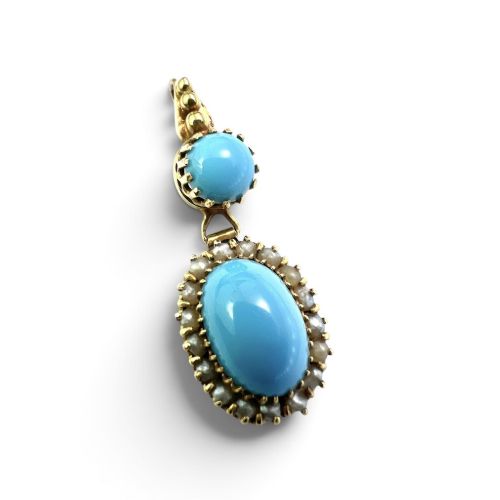
- A gemstone shaped and polished with a smooth, convex domed surface rather than faceted. This cut displays the natural robin's egg blue or matrix patterning of turquoise to best effect.
- Seed pearl
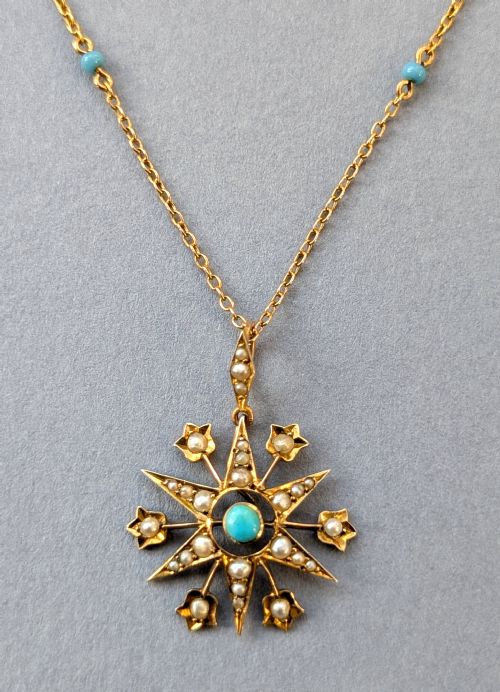
- A very small, naturally occurring pearl, often drilled and threaded onto fine silk or wire. They form delicate haloes and floral clusters around central turquoise stones in rings and pendants.
- Longuard chain
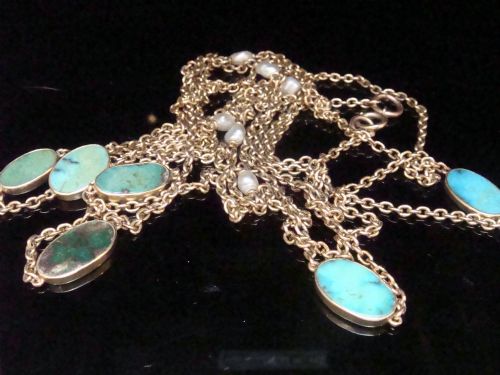
- An exceptionally long necklace, often measuring thirty inches or more, designed to be doubled around the neck or attached to a watch. They frequently feature trombone links and sliding barrel clasps.
- Etruscan Revival
- A nineteenth-century design style inspired by archaeological discoveries of ancient Greek and Etruscan goldwork. It is characterised by granulation, filigree and applied wirework on gold surfaces.
- Trilogy ring
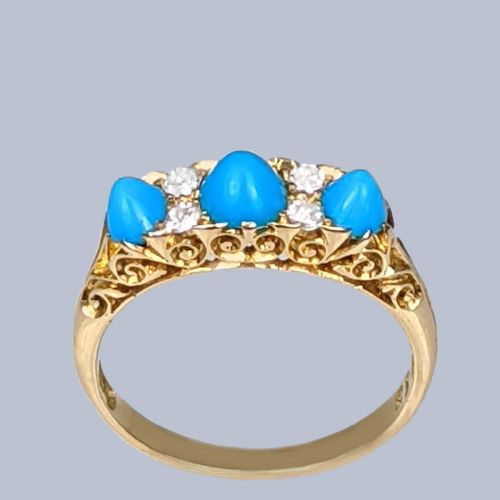
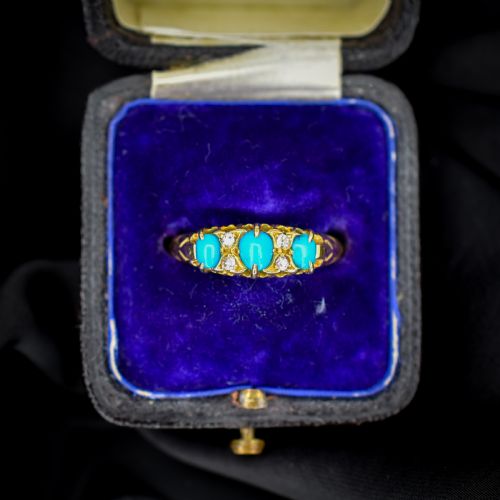
- A ring featuring three principal stones set in a row, often combining turquoise with old cut diamonds to represent the past, present and future.
Victorian Turquoise Jewellery: Frequently Asked Questions
What does matrix turquoise mean?
Matrix turquoise refers to stones that retain visible traces of the host rock, such as dark webbing or spiderweb patterns, running through the blue material. This creates a distinct earthy look compared to uniform, unblemished blue stones.
In antique pieces, matrix turquoise often appears in Arts and Crafts designs where organic, natural textures were actively celebrated by makers.
Were these pieces worn for mourning?
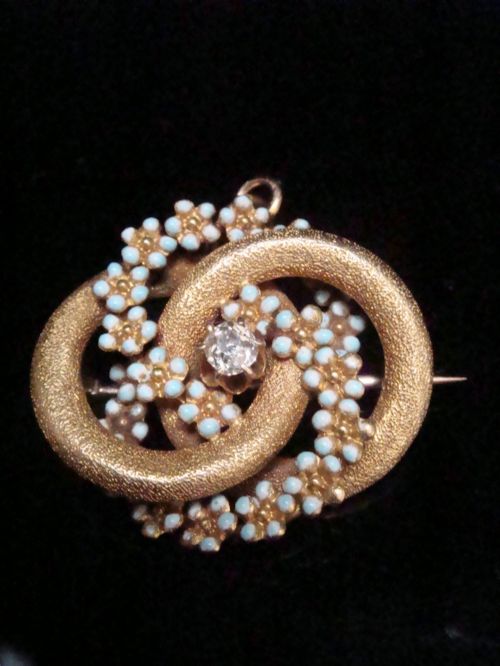
Victorians used specific jewellery to remember deceased loved ones, often incorporating dark blue enamel, seed pearls and turquoise alongside woven hair or portrait miniatures. Turquoise symbolised remembrance and forgetfulness of sorrow.
While many mourning items look sombre, turquoise designs often retained a brighter, more hopeful appearance due to the lively blue stones.
How can I tell a Victorian ring from an Edwardian one?
Victorian pieces generally feature heavier, warmer rose or yellow gold settings with romantic motifs like hearts, knots and dense cluster work. They lean towards rich, ornate detailing and substantive metal weights.
Edwardian items often introduce lighter yellow gold, white gold or platinum highlights, favouring airier openwork, garland motifs and delicate diamond accents surrounding the turquoise.