

Victorian Gold Bangle
A victorian gold bangle brings solid weight, engraved scrollwork and closed-wrist security to the arm.
Victorian Gold Bangle
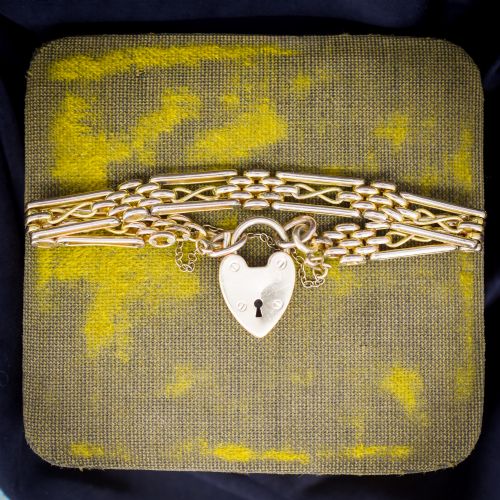
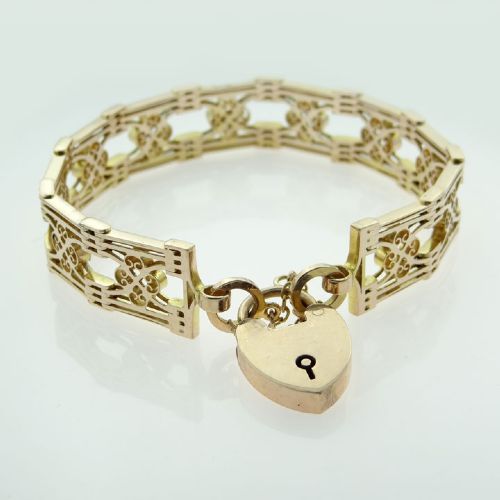
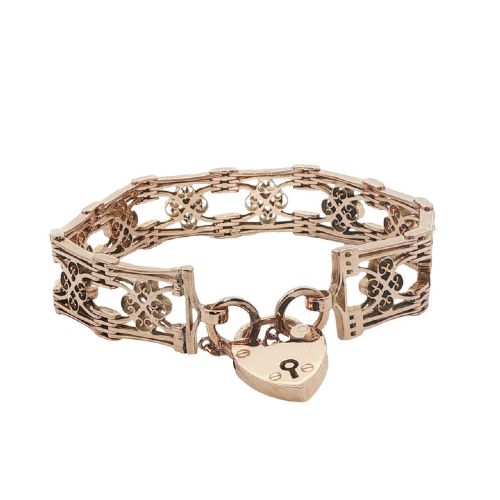
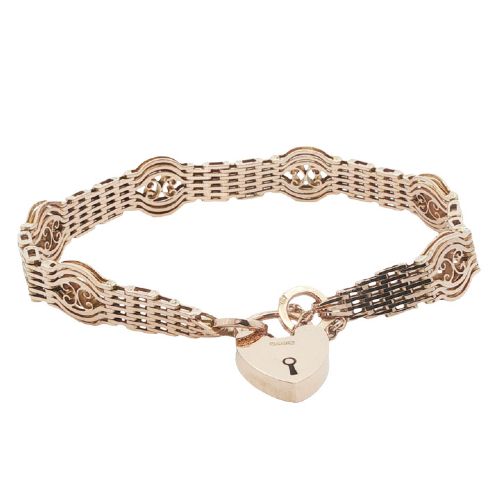
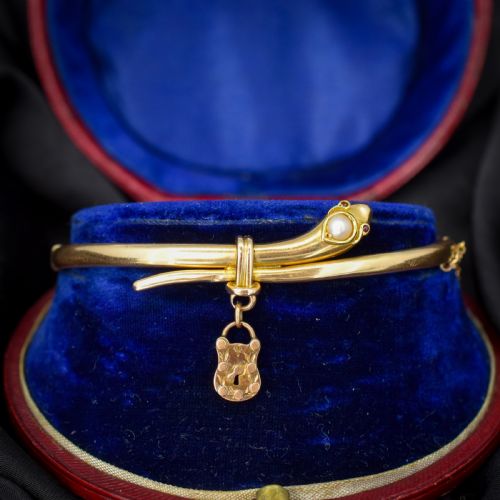
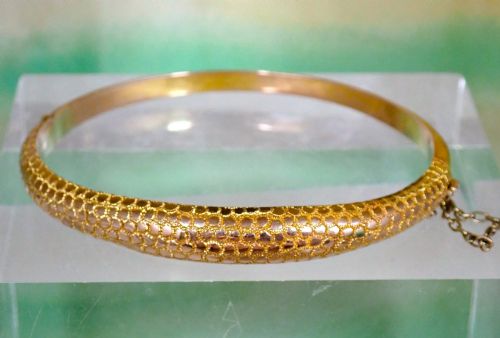
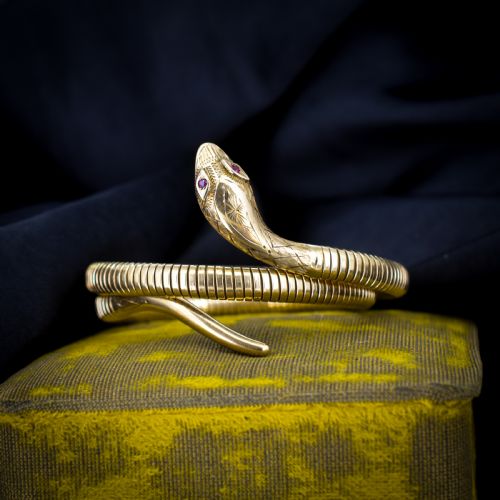
A buyer examining a victorian gold bangle finds rigid hinged cuffs, serpent wraps and expandable gate links designed to encircle the wrist securely. These pieces emerge from the nineteenth century into the early twentieth century, spanning periods from the 1850s through to Edwardian iterations.
Solid gold and hollow rolled metals form the primary structures, often augmented by safety chains to protect against loss during wear. Collectors encounter floral motifs, star settings, and padlock clasps alongside plain polished or engraved surfaces.
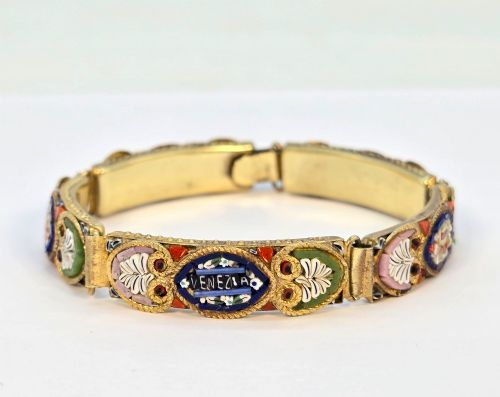
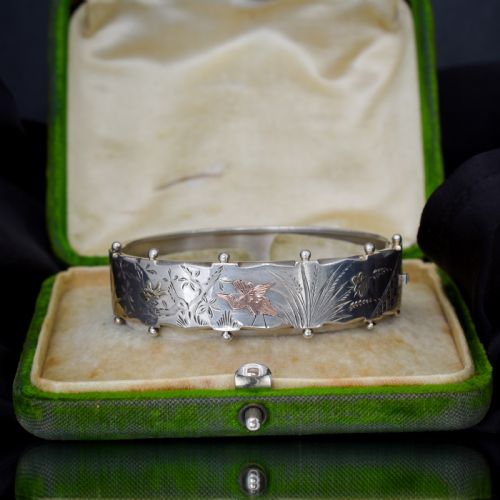
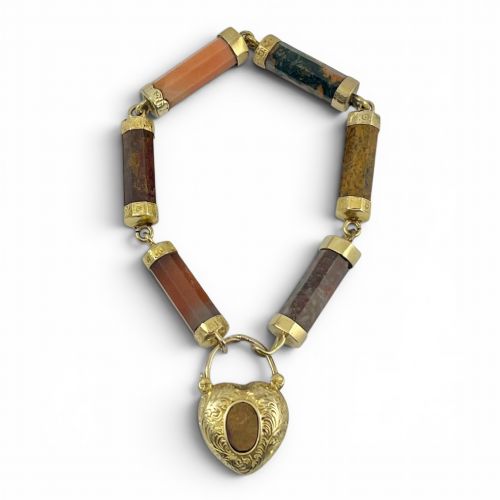
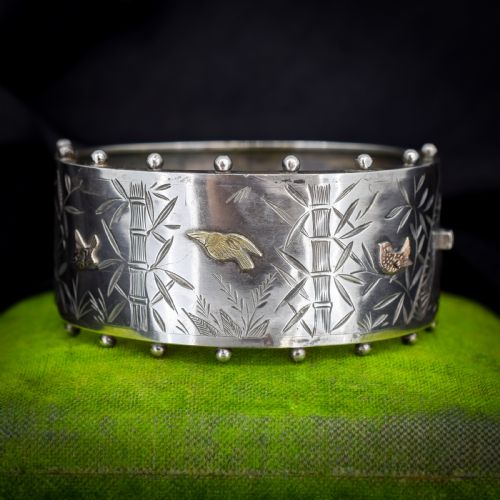
Many examples incorporate regional revivals including Scottish agate work and Italian micro mosaics, reflecting the broader tastes of Grand Tour travellers. Others adopt stylistic cues from the Aesthetic Movement, featuring birds, bamboo, and asymmetric flora across silver and gold overlays.
Materials and Construction
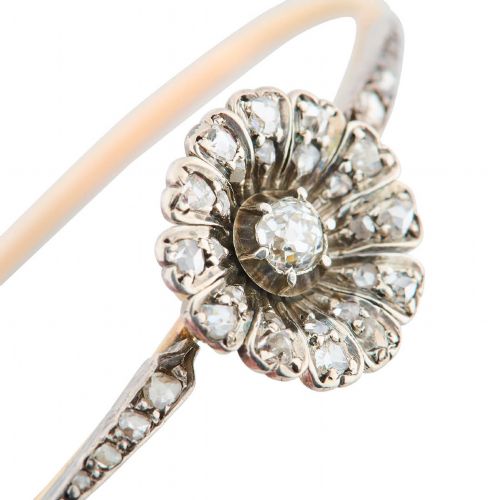
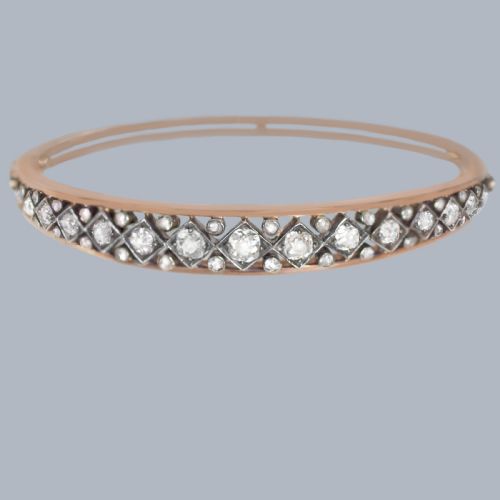
Goldsmiths utilised varying purities of yellow, rose, and green gold, ranging from nine-carat up to twenty-one-carat alloys, alongside silver-topped gold settings designed to enhance the whiteness of old-cut diamonds. Hollow-formed components provided bulk without excessive weight, while solid cast hinges and pins maintained structural integrity.
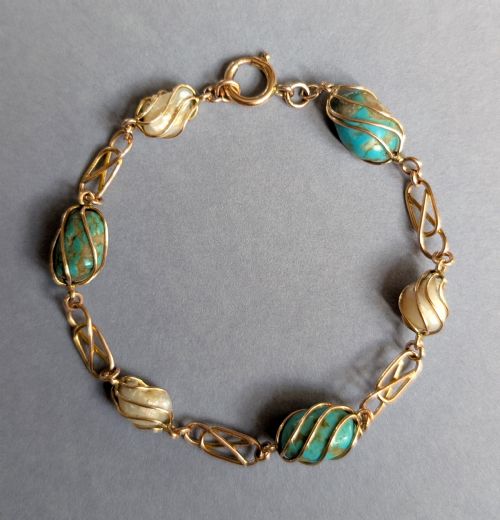
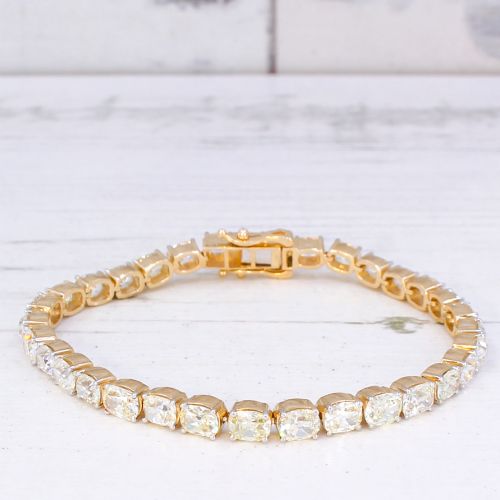
Gemstones including turquoise, seed pearls, almandine garnets, amethysts, and old mine-cut diamonds were flush-set, star-set, or raised in claw and cluster arrangements. Enamel work, Etruscan granulation, and hand-engraving completed the exterior ornamentation of these hinged bracelets.
Victorian Gold Bangle Retail Price Guide 2026
Typical asking prices for victorian gold bangle among the pieces listed under this phrase on Sellingantiques today, from the lower quarter to the upper quarter. They describe what is for sale here now, not the wider market.
Certain Victorian bangles hide tiny internal bells that jingle softly with every movement of the wrist.
Distinctions in Quality
The standard of execution depends on the crispness of hand-chased engraving and the structural durability of the hinge and clasp mechanism. Thicker gauge gold resists denting far better than thin rolled metal or hollow stampings that have softened over decades of use.
Superior pieces feature well-matched, securely set natural gemstones with intact foil backs and original safety chains, whereas lesser examples show uneven stone replacement or worn claws that fail to grip properly.
Chauvet
The Victorian Gold Bangle Glossary
- Old Mine Cut
- A diamond shape characterised by a roughly square girdle, high crown, and large culet, typical of nineteenth-century cutting techniques. These stones display broad, deep facets that catch candlelight warmly.
- Gate Link
- A flexible bracelet construction formed of multiple parallel bars linked by vertical connectors, frequently secured with a heart padlock. This style gained immense popularity during the late Victorian and Edwardian periods.
- Grand Tour
- A period of travel through continental Europe undertaken by wealthy individuals who acquired local crafts, such as micro mosaics and micromosaics. These souvenirs were frequently mounted into gold jewellery upon return.
- Etruscan Revival
- A design movement inspired by ancient archaeological excavations, featuring applied wirework and granulation on gold surfaces. Goldsmiths used these classical motifs to create rich, textured geometric patterns.
- Seed Pearl
- Very small, natural saltwater pearls drilled and threaded onto silk or wire within floral or cluster motifs. Their delicate scale requires careful handling to prevent loss.
Victorian Gold Bangle: Frequently Asked Questions
How do I wear a hinged bangle daily?
Slide the rigid hoop over the narrowest part of your hand while securing the integrated safety chain to your wrist first. This prevents accidental drops if the primary tongue clasp releases during movement.
Store the piece flat in a dedicated box away from heavier items to protect fragile surface engravings and delicate claw-set gemstones.
What is the difference between solid and rolled gold?
Solid gold pieces consist of uniform precious metal throughout their structure, marked by consistent weight and purity stamps such as nine carat or fifteen carat. Rolled gold applies a thin layer of gold alloy mechanically bonded to a base metal core.
Over long periods of wear, rolled variations may reveal the underlying base metal on high-friction edges, whereas solid pieces retain their metal composition.
Are safety chains original to these bracelets?
Most antique hinged bangles from the nineteenth century included safety chains as a practical measure against loss. These secondary chains match the gold colour and link style of the main body.
While some chains have been replaced during repairs over the past century, original examples show consistent patination and wear matching the rest of the bracelet.
How can I tell a Victorian bangle from an Edwardian one?
Victorian examples often display heavier rose gold tones, bold Etruscan revival wirework, floral repoussé, and substantial heart padlocks. Gemstone settings tend to be rich and colourful, utilising garnets, amethysts, and turquoise.
Edwardian pieces generally shift toward lighter yellow gold, platinum-topped mountings, and delicate seed pearl garlands, reflecting a lighter aesthetic favoured after nineteen hundred.