
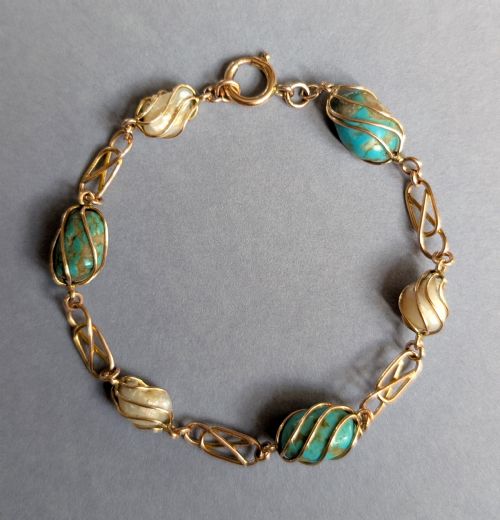
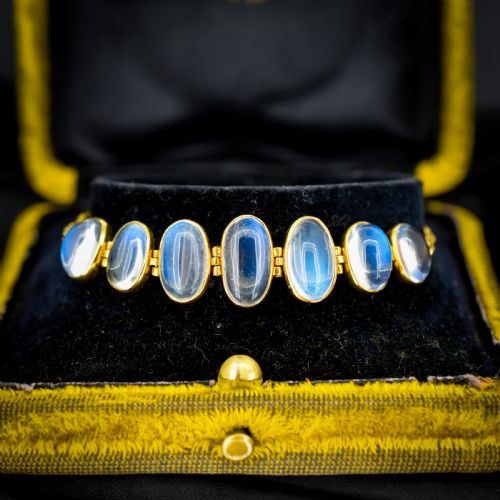


Victorian Gemstone Bracelet
A victorian gemstone bracelet brings together period goldwork and rich coloured stones, offering tangible history for the wrist.
Victorian Gemstone Bracelet
A victorian gemstone bracelet encompasses linked bands and rigid bangles set with stones such as amethyst, garnet, opal, ruby, sapphire and citrine. These pieces span the nineteenth century and into the early twentieth century, carrying the stylistic shifts of the period.
The version most commonly met on this page combines warm gold with vibrant coloured stones, often accented by pearls or seed pearls. Forms range from gate links and curb links to hinged bangles featuring central gem clusters.
Makers utilised distinct gold standards including nine carat, fifteen carat and eighteen carat gold to mount these stones securely. Pieces from this search embrace both Victorian workmanship and adjacent Edwardian aesthetics.
Materials and construction
Goldsmiths worked with multi-carat yellow and rose gold to form heavy links and rigid bangle structures that supported substantial stones. Amethysts, rubies, garnets and opals were meticulously hand-set into these precious metal mountings.
Seed pearls and split pearls frequently bordered larger coloured gems, threaded or pegged securely into delicate gold settings. Secure clasps, including heart padlocks, integrated practical function directly into the decorative design of the bracelet.
Listings feature yellow gold, rose gold, and multiple gold standards alongside garnet, amethyst, opal, ruby, sapphire, citrine, diamond, and pearl.
Assessing quality and craftsmanship
The distinction between tiers rests upon the choice of gemstones and the purity of the gold mount. Heavier gold weight and higher carat standards elevate a piece, alongside well-matched stones with strong natural colour saturation.
Finely detailed handwork on links, secure stone settings and intact seed pearl arrangements distinguish superior examples. The presence of well-preserved original clasps and articulated joints further defines the finer end of the selection.
The Victorian Gemstone Bracelet Glossary
- Bangle
- A rigid circular bracelet that slips over the hand or opens with a hinged clasp. Many Victorian examples feature a secure safety chain.
- Gate link
- A style of bracelet constructed from rows of parallel metal bars connected by smaller vertical links. This design created a flexible, substantial band popular in the nineteenth century.
- Seed pearl
- A very small, naturally small pearl used in clusters or borders around larger gems. These tiny pearls require careful threading or pegging into the gold base.
- Padlock clasp
- A functional closure shaped like a miniature padlock, frequently used as a decorative centrepiece on heart-themed bracelets. It secures the ends of curb or knot links together.
- Cabochon
- A gemstone shaped and polished with a smooth, rounded surface rather than faceted edges. This cut is typical for opals, moonstones and certain garnets from the period.
Victorian Gemstone Bracelet: Frequently Asked Questions
Were these bracelets worn daily?
Victorian jewellery was frequently worn for social occasions and everyday life, reflecting the distinct fashions of the nineteenth century.
Lower carat gold and durable stones like amethyst and garnet handled regular wear well, though softer gems required more care.
How do I tell Victorian from Edwardian pieces?
Victorian designs often feature heavier gold weights, warmer rose or yellow tones, and deep, saturated gemstone clusters.
Edwardian styles tend towards lighter settings, delicate seed pearl work, and a brighter overall aesthetic influenced by the early twentieth century.
How do I clean an old gemstone bracelet?
Clean these pieces gently using a soft dry cloth to remove oils and surface dust after wearing.
Avoid harsh chemical dips or ultrasonic cleaners, as seed pearls and softer stones like opals or turquoise are easily damaged by moisture and chemicals.