


Blue Sapphire Gold Bracelet
A blue sapphire gold bracelet brings deep blue stones together with precious metal, offering lasting elegance across Victorian, Edwardian and mid-century designs.
Blue Sapphire Gold Bracelet
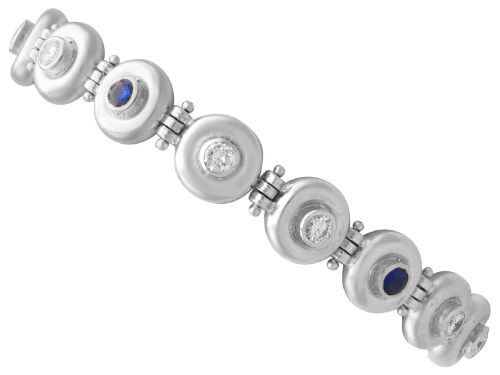
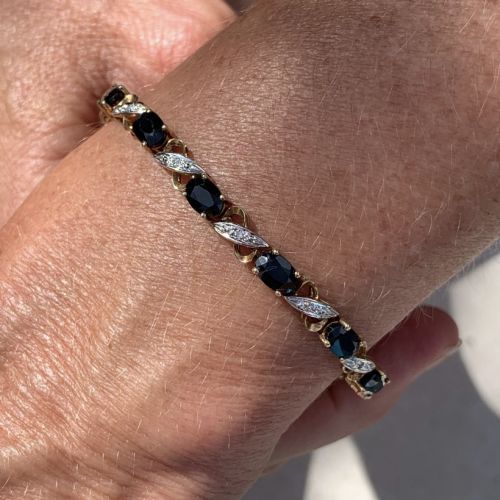
A blue sapphire gold bracelet gathers pieces from the Victorian, Edwardian, 1920, 1930, 1960 and vintage periods. These jewels combine blue sapphires with yellow gold, white gold, rose gold or 9ct and 18ct gold settings.
Buyers encounter fine line bracelets, Art Deco geometric settings and gem-set cluster links. Many examples incorporate supporting diamonds, seed pearls or crystal rhinestones alongside the central sapphires.
The selection ranges from delicate early twentieth-century Edwardian work to bolder mid-century statements. Each piece reflects the dominant jewellery aesthetics of its specific decade.
Materials and construction
Goldsmiths set natural sapphires, including Ceylon varieties and basaltic stones, into 9ct and 18ct yellow, white or rose gold mounts. Metal selection shifted across decades, moving from warm yellow gold in Victorian and Edwardian pieces towards bright white gold in later Art Deco and 1960s creations.
Diamonds frequently accompany the sapphires, adding brilliance through precise claw or channel settings. Seed pearls also appear in earlier pieces, introducing delicate textural contrast to the gold work.
Listings feature yellow gold, white gold and rose gold alongside platinum-era influences.
Assessing quality and craftsmanship
Quality rests upon the depth of the sapphire colour and the precision of the stone cutting. Well-matched blue tones across multiple gems elevate a piece significantly.
The integrity of the gold mount and the security of the settings determine overall durability. Finer examples display meticulous stone placement and balanced proportions within the metal framework.
The Blue Sapphire Gold Bracelet Glossary
- Ceylon Sapphire
- A sapphire originating from Sri Lanka, known for a bright and vibrant blue coloration. These stones are prized for their lively internal reflection.
- Art Deco
- A design style spanning the 1920s and 1930s, characterised by geometric symmetry and clean lines. Pieces from this era often feature structured platinum or white gold settings.
- Seed Pearl
- A very small, naturally formed pearl used in clusters or delicate borders. They add subtle lustre to Edwardian and Victorian jewellery.
- Basaltic Sapphire
- A sapphire originating from alkaline basaltic rocks, typically displaying a darker, more saturated blue hue. These stones offer a robust and deep colour profile.
- Edwardian
- A stylistic period spanning the early twentieth century, noted for delicate filigree and graceful floral motifs. Jewellery from this time prioritises refined elegance.
Blue Sapphire Gold Bracelet: Frequently Asked Questions
How do I date a blue sapphire gold bracelet?
Dating relies on examining the metal alloys, hallmark stamps and overall design motifs. Art Deco pieces show geometric symmetry, whereas Victorian examples favour heavier gold work and seed pearls.
Changes in clasp technology and stone cutting styles also provide reliable clues regarding the decade of manufacture.
Are all sapphires in these bracelets natural?
The selection includes natural sapphires, with specific mentions of unheated Ceylon stones and basaltic varieties. Certification notes often accompany pieces to confirm their natural origin.
Archival pieces may also feature alternative materials like blue rhinestone crystals, depending on the specific period.
What is the difference between 9ct and 18ct gold settings?
Eighteen-carat gold contains a higher proportion of pure gold, offering a richer colour and greater resistance to tarnishing. Nine-carat gold provides a harder alloy due to a higher percentage of other metals.
Both purities appear across different eras, selected by makers for durability and aesthetic weight.
How should I care for an antique sapphire bracelet?
Clean the bracelet gently using warm soapy water and a soft brush to remove dust from behind the stones. Avoid harsh chemical dips, especially when seed pearls or delicate settings are present.
Store the piece flat in a lined box to prevent scratching against other jewellery.