


Unheated Sapphire Jewellery
Unheated sapphire jewellery carries the pure, unaltered colour of the earth in stones that trace the Victorian, Edwardian, Art Deco and Mid-Century eras.
Unheated Sapphire Jewellery
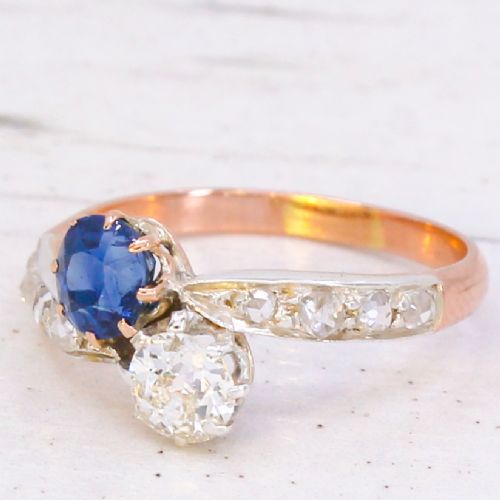
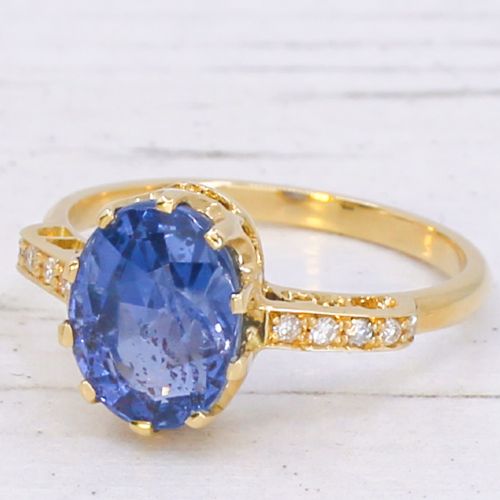
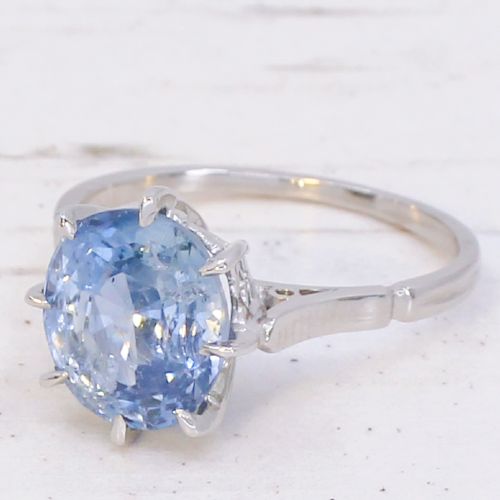
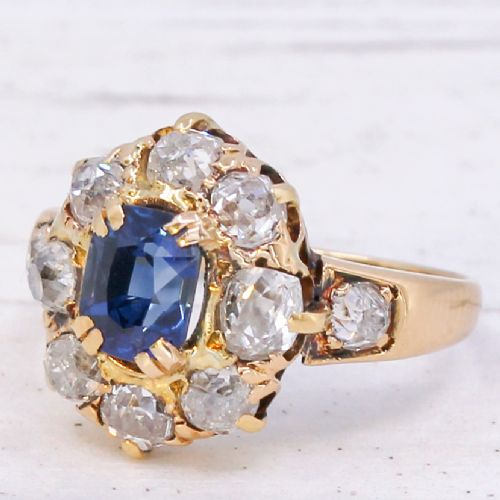
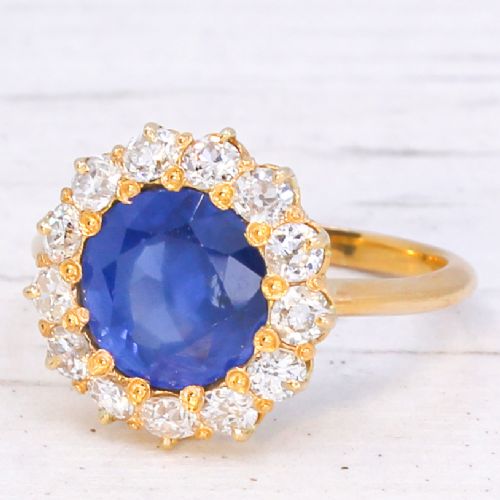
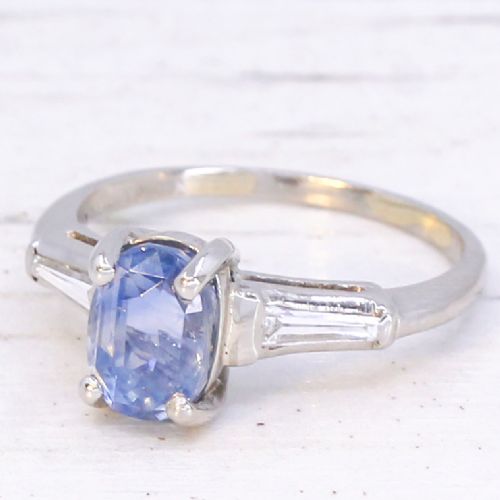
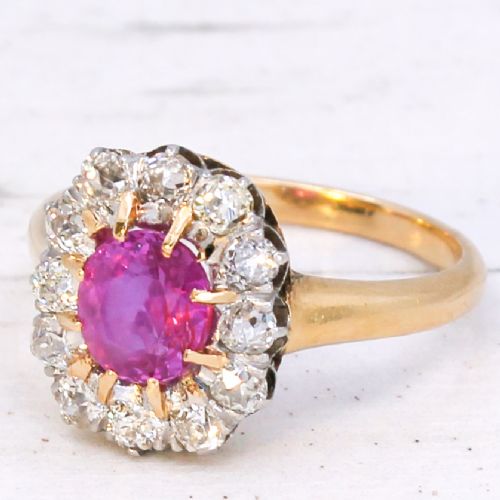
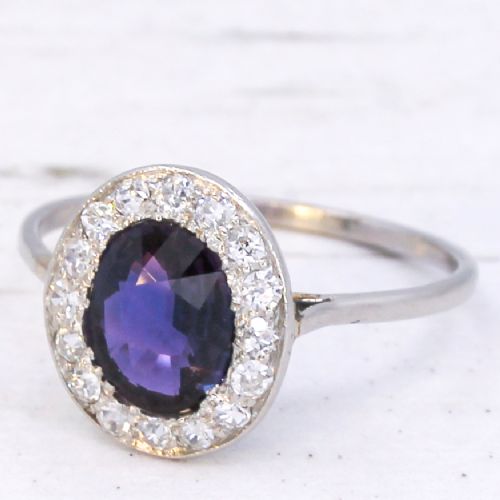
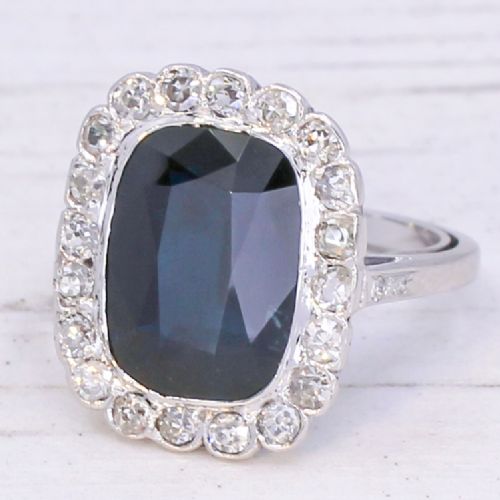
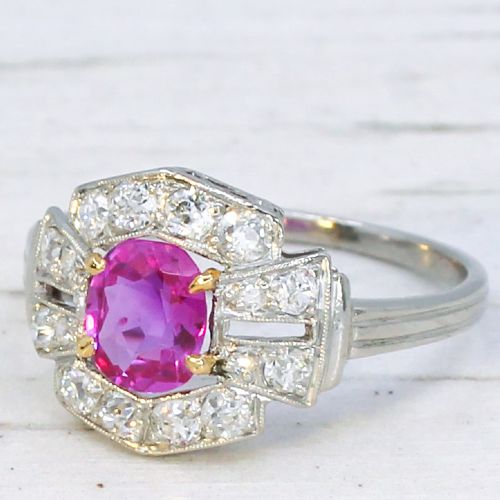
Unheated sapphire jewellery comprises rings, brooches, bracelets and pendants set with stones that have undergone no thermal enhancement to improve their natural colour or clarity. When searching for unheated sapphire jewellery, buyers encounter pieces spanning the Victorian, Edwardian, Art Deco and Mid-Century periods, with rings forming the vast majority of surviving examples.
The sapphire origins recorded across these pieces include Ceylon, Burma, Kashmir and Mogok, yielding stones in shades of blue, pink, green and star varieties. These gems are frequently paired with diamonds in platinum or gold settings, maintaining the distinct design vocabularies of their respective decades from the late nineteenth century through to the nineteen-sixties.
How they were made
Makers set these unheated gems into precious metals using traditional techniques, mounting stones in platinum, yellow gold or silver. Diamond accents are often cut in old mine or old European styles, complementing the central sapphire.
Structural designs incorporate hand-finished details appropriate to each era, from intricate Victorian wirework and granulation to geometric Art Deco platinum framing and clean Mid-Century solitaire mounts.
Current selections span eight distinct decades from the Victorian era through to 1960, utilising platinum, yellow gold, silver, diamonds, and sapphires in blue, pink, green, and star variations.
What varies in quality
Quality rests primarily in the provenance and intrinsic optical properties of the unheated stone, including the saturation of its natural colour and the presence of unaltered internal silk or inclusions. Geographical origin certifications, particularly for stones from Kashmir, Burma or Ceylon, heavily influence the character of the piece.
The standard of metalwork and the matching quality of accompanying diamonds also dictate overall execution, distinguishing standard commercial workshops from finer high-period jewellery manufacture.
The Unheated Sapphire Jewellery Glossary
- Unheated sapphire
- A natural corundum gemstone that has not been subjected to artificial heat treatment to alter its colour or clarity. This condition is verified by gemmological laboratories.
- Ceylon sapphire
- A stone originating from the island nation of Sri Lanka, historically known for a vibrant and luminous range of blue or pink tones.
- Kashmir sapphire
- A gem originating from the Himalayan region, prized for a distinctive velvety blue appearance caused by microscopic inclusions.
- Cluster ring
- A setting style where a central stone is surrounded by a tight ring of smaller accent stones, usually diamonds.
- Cabochon
- A gemstone cut with a smooth, rounded, convex top rather than faceted planes, frequently utilised for star sapphires.
Unheated Sapphire Jewellery: Frequently Asked Questions
How do I know a sapphire is unheated?
Gemmological certificates issued by independent laboratories provide definitive analysis of internal inclusions and crystal structures, confirming whether a stone has remained unheated.
These reports document microscopic evidence that reveals the natural thermal history of the corundum.
Which periods are common for these rings?
Surviving examples originate predominantly from the Victorian, Edwardian, Art Deco and Mid-Century eras, spanning from the late nineteenth century to the nineteen-sixties.
Each period imparts distinct stylistic hallmarks to the setting and the surrounding diamond work.
What is a star sapphire?
A star sapphire displays an optical phenomenon known as asterism, where light reflects across needle-like inclusions to form a six-rayed star shape.
These stones are typically cut as cabochons to best exhibit the moving luminous pattern across the surface.
Can I wear an antique sapphire ring daily?
Corundum is an extremely hard mineral, rating nine on the Mohs scale, making these pieces durable for regular wear when properly maintained.
Prongs and settings in older platinum or gold jewellery should be inspected periodically to ensure the stones remain secure.