


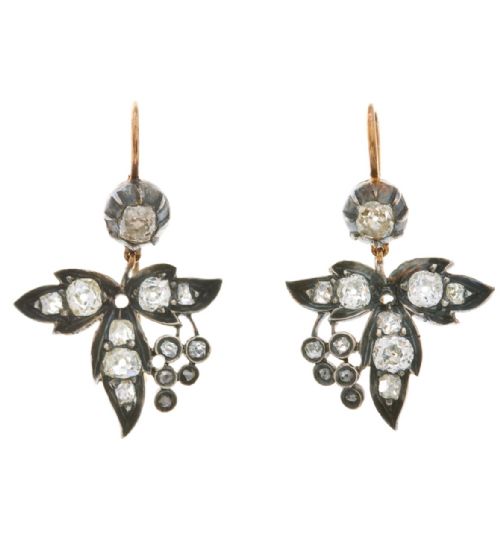
Rose Gold Drop Earrings
These rose gold drop earrings bring together centuries of delicate goldsmithing and gemstone work, offering a touch of period elegance for daily wear.
Rose Gold Drop Earrings
Rose gold drop earrings span several distinct historical eras, including the Georgian, Victorian, Edwardian, and Art Deco periods, alongside pieces from the 1930s and the 18th century. Buyers searching this phrase encounter delicate dangling designs featuring gemstones suspended below the main fitting, often configured as day-to-night pieces or hinged drops.
Victorian and Edwardian examples dominate the selection, frequently pairing rose gold with yellow gold, silver, or platinum settings. These earlier iterations often incorporate motifs such as ivy leaves, hearts, bows, and teardrops, housing stones like diamonds, pearls, garnets, and tourmalines.
The assortment also includes pieces from later decades, such as Art Deco designs and 1930s amethysts, demonstrating how the drop earring form evolved while retaining its characteristic movement. Such variety ensures that collectors find both subtle daytime wear and substantial evening jewels.
Materials and construction
Goldsmiths constructed these drop earrings using various gold purities, notably nine-carat, fifteen-carat, and eighteen-carat rose and yellow gold, sometimes combined with platinum or silver toppings. These metals were shaped into hinged drop mechanisms, screw fittings, and delicate wire frameworks to support dangling elements.
Stone setting techniques relied heavily on rose cut and old cut diamonds, alongside pearls, garnets, amethysts, emeralds, and tourmalines. Lapidaries shaped these stones to catch candlelight or natural light, securing them within meticulous cluster arrangements, ivy leaf structures, and bow motifs.
Common gemstone pairings for these antique drops include diamonds, seed pearls, Bohemian garnets, blue zircons, and green tourmalines.
Judging quality
Quality rests on the integrity of the original metalwork and the harmony between the gold colour and the selected gemstones. Finer examples display precise hand-cut stones, secure claw or collet settings, and sophisticated articulation in the drop mechanism that allows graceful movement.
The distinction between standard commercial pieces and superior items lies in the complexity of the design, such as multi-part hinged components or integrated platinum highlights. Original fastenings and well-matched natural pearls or vibrant coloured stones elevate the standing of a piece.
The Rose Gold Drop Earrings Glossary
- Rose gold
- A gold and copper alloy creating a warm reddish hue that became popular in jewellery manufacture during the Victorian and Edwardian eras. This metal provides a softer background for diamonds and coloured gemstones.
- Drop earrings
- Earrings designed to suspend below the earlobe rather than sitting directly against it. They often feature movement through hinged or linked joints.
- Rose cut
- An antique gemstone cut featuring a flat base and a domed crown faceted with triangular planes. This cut appeared frequently in Georgian and Victorian jewellery.
- Day-to-night earrings
- Convertible jewellery designed with removable drop sections. This allowed the wearer to transition from a simple daytime setting to a more elaborate evening configuration.
- Old cut
- A precursor to the modern brilliant cut diamond, characterised by a smaller table, higher crown, and deep pavilion. These stones were hand-faceted to suit dim lighting conditions.
Rose Gold Drop Earrings: Frequently Asked Questions
How do I wear antique drop earrings safely?
Ensure the fastenings, whether hooks, screws, or lever-backs, are secure before wearing them for extended periods. Storing them in a lined box prevents the dangling components from tangling or sustaining impact.
Because many antique earrings feature delicate rose gold wirework or closed-back settings, avoid exposing them to water, harsh chemicals, or ultrasonic cleaners. Gentle wiping with a soft cloth preserves the original metal finish.
What is a day-to-night earring?
A day-to-night earring is a versatile antique design featuring a detachable lower section. The wearer removes the dangling drop portion for daytime tasks and reattaches it for evening events.
This clever mechanism allowed period owners to purchase one adaptable pair of jewels rather than separate sets for different occasions. You can spot the tiny hinges or threaded fittings where the sections join.
How can I tell the period of these earrings?
Dating relies on a combination of metal characteristics, gemstone cuts, and fastening types. Georgian and early Victorian pieces often utilise closed-back settings and old cut stones, whereas Edwardian examples frequently introduce platinum toppings and intricate millegrain work.
Examining the overall motif also helps, as ivy leaves, natural pearls, and specific bow shapes align closely with nineteenth-century design trends. Hallmarks, where present, offer further confirmation of the manufacturing era.