


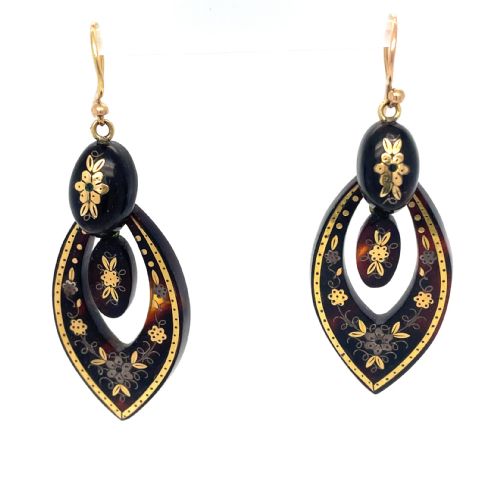


19th Century Gold Earrings
These 19th century gold earrings capture the rich decorative ambition of the period, offering intricate drop designs and rich stones that elevate any collection.
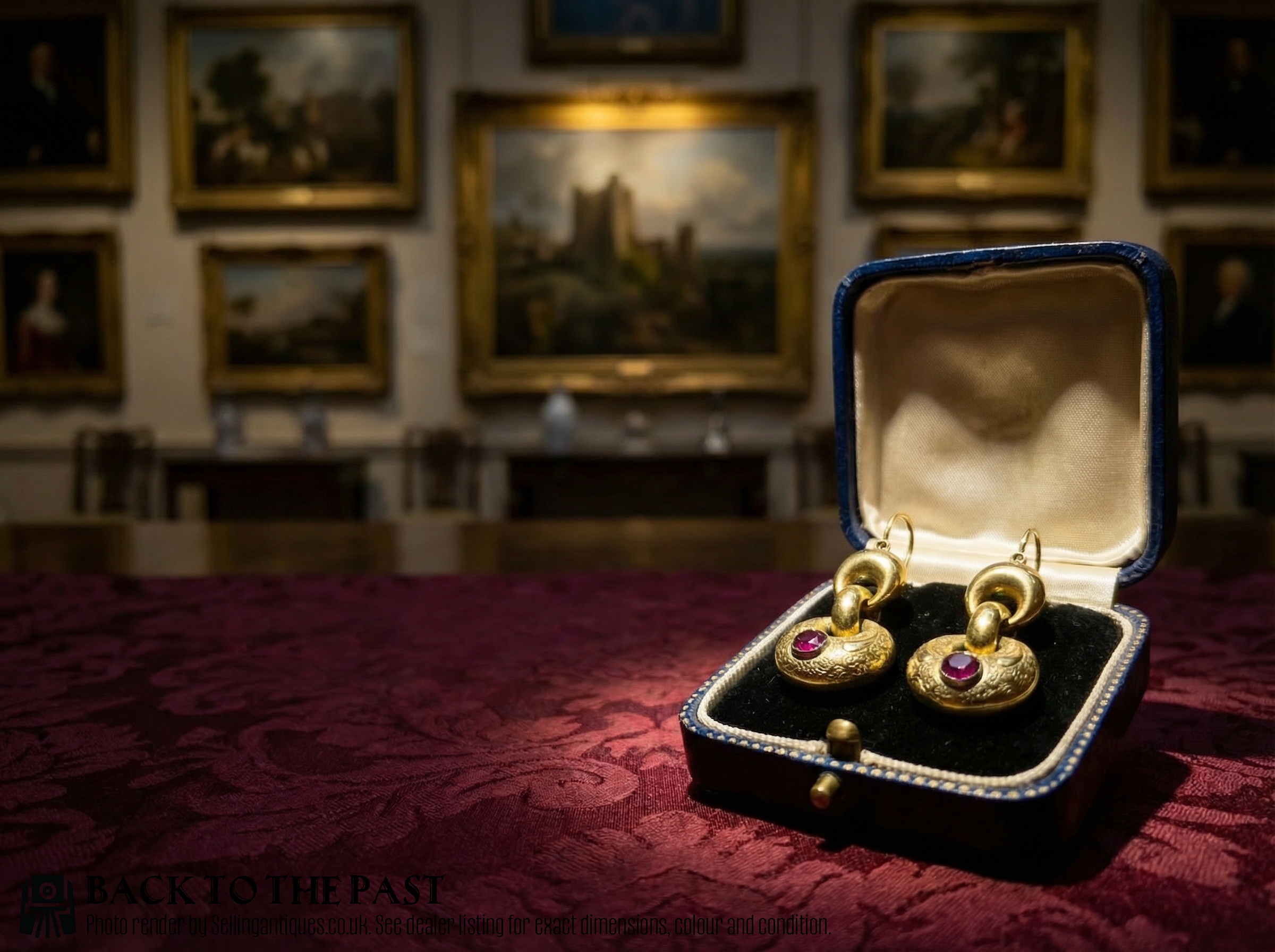
19th Century Gold Earrings
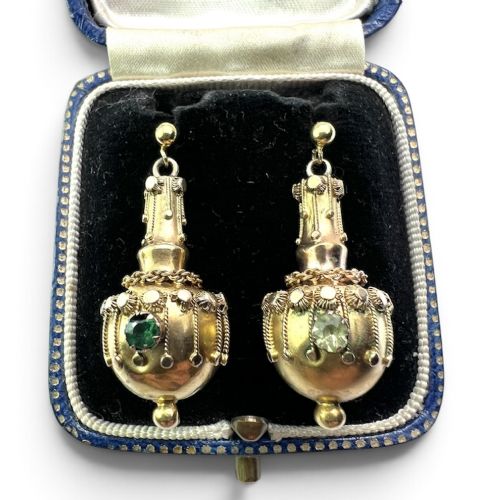
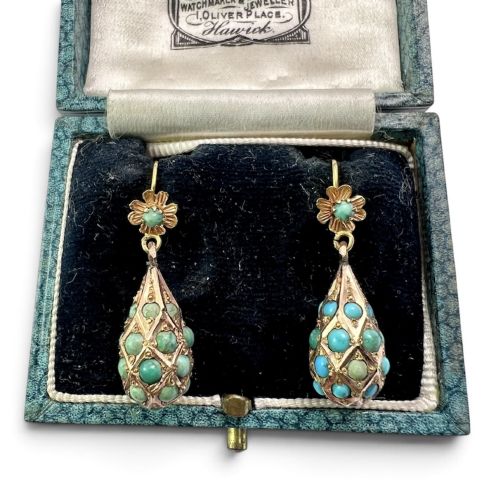
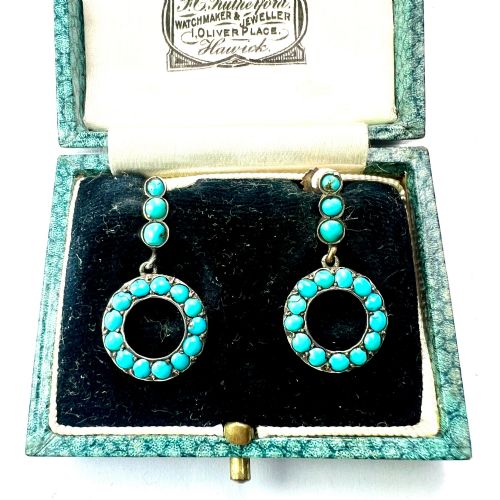
Makers of the period favoured distinct stylistic revivals, particularly Etruscan Revival alongside naturalistic coral, garnet, and turquoise designs. These pieces range from delicate pearl clusters to large hollow hoops.
The materials reflect a diverse material palette, combining lower and higher karat gold with silver, jet, tortoiseshell, and paste. Many pairs showcase elaborate dangling configurations designed to catch the light during movement.
How they were made
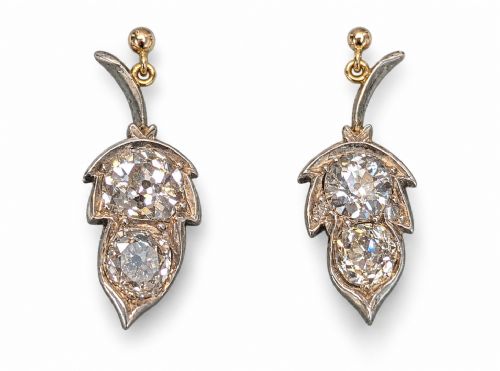
Goldsmiths constructed these pieces using solid and hollow gold techniques, frequently utilising 9ct and 15ct gold alongside silver settings for gemstones. Many pairs incorporate gemstones such as turquoise, garnet, amethyst, and diamond directly into the metalwork.
Specialised techniques include pique inlay on tortoiseshell and intricate wirework found in Etruscan Revival designs. Artisans also carved natural materials like coral and Whitby jet to form detailed botanical and animal motifs.
Earwires and settings are hand-forged or soldered, with components varying from simple hooks to articulated drop mechanisms. The integration of mixed metals like rose and yellow gold demonstrates sophisticated handling of colour.
19th Century Gold Earrings Retail Price Guide 2026
Typical asking prices for 19th century gold earrings among the pieces listed under this phrase on Sellingantiques today, from the lower quarter to the upper quarter. They describe what is for sale here now, not the wider market.
Listings on this site feature Victorian and Edwardian periods, utilising gold, silver, turquoise, garnet, pearl, diamond, coral, jet, and tortoiseshell.
What varies in quality
The standard of execution in 19th century gold earrings depends heavily on the precision of the stone setting and the delicacy of the wirework. Superior examples display meticulous detail in carved coral or natural gemstones without adhesive residues.
Subtleties in metal purity, such as the distinction between 9ct and 15ct gold, influence the weight and structural integrity of larger hoops and drop earrings. Finer craftsmanship appears in the seamless joining of hollow components and balanced proportions.
The 19th Century Gold Earrings Glossary
- Etruscan Revival
- A nineteenth century design movement inspired by archaeological discoveries of ancient Italian goldwork, characterised by granulation and filigree. This style frequently employs applied gold wire patterns on a matte surface.
- Pique
- A technique involving the inlay of gold or silver pins into tortoiseshell or ivory to form geometric or floral patterns. This method demands extreme precision from the artisan.
- Whitby Jet
- A hard, fossilised wood found in Yorkshire, carved into lightweight mourning and fashion jewellery during the Victorian era. It takes a deep, velvety black polish.
- Parure
- A matched set of jewellery designed to be worn together, which can include earrings, necklaces, and brooches. Surviving matching sets remain highly collectible.
19th Century Gold Earrings: Frequently Asked Questions
How do I wear antique drop earrings safely?
Ensure the earwires are secure and use supportive backs if the drop is substantial. Storing them in a dedicated box prevents the delicate dangling components from tangling or sustaining impact.
Because many nineteenth century wires are slightly thicker than modern standards, check the gauge before wearing them for extended periods. Handle them by the metal rather than pulling on dangling stones or coral carvings.
How do I clean nineteenth century gold earrings?
Use a soft, dry microfibre cloth to remove surface dust after wearing. Avoid harsh chemical dips, ultrasonic cleaners, or prolonged soaking, particularly for pieces containing turquoise, coral, jet, or tortoiseshell.
Water can weaken organic materials and historical adhesives used in foil-backed stones or paste. If deeper cleaning is necessary, consult a specialist who understands antique jewellery construction.
Are these earrings made of solid gold?
The listings on this page include pieces made from 9ct and 15ct gold, alongside hollow gold constructions designed to reduce weight on the earlobe. Hollow hoops and drops require careful handling to avoid denting.
Some designs also incorporate silver settings for diamonds and paste to enhance the brilliance of the stones, which was a standard practice during the nineteenth century.
How can I tell a Victorian earring from an Edwardian one?
Victorian pieces often display heavier proportions, warmer rose gold hues, and distinct historical revivals like Etruscan or naturalistic floral motifs. The evidence here spans early Victorian work through to Edwardian production.
Edwardian items frequently trend toward lighter gemstone arrangements and refined millegrain settings, though stylistic overlaps occurred frequently as tastes transitioned between reigns.