




Etruscan Revival Jewellery
Etruscan Revival jewellery brings classical archaeological splendour to the ear and hand through intricate granulation and goldwork.
Etruscan Revival Jewellery
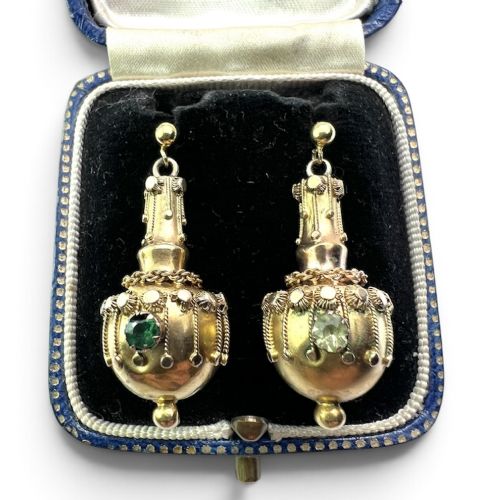
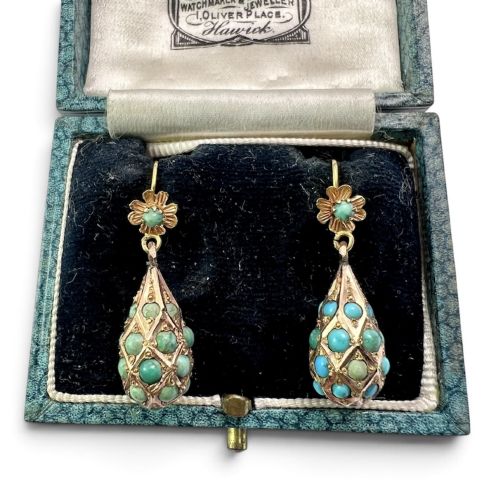
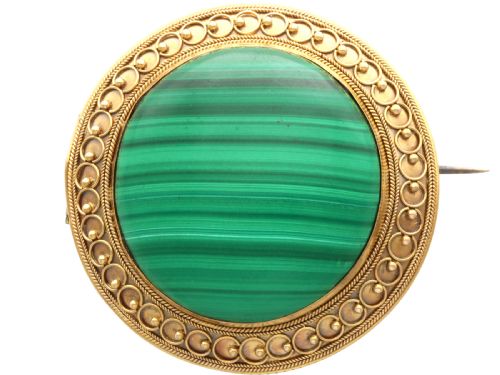
Etruscan Revival jewellery captures the fascination with ancient classical forms that swept through the Victorian and Edwardian eras. Pieces on this page span the Victorian and Edwardian periods, taking the form of earrings, brooches, and rings.
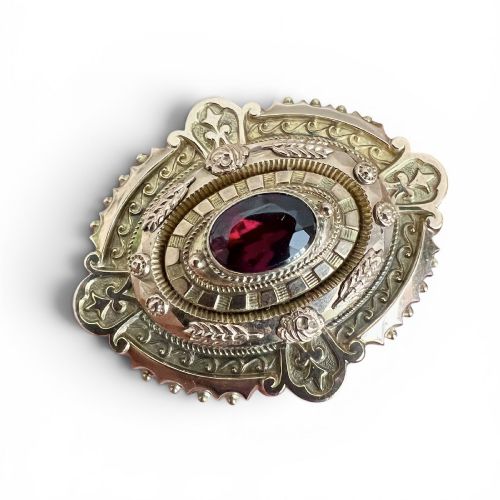
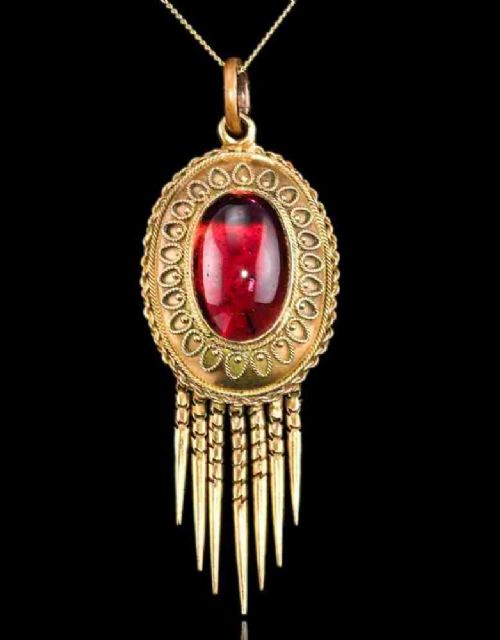
The earrings and brooches frequently showcase distinct archaeological motifs like the amphora or large locket designs. Rings from this tradition combine modest gold bands with precious stones such as diamonds.
Victorian pieces lead the selection, offering substantial gold settings paired with garnets or fashioned into amphora drops. Edwardian examples refine the aesthetic into lighter gold rings set with diamonds.
How they were made
Maker's hands shaped these pieces using 15ct gold, 9ct gold, and unmarked gold as the primary metal foundations. Techniques relied on working pliable high and medium karat gold into elaborate wirework and chased surfaces.
Gemstones integrated into the designs include deep red garnets and sparkling diamonds. Stones were securely flush-set or bezel-set into the warm gold bodies to complement the classical revival motifs.
Victorian makers occasionally turned ancient wine vessels into earrings because nothing says tea-time quite like miniature gold amphorae.
What varies in quality
The standard of execution in the goldwork marks the distinction between ordinary and exceptional pieces. Finer items display meticulous application of wirework and granulation rather than simple cast imitations.
Proportion and stone selection further separate the tiers, with richer garnets and brighter diamonds elevating the piece. The integrity of the original construction and the survival of delicate applied details command attention.
The Etruscan Revival Jewellery Glossary
- Granulation
- A decorative technique involving tiny spheres of gold soldered to a metal surface in geometric patterns. This method defines much of the classical archaeological aesthetic.
- Amphora
- A two-handled ancient jar shape frequently translated into miniature form for Victorian earrings and pendants. It reflects the direct influence of classical antiquity on nineteenth-century design.
- Locket Brooch
- A wearable brooch that incorporates a concealed compartment for portraits or locks of hair. These pieces combine practical keepsake utility with ornate revival decoration.
- Bezel Setting
- A collar of metal that securely encircles the edge of a gemstone to hold it in place. This secure mounting style typifies antique ring construction.
Etruscan Revival Jewellery: Frequently Asked Questions
What is Etruscan Revival jewellery?
This jewellery style imitates the ornamentation discovered in ancient Italian tombs during the nineteenth century. Goldsmiths revived ancient techniques to produce elaborate gold pieces.
Items range from gemstone rings to large brooches and dangling earrings created during the Victorian and Edwardian eras.
How do I date these pieces?
Dating relies on examining the gold purity marks, overall construction methods, and prevailing stylistic traits. Victorian examples often utilise higher karat gold and heavier garnet elements.
Edwardian pieces tend to lean towards lighter gold work paired with diamonds. Comparing the closure types and mountings helps narrow down the era.
Are these pieces made of solid gold?
The pieces recorded here are fashioned from solid 15ct gold, 9ct gold, or standard gold. Antique gold standards differ from modern equivalents.
Checking for hallmarks or testing the metal confirms the composition. The substantial gold content gives these revival pieces their characteristic warmth.
How should I care for antique gold jewellery?
Gentle handling preserves the delicate wirework and applied granulation characteristic of this aesthetic. Avoid harsh chemical cleaners that can damage softer gemstones like garnets.
Store pieces individually in soft pouches to prevent friction against other items. Regular gentle dusting keeps the intricate gold surfaces bright.