


Victorian Garnet Brooch
A victorian garnet brooch brings deep red warmth and intricate metalwork together, making it a treasured piece of nineteenth-century heritage.
Victorian Garnet Brooch
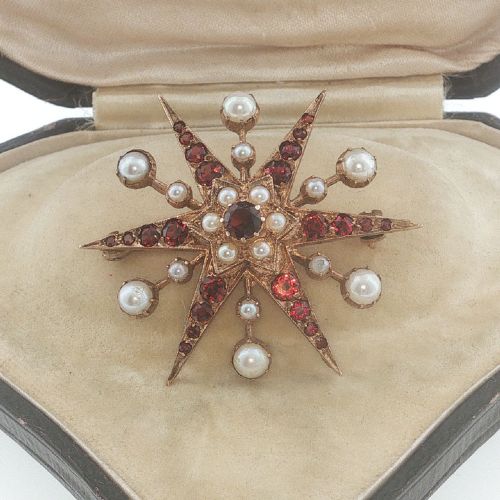
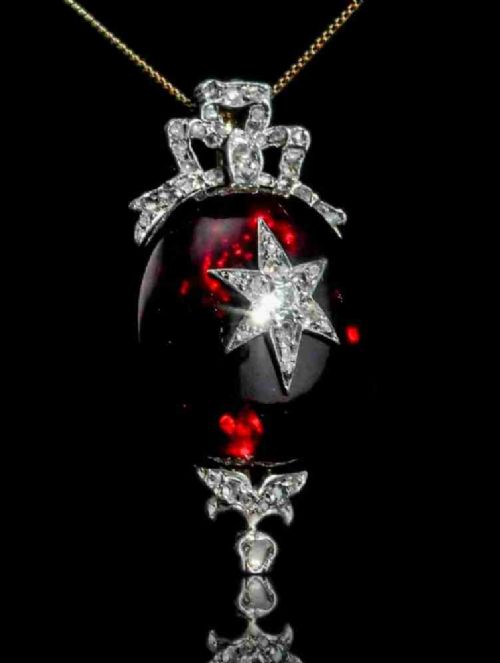
A victorian garnet brooch encompasses everything from large cluster designs to starburst and pendant forms set with deep red stones. Buyers searching for a victorian garnet brooch frequently encounter cluster configurations and star motifs alongside elaborate locket pieces.
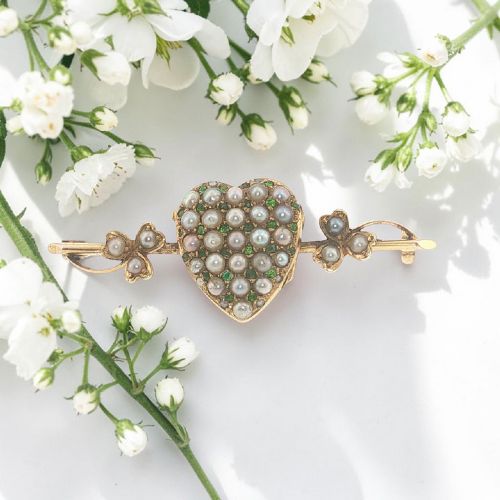
The materials span high-karat golds like fifteen-carat and nine-carat yellow gold, often paired with seed pearls, diamonds, and occasionally green garnets or chrysoberyl. Many examples display Etruscan revival styles, incorporating granulation and wirework that reflect nineteenth-century archaeological discoveries.
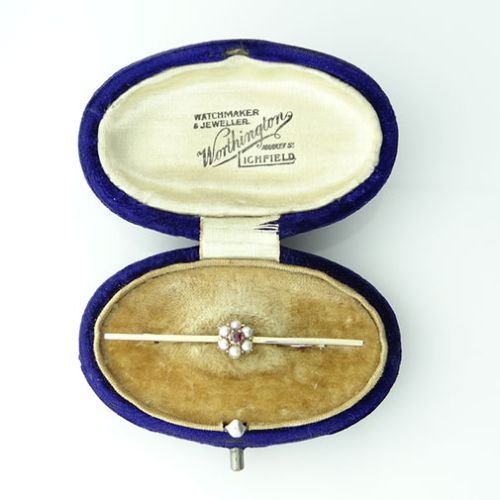
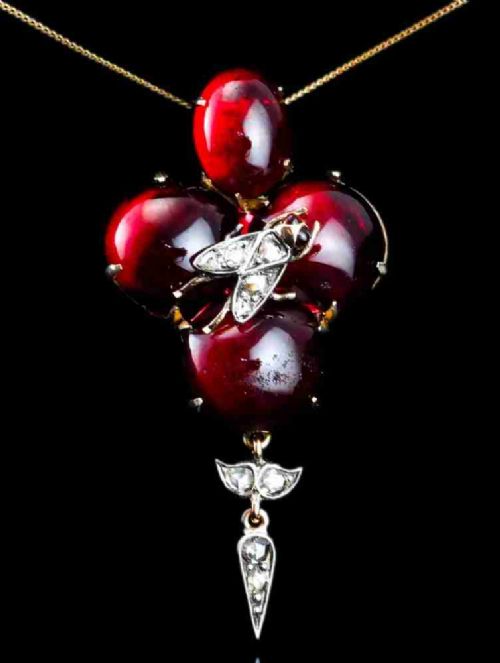
Beyond standard brooches, dual-purpose pendant brooches appear frequently, allowing the piece to wear on a chain as well as a pin. These versatile jewels range from simple bar pins to substantial multi-stone statement pieces.
Construction and Materials
Goldsmiths worked primarily in yellow gold, utilising fifteen-carat and nine-carat alloys alongside silver-topped gold settings to enhance the brilliance of diamonds and dark garnets. Stones were shaped as flat cuts, cabochons, or rose cuts, nestling closely within heavy bezels or tightly packed cluster arrangements.
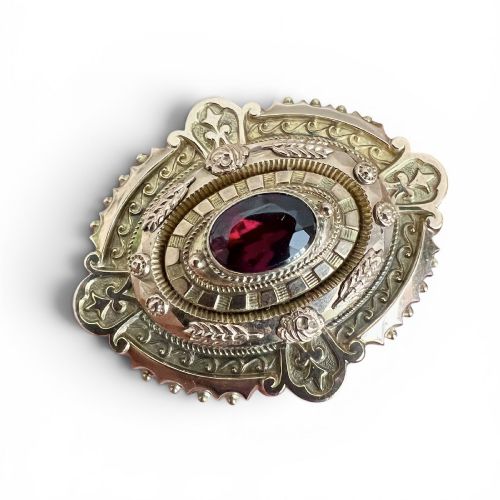
Etruscan revival pieces demanded meticulous handwork, applying minute gold beads and delicate wire filigree directly onto the base metal. Enamel and seed pearls frequently accented the central garnet stones, secured with hand-cut pins and C-clasps.
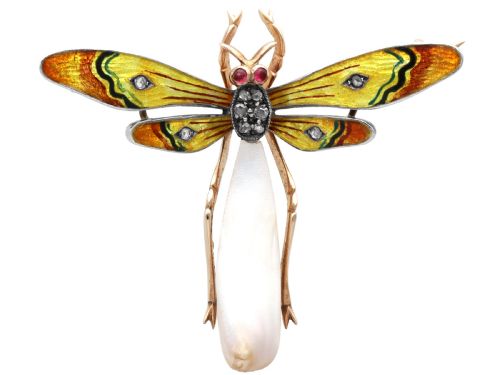
Jockey cap pins and winged dragonflies demonstrate that Victorian jewellers enjoyed turning sporting equipment and garden insects into glittering garnet statements.
Assessing Quality
Superior examples distinguish themselves through the depth of colour in the almandine or carbuncle garnets and the precision of the goldsmith's handwork. High-quality pieces maintain intact granulation, secure stone settings, and balanced proportions that elevate them beyond standard mass production.
The Victorian Garnet Brooch Glossary
- Almandine garnet
- A dense, deep red variety of garnet commonly found in nineteenth-century jewellery. It provides the dark, rich tone characteristic of Victorian clusters.
- Cabochon
- A gemstone shaped and polished with a smooth, convex surface rather than faceted. This cut emphasises the deep inner glow of large garnets.
- Etruscan revival
- A nineteenth-century design style inspired by ancient archaeological excavations in Italy. It relies heavily on applied gold wirework and granulation.
- Carbuncle
- A historical term for a red garnet cut <em>en cabochon</em>. These stones often appear raised prominently within heavy gold mountings.
- Demi parure
- A matched set of jewellery consisting of two or three pieces, such as a brooch paired with matching earrings. They offer a coordinated appearance typical of Victorian social attire.
Victorian Garnet Brooch: Frequently Asked Questions
How do I wear a convertible pendant brooch?
Many Victorian pieces feature a hidden loop or fold-down bail at the reverse alongside the pin fitting. This allows the jewel to secure onto garments as a brooch or suspend from a chain as a pendant.
Ensure the pin catch remains secure when wearing it on fabric, and check that any bail mechanism locks firmly into place when transitioning to a necklace.
What is the difference between Bohemian garnets and Victorian almandine stones?
Bohemian garnets typically consist of many small, rose-cut stones tightly clustered together to create a brilliant red pavement effect. Almandine garnets are larger, deeper in tone, and often featured as solitary cabochons or focal centerpieces.
While Bohemian pieces rely on massed sparkle, almandine jewellery emphasises the rich, wine-dark colour of individual large gems.
How can I tell if a piece is Etruscan revival?
Etruscan revival jewellery displays characteristic applied ornamentation, including tiny spherical gold granules and delicate twisted wire patterns soldered onto matte gold surfaces. This aesthetic mimics ancient Italian metalwork discovered during Victorian excavations.
Examine the metal under magnification to confirm the tiny gold balls are individually applied rather than cast as part of the base plate.
Were seed pearls durable in Victorian jewellery?
Seed pearls were widely utilised to frame garnet clusters and create floral motifs, though organic pearls require careful handling. Because natural pearls are sensitive to acids and moisture, historic pieces demand gentle cleaning without harsh chemical dips.
Check that each tiny pearl remains securely pegged and glued within its setting, as organic adhesives can degrade over time.