
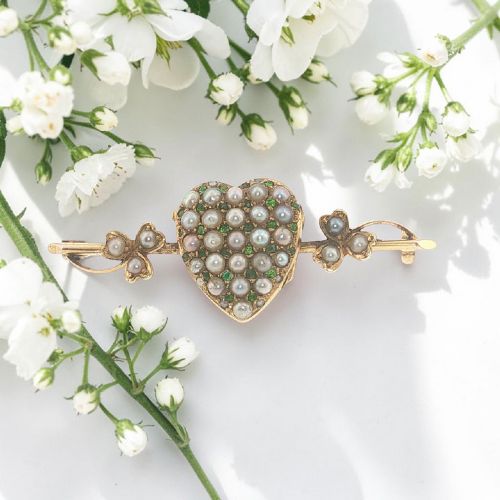


Gold Garnet Pin
A gold garnet pin brings deep red warmth and Victorian presence to a lapel, combining rich stones with lasting precious metal.
Gold Garnet Pin
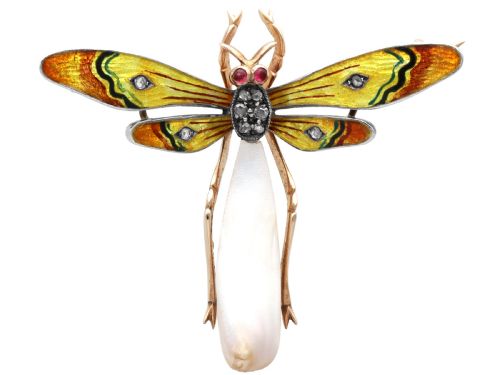
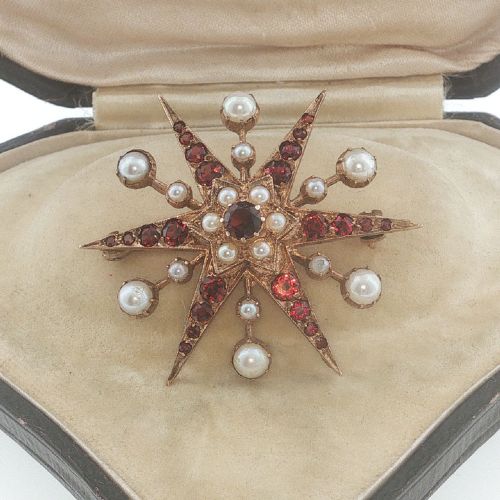
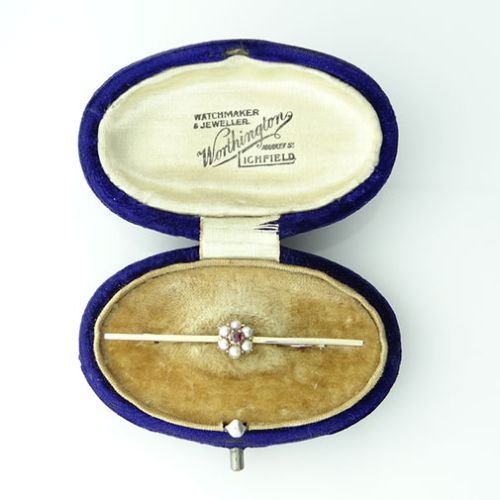
A gold garnet pin is primarily found as a brooch, locket brooch, or bar pin originating from periods such as the Victorian era, the nineteenth century, and mid-century decades. These pieces serve as functional fastenings and decorative ornaments, frequently taking the form of starbursts, hearts, animal figures, or geometric clusters.
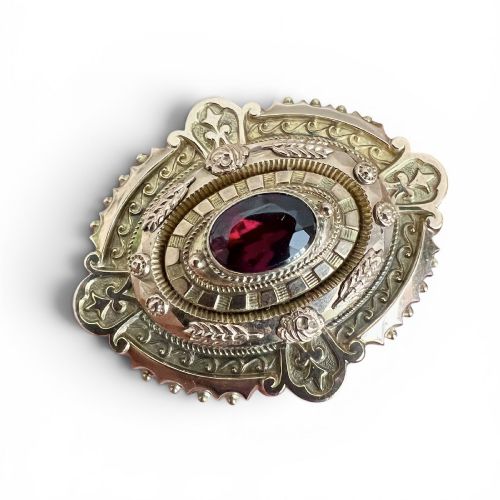
The version you are most likely to meet on this page is a Victorian brooch or pendant brooch set in gold with seed pearls alongside the central garnet. Such pieces reflect the styles of their time, spanning standard Victorian work to Etruscan Revival designs and later vintage revivals.
Materials and Construction
Makers set garnets - including flat cut almandine, carbuncle, pink, and green varieties - into gold alloys ranging from nine carat and ten carat up to fifteen and eighteen carat yellow and rose gold. Seed pearls, diamonds, paste, and red enamel guilloche frequently accompany the primary stones.
Construction techniques involve securing the gems within gold settings, sometimes incorporating locket compartments, intricate wirework for Etruscan Revival pieces, or detailed casting for figural forms like poodles and jockey caps.
A vintage yellow gold poodle brooch offers a playful canine alternative to traditional floral and starburst designs.
Quality and Execution
Quality separates pieces through the selection and cutting of the stones, such as the depth of colour in flat cut almandine garnets or the clarity of accompanying diamonds and pearls. Heavier gold weight and higher carat standards mark the upper end of the range.
Execution also shows in the precision of the metalwork, whether in the delicate arrangement of seed pearls in a starburst pattern or the intricate detail of an Etruscan Revival locket brooch.
The Gold Garnet Pin Glossary
- Almandine garnet
- A deep red variety of garnet commonly seen in Victorian jewellery. These stones provide the dark, rich colour characteristic of nineteenth-century pieces.
- Etruscan Revival
- A nineteenth-century design style inspired by archaeological discoveries of ancient Italian metalwork. Pieces in this style use granulation and intricate gold wire applications.
- Carbuncle
- A cabochon-cut garnet with a smooth, domed surface rather than faceted edges. This cut emphasises the dense colour of the stone without internal reflections.
- Seed pearl
- A very small, natural or cultured pearl used as an accent. Makers cluster these around garnets in starburst and floral brooches.
Gold Garnet Pin: Frequently Asked Questions
How do I wear a gold garnet pin?
These pins attach securely to lapels, scarves, and heavy fabrics using standard pin stems or safety catches. They function effectively as standalone ornaments or combined with matching earrings.
Heavier locket brooches require sturdy cloth to support their weight without pulling the fabric.
What is an Etruscan Revival brooch?
Etruscan Revival brooches copy ancient Mediterranean metalworking techniques discovered during nineteenth-century excavations. They feature applied wirework and tiny gold granules arranged in geometric patterns.
These pieces are typically heavier and more sculptural than standard Victorian designs.
How can I tell a Victorian pin from a vintage one?
Victorian pieces often use higher carat gold such as fifteen carat or eighteen carat alongside hand-cut almandine garnets and natural seed pearls. Their construction methods reflect nineteenth-century bench manufacturing.
Mid-century and later vintage pieces more frequently utilise nine carat or yellow gold with standardised stone cuts.
What are flat cut garnets?
Flat cut garnets have a polished table top and a shallow underside rather than traditional deep facets. This traditional cutting style was common in Georgian and early Victorian jewellery.
The technique allows dark garnets to transmit light effectively through the stone.