


Gold Mourning Pin
A gold mourning pin is a small sentimental jewel worn to remember the dead, uniting personal grief with fine period craftsmanship.
Gold Mourning Pin
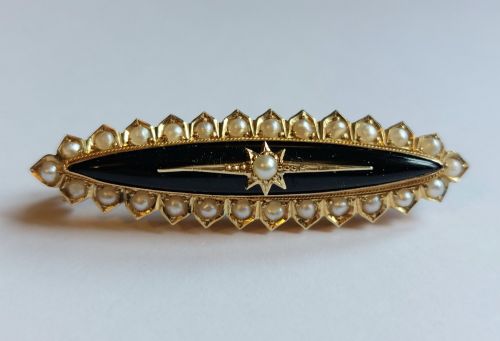
A gold mourning pin brings together small wearable pieces created to remember the departed, appearing primarily in Victorian and Georgian forms across this selection. These items function as intimate personal memorials, often taking the shape of brooches, lace pins, and lockets designed to be fastened directly to garments. Buyers encounter numerous Victorian and Georgian examples alongside specific period pieces dated to the nineteenth century and eighteen-eighty.
The objects span several distinct historical styles, notably Etruscan Revival and Georgian Neoclassical, reflecting changing aesthetic preferences for remembrance jewellery. Many pieces incorporate compartments or glazing intended to hold hair, miniature portraits, or woven silk tributes beneath glass. These formats range from simple bar pins to elaborate buckled shapes and hardstone cameos.
Materials and construction
Makers shaped these jewels primarily from yellow gold, often utilising fifteen-carat or eighteen-carat metal alongside lower carat alloys, silver inlay, and tortoiseshell piqué work. The structural foundations frequently support intricate bezels and wirework characteristic of nineteenth-century goldsmithing.
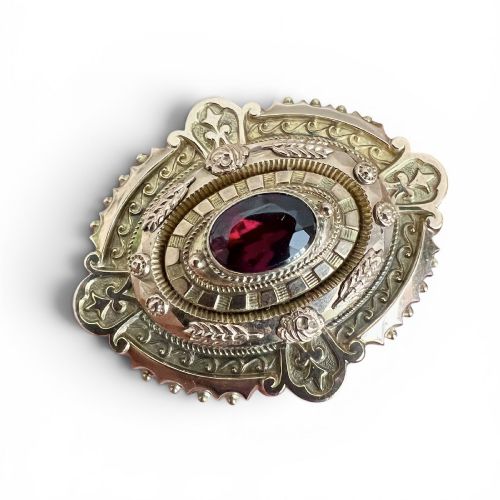
Gems and organic materials decorate the surfaces, with seed pearls, garnets, diamonds, pearls, onyx, ruby paste, and hardstone cameos set into the gold frames. Glazed compartments protect delicate arrangements of human hair and enamel work, requiring precise miniature sealing techniques to secure the contents.
Listings feature items spanning the Georgian, Victorian, and Edwardian periods, constructed from gold, seed pearls, onyx, and garnets.
Assessing quality
Quality rests upon the refinement of the goldsmithing and the complexity of the materials integrated into the design. Superior pieces demonstrate meticulous metalwork, such as fine Etruscan Revival wire application or intricate tortoiseshell piqué inlay, whereas simpler examples rely on plain polished gold settings.
The integration of precious stones and the preservation of internal hair work or glass covers influence the character of each piece. Finer items balance structural integrity with delicate decorative elements like seed pearl borders and high-grade garnets or diamonds.
The Gold Mourning Pin Glossary
- Mourning pin
- A small wearable jewel created to commemorate a deceased person. These items often feature gold settings and compartments for hair.
- Seed pearl
- A very small natural pearl, frequently utilised in nineteenth-century jewellery to frame central stones or create floral motifs.
- Piqué work
- A decorative technique involving the inlay of tiny gold or silver pins into a tortoiseshell or ivory base to form geometric or floral patterns.
- Etruscan Revival
- A nineteenth-century design style inspired by ancient archaeological discoveries, characterised by granulation and applied wirework on gold.
- Flat cut garnet
- A gemstone faceted with a flat table and shallow pavilion, commonly seen in Georgian pieces to maximise the dark red colour against foil backings.
Gold Mourning Pin: Frequently Asked Questions
What is a gold mourning pin?
A gold mourning pin is a commemorative jewel made to honour a deceased loved one during the Georgian and Victorian eras.
These pieces typically incorporate precious metals, gemstones, and sometimes human hair sealed behind glass.
How were mourning pins worn?
Owners pinned these jewels directly onto garments, shawls, or mourning dress as a visible sign of remembrance.
Many examples function as brooches or lace pins designed to secure fabrics while displaying sentimental decoration.
How do I date a mourning pin?
Stylistic clues such as Etruscan Revival wirework, Georgian Neoclassical motifs, or specific material choices help indicate the period.
Inscriptions, construction techniques, and hallmarks stamped into the gold also provide chronological markers.
Can I wear an antique mourning pin?
These historical jewels can be worn carefully on sturdy fabrics, though their age requires gentle handling.
Secure clasps and proper storage help preserve delicate elements like seed pearls and glass-covered hairwork.