

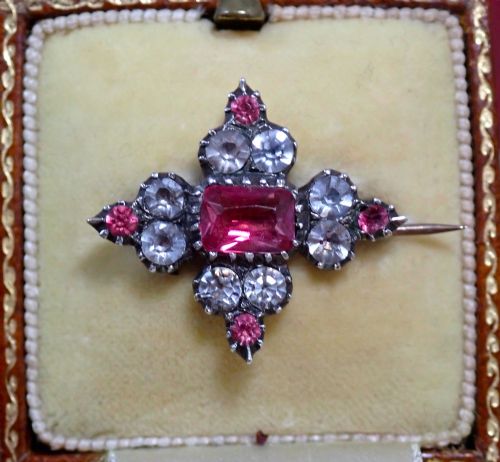


Red Paste Jewellery
These red paste jewellery pieces deliver the deep colour of rubies and garnets using brilliant glass set in silver and gold.
Red Paste Jewellery
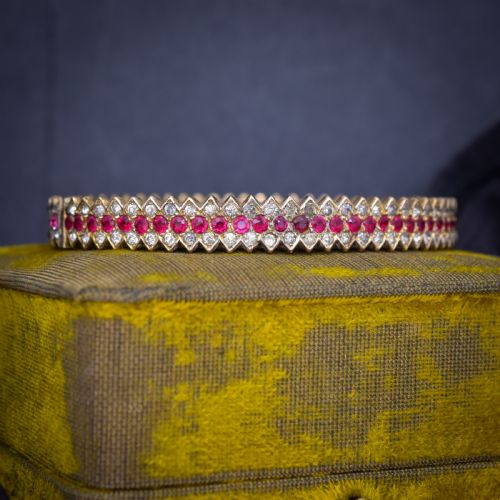
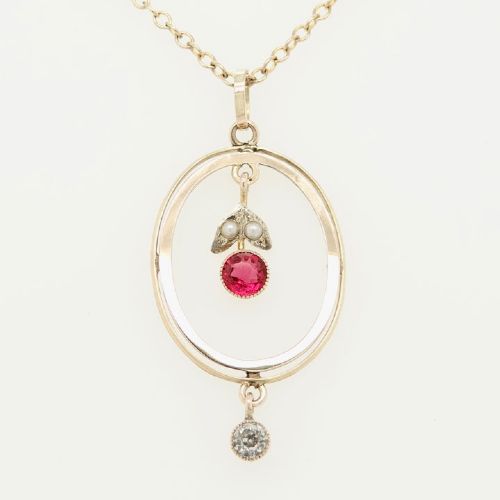
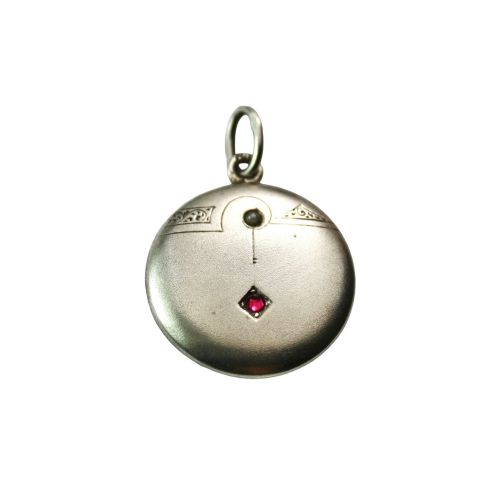
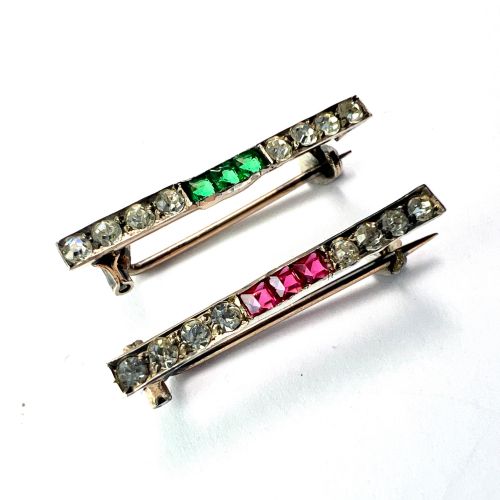
The assortment on this page ranges from early Georgian silver and gold black dot pieces and mourning brooches to later Art Deco swivel bands, chevron bangles, and ruby-coloured riviere necklaces. Earring pairs and jewellery sets occasionally appear alongside individual items like pendants incorporating seed pearls or garnets.
Victorian examples bring together gold, gilt, and garnet paste, while twentieth-century pieces lean towards the clean lines of Art Deco sterling silver and gold settings. Each item reflects the prevalent design aesthetic of its decade, utilising glass paste to achieve vivid red hues.
How they were made
Makers set moulded or cut glass paste into mounts of silver, gold, nine-carat gold, gold gilt, and pewter. Some earlier Georgian and Victorian examples incorporate seed pearls, garnets, and detailed wirework such as Etruscan Revival motifs.
Stones are secured within metal bezels or claw settings, sometimes backed with foil or black dots in Georgian work to alter the reflection and depth of the red glass. Construction methods vary from hand-fabricated silver and gold mounts to cast pewter frames and stamped bangle bracelets.
Listings feature items spanning the Georgian, Victorian, Edwardian, Art Nouveau, and Art Deco periods, created in silver, gold, and pewter.
What varies in quality
Quality depends upon the clarity and colour saturation of the glass paste, the precision of its facets, and the integrity of the metal setting. Finer pieces demonstrate careful stone cutting that maximises light return, paired with substantial silver or gold fabrication rather than lighter gilt metals.
The artistry of the mounting differentiates standard production from exceptional work, particularly where delicate seed pearls, granulation, or complex configurations like swivel mechanisms and riviere links are integrated. Preservation of the original stones and uncompromised metalwork elevate the standard of individual pieces.
Peter Behrens for Osiris
The Red Paste Jewellery Glossary
- Paste
- A heavy, high-refractive glass used since antiquity to imitate gemstones. It is cut and polished by hand or machine before being set into jewellery.
- Riviere necklace
- A continuous strand of identically sized or graduated gemstones or paste stones linked closely together. Each stone is individually set in its own collet.
- Black dot paste
- A Georgian technique where a small black spot is painted on the foil backing of a paste stone to simulate the culet or natural inclusions of a true diamond or ruby.
- Gilt
- A thin layer of gold applied to the surface of a base metal or silver object. It provides the appearance of solid gold without the associated weight and cost.
Red Paste Jewellery: Frequently Asked Questions
What is red paste jewellery?
Red paste jewellery consists of ornamental pieces set with pigmented glass designed to imitate rubies, garnets, and other red gemstones. These items are mounted in silver, gold, and gilt metals across multiple historical periods.
Craftsmen shaped and polished the glass to catch the light much like mined stones. The resulting items offer the visual impact of fine gemstone jewellery from past centuries.
How do I date red paste jewellery?
Dating relies on identifying the metal types, setting styles, and overall design characteristics. Georgian pieces often feature closed-back settings and foil backs, while Victorian items introduce varied gilt work and mourning motifs.
Twentieth-century examples transition into the geometric forms of Art Deco and the flowing lines of Art Nouveau. Comparing the mounting technique against known period styles clarifies the date of manufacture.
Was red paste considered valuable originally?
Paste jewellery has historically served as a respected art form rather than a mere deception. Georgian and Victorian wearers valued these pieces for their intricate design and vibrant colour.
High-quality paste items were often commissioned alongside or instead of precious gems to match specific outfits. Their worth stemmed from craftsmanship and artistic merit rather than intrinsic mineral value.
How should I care for paste jewellery?
Paste glass is softer than mined gemstones and requires gentle handling to avoid scratching. Cleaning should be done with a dry or barely damp cloth, avoiding chemical dips that can damage foil backs or gilt surfaces.
Store pieces individually in soft pouches to prevent friction against other items. Limiting exposure to moisture helps preserve the integrity of older silver and gold settings.