
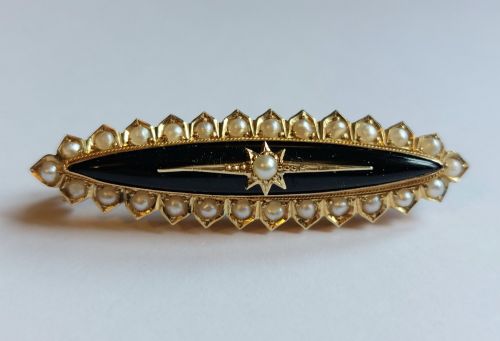
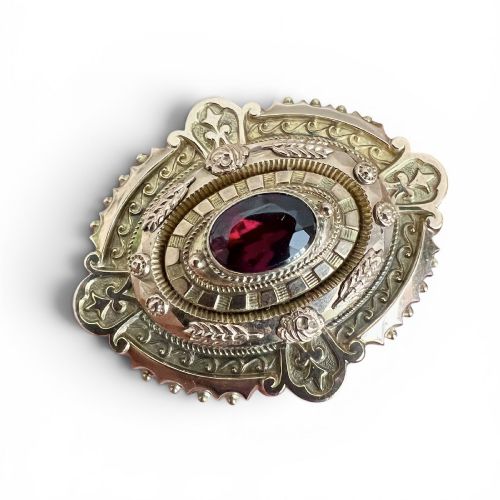


Antique Mourning Pin
These antique mourning pin pieces hold the quiet weight of remembrance, offering tangible ties to past lives through gold, hair, and stone.
Antique Mourning Pin
An antique mourning pin brings together small brooches and lace pins created to remember those who passed away. Buyers encounter pieces spanning the Georgian, Victorian, and Edwardian eras, each carrying distinct sentimental weight.
Mourning jewellery serves as both a personal keepsake and a wearable art form. These items reflect past social customs surrounding grief and remembrance through specific motifs.
Materials and construction methods
Maker workshops utilised yellow gold, 15ct gold, and 18K gold to form the primary structures of these pins and brooches. Silver inlay also appears alongside gold in tortoiseshell piqué work.
Gemstones such as garnet, diamond, onyx, and ruby paste were set into the metal frameworks. Seed pearls, pearls, and glass components complete the decorative elements of the designs.
Tortoiseshell piqué work combines tiny metal pins with organic shell to catch the candlelight of a parlour.
Distinctions in quality
The standard of a piece rests upon the fineness of its metalwork and the complexity of its assembly. Pieces featuring detailed Etruscan Revival elements or precise piqué work display greater technical skill.
Material selection divides the range, with higher quality items incorporating selected diamonds, garnets, or intricate seed pearl arrangements alongside solid gold mounts.
The Antique Mourning Pin Glossary
- Mourning brooch
- A personal ornament worn to remember a deceased person, often containing hair or commemorative elements. These items date primarily from the Georgian and Victorian periods.
- Seed pearl
- A very small natural pearl, frequently utilised in clusters to form floral or geometric patterns on jewellery. They add a delicate white lustre to gold settings.
- Piqué work
- A decorative technique involving the inlay of tiny points of gold or silver into tortoiseshell. This method creates intricate patterns across the surface of the brooch.
- Flat cut garnet
- A gemstone slice cut with a flat top and polished facets rather than a traditional pavilion. This style of cutting is characteristic of Georgian pieces.
Antique Mourning Pin: Frequently Asked Questions
What periods do these pins cover?
The pieces span the Georgian, Victorian, and Edwardian eras. Items range from the eighteenth century through the nineteenth century and into the early twentieth century.
Specific dates mentioned in the evidence include the 1850s, 1860s, 1880s, and 1890s. Each period introduces distinct stylistic traits.
What materials are used?
Gold forms the base of the majority of these items, appearing in standard gold, 15ct gold, and 18K yellow gold. Silver also appears as inlay work.
Gemstones include garnet, diamond, onyx, and ruby paste, accompanied by seed pearls, pearls, glass, and tortoiseshell.
How were hair mourning items made?
Georgian and Victorian makers incorporated human hair beneath glass compartments within the brooch structure. This hair was frequently woven into intricate decorative patterns.
The resulting piece served as a direct and personal physical token of remembrance for the wearer.
What is an Etruscan Revival brooch?
This style draws inspiration from ancient Etruscan goldwork discovered during archaeological excavations in the nineteenth century. It relies on applied gold wire and granulation.
Pieces of this type showcase classical revival aesthetics applied to Victorian mourning forms.