


Gold Mourning Brooch
A gold mourning brooch holds memory close in gold, hair, pearl and stone, preserving personal history through centuries of craftsmanship.
Gold Mourning Brooch
A gold mourning brooch serves as a tangible link to the past, combining sentiment with personal adornment. When exploring gold mourning brooch examples, buyers encounter pieces spanning the Georgian, Victorian and Edwardian eras.
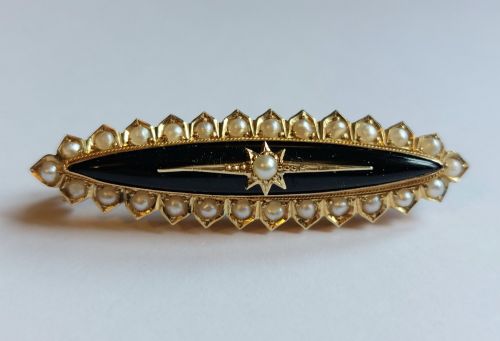
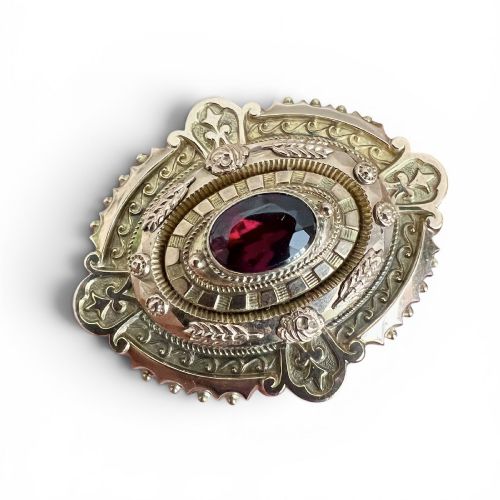
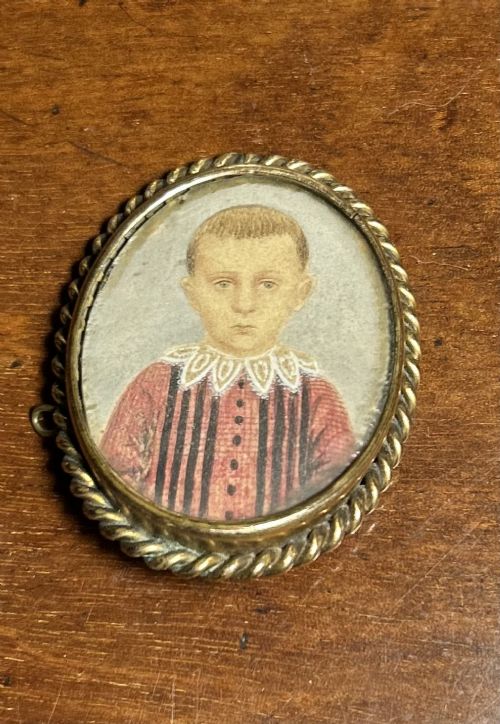
The selection ranges from small Georgian hair pieces to larger Victorian designs incorporating onyx, garnet and seed pearls. Many incorporate compartments designed to hold woven hair or portrait miniatures.
Originating as tokens of remembrance, these pieces utilise precious metals alongside organic materials like tortoiseshell and natural pearl. The forms vary from simple bar pins to intricate Etruscan revival and buckle shapes.
Materials and construction methods
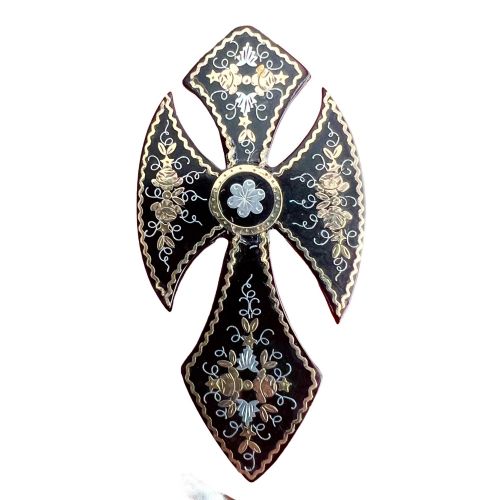
Gold forms the structural base of these pieces, appearing in various purities including 9ct, 14ct, 15ct, 18ct and gold cased variants. Enamel work frequently adds contrasting dark borders, while silver inlay and piqué techniques decorate tortoiseshell surfaces.
Seed pearls, garnets, diamonds and hardstones are set into the metalwork to frame central compartments or motifs. Artisans also worked with human hair, intricately braiding or curling it behind glass panels to create lasting commemorative displays.
Listings feature periods spanning from the Georgian era through to Edwardian times, utilising gold, silver, onyx, garnet, tortoiseshell and seed pearls.
Factors determining quality
The fineness of the gold metalwork and the complexity of the design set the standard for each piece. Pieces featuring detailed Etruscan revival wirework or precise tortoiseshell piqué inlay demonstrate superior artisan skill.
The condition and intricacy of the internal hair work or the quality of set gemstones further differentiate standard examples from exceptional ones. Intact enamel work and secure glass bezels also elevate the standing of a piece.
The Gold Mourning Brooch Glossary
- Piqué
- A decorative technique involving inlaying tiny pins of gold and silver into a tortoiseshell or horn base. This method creates delicate geometric or floral patterns across the surface.
- Seed pearl
- Very small, natural pearls often used in clusters or borders around a central focal point. They were widely utilised in sentimental jewellery for their delicate appearance.
- Georgian Neoclassical
- A style reflecting classical Greek and Roman influences, frequently appearing in early sentimental and memorial pieces. It often incorporates urns, weeping figures or classical motifs.
- Etruscan Revival
- A Victorian design movement inspired by ancient archaeological discoveries in Italy. Characterised by granulation and fine wirework applied to gold surfaces.
- Flat cut garnet
- Garnets cut with a flat top and polished lower facets, common in earlier periods. This technique maximises the deep red colour of the stone.
Gold Mourning Brooch: Frequently Asked Questions
How do I care for a gold mourning brooch?
Store the brooch in a dry, padded box away from direct sunlight to protect sensitive materials like hair and seed pearls. Avoid using liquid jewellery cleaners, as moisture can damage internal compartments and delicate organic elements.
Use a soft, dry cloth to gently wipe the gold metal surfaces. Handle the piece carefully by its edges to prevent putting pressure on the glass panels or stone settings.
Were all mourning brooches worn after a death?
Many pieces served as direct memorials for deceased family members, often inscribed with names, dates or ages on the reverse. However, some functioned simply as sentimental love tokens or keepsakes exchanged between living relations.
The inclusion of black enamel and specific motifs typically indicates bereavement, while lighter pearls and bright gemstones often point towards sentimental affection.
How can I tell a Georgian piece from a Victorian one?
Georgian examples often feature closed-back foil settings behind gemstones and finer, more delicate hair work under convex glass. The gold used in this era frequently appears in lower yellow gold purities or gold cased variations.
Victorian pieces tend to be heavier and more robust, incorporating diverse styles like Etruscan revival or intricate piqué work. Hallmarks, when present, help confirm the exact decade of manufacture.
Can I wear my mourning brooch daily?
These historical items require gentle treatment due to their age and delicate construction. While sturdy gold and hardstone versions handle occasional wear well, pieces with prominent seed pearls or glass hair compartments need extra caution.
Secure fastening and avoiding impact against hard surfaces will help preserve the integrity of the pin mechanism and fragile internal components.